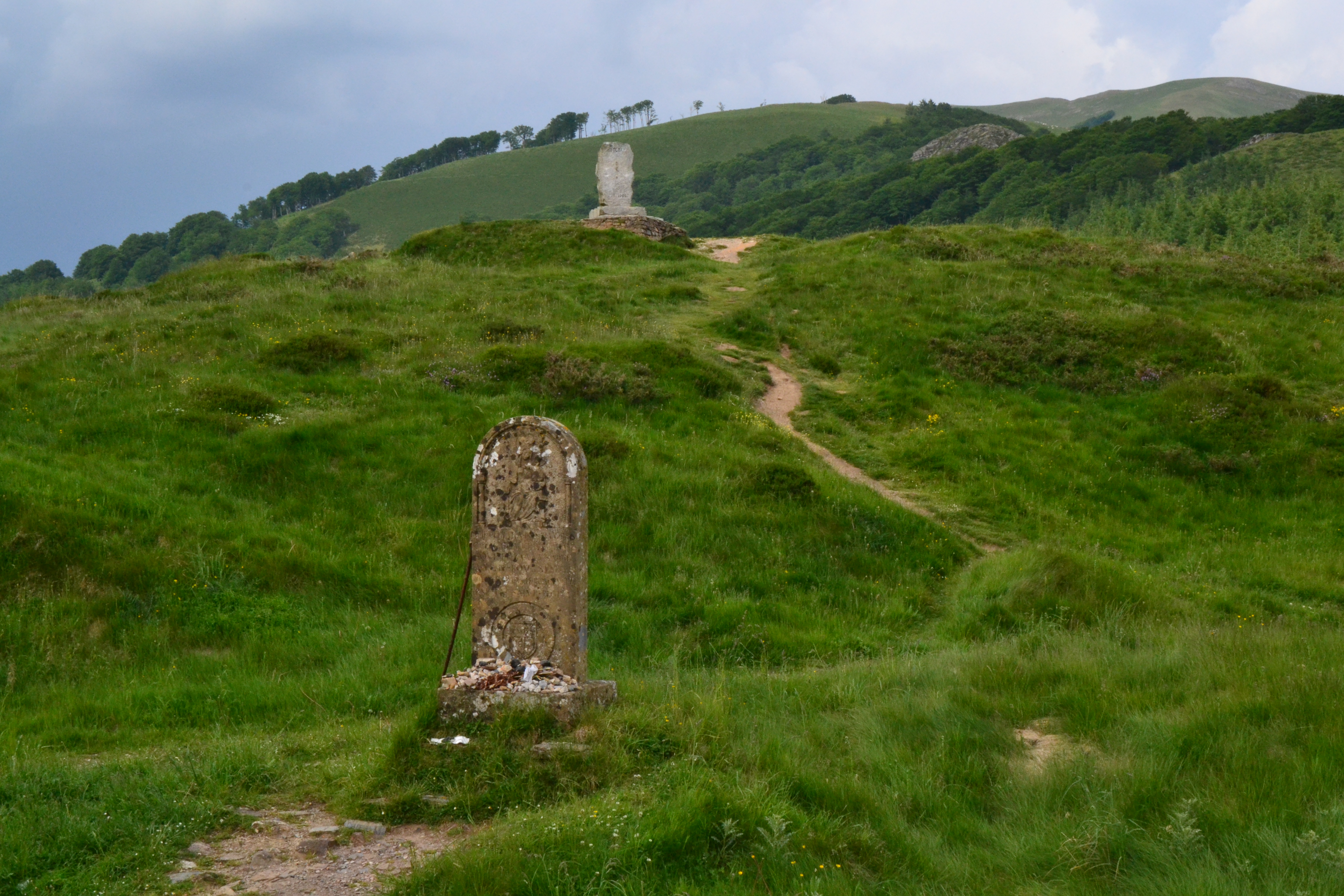
Roncevaux Pass
Roland died here, or so the poem says. In 778, Charlemagne's rearguard was annihilated at a mountain pass in the western Pyrenees, an ambush so devastating that it became the subject of the oldest surviving major work of French literature, The Song of Roland. The poem transformed a tactical disaster into an epic of Christian valor against Muslim armies, but the historical reality was different - and arguably more interesting. The attackers were not Saracens but Basque mountain raiders, local people defending their territory against a Frankish emperor who had just sacked the city of Pamplona on his way home. Roncevaux Pass, at 1,057 metres between France and Spain, has been collecting stories like these for over twelve centuries.
The Ambush of 778
Charlemagne had crossed the western Pyrenees to campaign in the Iberian Peninsula, and in 778 his army was returning north through the mountain passes. Einhard, the emperor's biographer, recorded what happened next in his Vita Karoli Magni: Vasconian raiders hid in the woods atop a high mountain and waited for the Frankish army's rearguard to descend into the valley below. The ambush was devastating. Among the dead were Eggihard, the king's steward; Anselm, the Count Palatine; and Roland, Governor of the March of Brittany. Einhard's account is terse and does not assign blame to Muslims - the attackers were Basques defending their homeland against an army that had just destroyed the walls of Pamplona. But when poets retold the story three centuries later, the Basques became Saracens, and Roland became the greatest knight in Christendom.
The Second Blow
Forty-six years later, the pass struck again. In 824, a combined Basque and Qasawi Muslim force ambushed another Carolingian expedition in what historians call the Second Battle of Roncevaux Pass. The tactical pattern was almost identical: a Basque force engaging from the mountain heights against a northbound Frankish column in the same geographical setting. This time the consequences reached further than the first engagement. The Carolingian commanders Aeblus and Aznar Sanchez were captured, and the defeat led directly to the establishment of the independent Kingdom of Pamplona - a landmark in Basque political history that shaped the borders and identities of the region for centuries to come.
Pilgrims and Soldiers
Between its battles, Roncevaux serves a gentler purpose. The pass has been an important crossing point on the Camino de Santiago, the pilgrimage route to Santiago de Compostela in northwestern Spain, for over a thousand years. Pilgrims departing from Saint-Jean-Pied-de-Port on the French side climb through beech forests and high meadows before descending to the monastery at Roncesvalles on the Spanish side. The route divides the valley of the Nive to the north from the valley of the Irati to the south, crossing terrain that shifts from Atlantic-influenced woodland to drier Mediterranean slopes within a few kilometres. Votive crosses mark the pass itself, planted by pilgrims over the centuries. Even the 1813 Peninsular War revisited this ground, when French Napoleonic troops and Anglo-Portuguese forces fought at the pass on 25 July - though this battle ended in an allied defeat rather than a French one.
The Disputed Ground
Where exactly Roland fell remains contested. The stone monument near the pass marks the traditional site, but the inhabitants of Valcarlos, in the valley below, have long claimed that their town is the true location of the 778 ambush. Their argument is geographic: Charlemagne's troops were descending from the pass toward the Frankish realm, so the rearguard would have been strung out along the road below the summit, not at the top. The debate will likely never be resolved - Einhard was maddeningly vague about specifics, and the poem that immortalized the battle was written for dramatic effect, not cartographic precision. What remains undisputed is the pass itself, still threading between the same beech forests where raiders once waited, still carrying travelers between two countries and two worlds.
From the Air
Roncevaux Pass sits at 1,057 metres elevation at approximately 43.02N, 1.32W in the western Pyrenees, entirely on the Spanish side of the border. The pass connects the Nive valley (France) with the Irati valley (Spain). Saint-Jean-Pied-de-Port is visible about 8 kilometres north on the French side. Best viewed at 4,000-6,000 feet AGL to appreciate the pass geography and the approach routes from both sides. The nearest airports are Pamplona (LEPP), approximately 25 nautical miles south, and Biarritz-Anglet-Bayonne (LFBZ), about 30 nautical miles northwest. Mountain weather is unpredictable; cloud cover can obscure the pass quickly, and strong winds funnel through the gap.