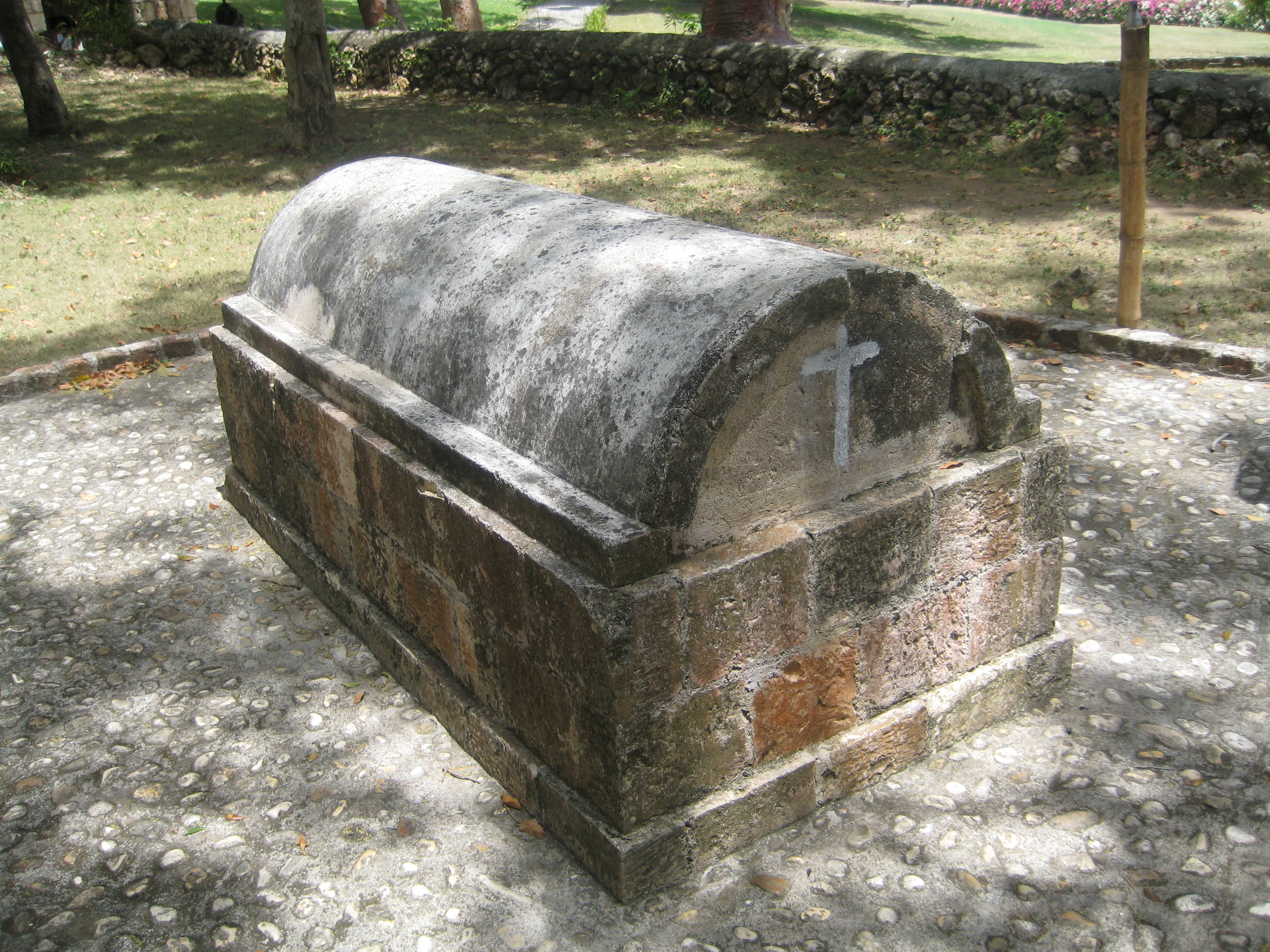
Rose Hall, Montego Bay
The property was originally called True Friendship. The irony sharpens when you learn what happened there. Rose Hall, perched on a hillside above Montego Bay with panoramic views of the Jamaican coast, is the island's most famous great house - a Georgian mansion built on sugarcane profits and the labor of hundreds of enslaved people. It spent nearly a century as a ruin before a former Miss USA bought it, restored it to its eighteenth-century grandeur, and turned it into a tourist attraction anchored by the legend of a murderous "White Witch" who probably never existed. History, fiction, and commerce have tangled so thoroughly at Rose Hall that visitors sometimes struggle to tell which is which.
Four Husbands and a Fortune
Henry Fanning bought 290 acres of caneland in 1742 for three thousand pounds. He married Rosa Kelly on July 16, 1746, and died soon afterward - leaving his widow the land and a plan for a great house she would spend decades trying to build. Rosa married George Ash, a local plantation owner who began construction. The house cost thirty thousand pounds, lavishly decorated with carved mahogany and stone. Ash died in 1752. Rosa's third husband, Norwood Witter, arrived in May 1753 and managed to consume a significant portion of her fortune before dying in 1765. Her fourth husband, John Palmer, owned the adjoining plantation Palmyra. Rosa finally had both a partner and the resources to run the combined estates - over 1,900 acres producing sugar, supporting more than 270 head of cattle, and holding roughly 250 enslaved Africans on Palmyra alone. She died in 1790, having outlasted three husbands and buried the fourth.
Stone, Mahogany, and Silk
The architect James Hakewill visited Rose Hall and recorded it as one of Jamaica's finest buildings. The Jamaican Georgian mansion sits on a stone base with a plastered upper storey, its elevation on the hillside commanding views down to the coast. After decades of ruin, the house was restored with mahogany floors, interior windows, paneling, and wooden ceilings. Silk wallpaper printed with palms and birds covers the walls. Chandeliers hang from restored ceilings, and European antiques fill the rooms. The estate surrounding the house has grown into a modern resort complex: a championship golf course, a hotel, and high-end real estate development occupy the grounds where sugarcane once grew. A bar operates downstairs and a restaurant upstairs. Rose Hall is simultaneously a museum, a nightlife venue, and a real estate brochure - a plantation house that has been repurposed so many times it has become a palimpsest of Jamaican history.
The Witch Who Wasn't
The legend goes like this: Annie Palmer, the White Witch of Rose Hall, murdered three husbands and terrorized the enslaved people of the estate using voodoo. Her ghost haunts the property. Tour guides lead visitors through supposed tunnel locations, point out alleged bloodstains, and conduct seances to summon her spirit. It makes for excellent theater. The historical record tells a different story. Anne Mary Patterson married John Rose Palmer on March 28, 1820. He had traveled from England to claim the estate after it passed through the Palmer family's line of succession. John Rose Palmer died in November 1827. An investigation of the White Witch legend in 2007 concluded that the story was fictionalized - likely drawing on a 1929 novel by Herbert G. de Lisser called "The White Witch of Rosehall." The real Anne Mary Patterson left no evidence of murder, voodoo, or supernatural powers. But the fiction has proven far more durable than the facts.
From Ruin to Resort
By the 1960s, Rose Hall was a shell. The roof had collapsed. Vegetation reclaimed the walls. Jamaica's most celebrated great house looked like every other abandoned plantation - a monument to an economy that had died a century earlier. Then, in 1977, former Miss USA Michele Rollins and her entrepreneur husband John Rollins bought the property. They refurbished it at considerable personal expense, filling rooms with period antiques and conceptualizing a tour experience that showcased both the house's eighteenth-century splendor and the Annie Palmer legend that drew crowds. The combination worked. Rose Hall became one of Jamaica's top tourist attractions, offering daytime history tours and evening ghost tours. The Rollins family's investment extended beyond the house itself, developing the surrounding acreage into a resort and golf destination. What was once a ruin is now a business - one that trades on the beauty of Georgian architecture, the horror of a fabricated haunting, and the unspoken reality of the enslaved people whose labor built everything the tourists come to admire.
From the Air
Located at 18.52N, 77.82W on the north coast of Jamaica, east of Montego Bay. The great house sits on a prominent hillside visible from the coast road and from the air. Look for the white Georgian mansion above the green hillside, with the championship golf course spreading across the coastal lowland below. The Montego Bay resort strip extends westward along the coast. Nearest major airport: Sangster International Airport (MKJS) in Montego Bay, approximately 12 km to the west. Approach from the north for the best view of the house against the hillside. Tropical conditions year-round with afternoon convective buildup common.