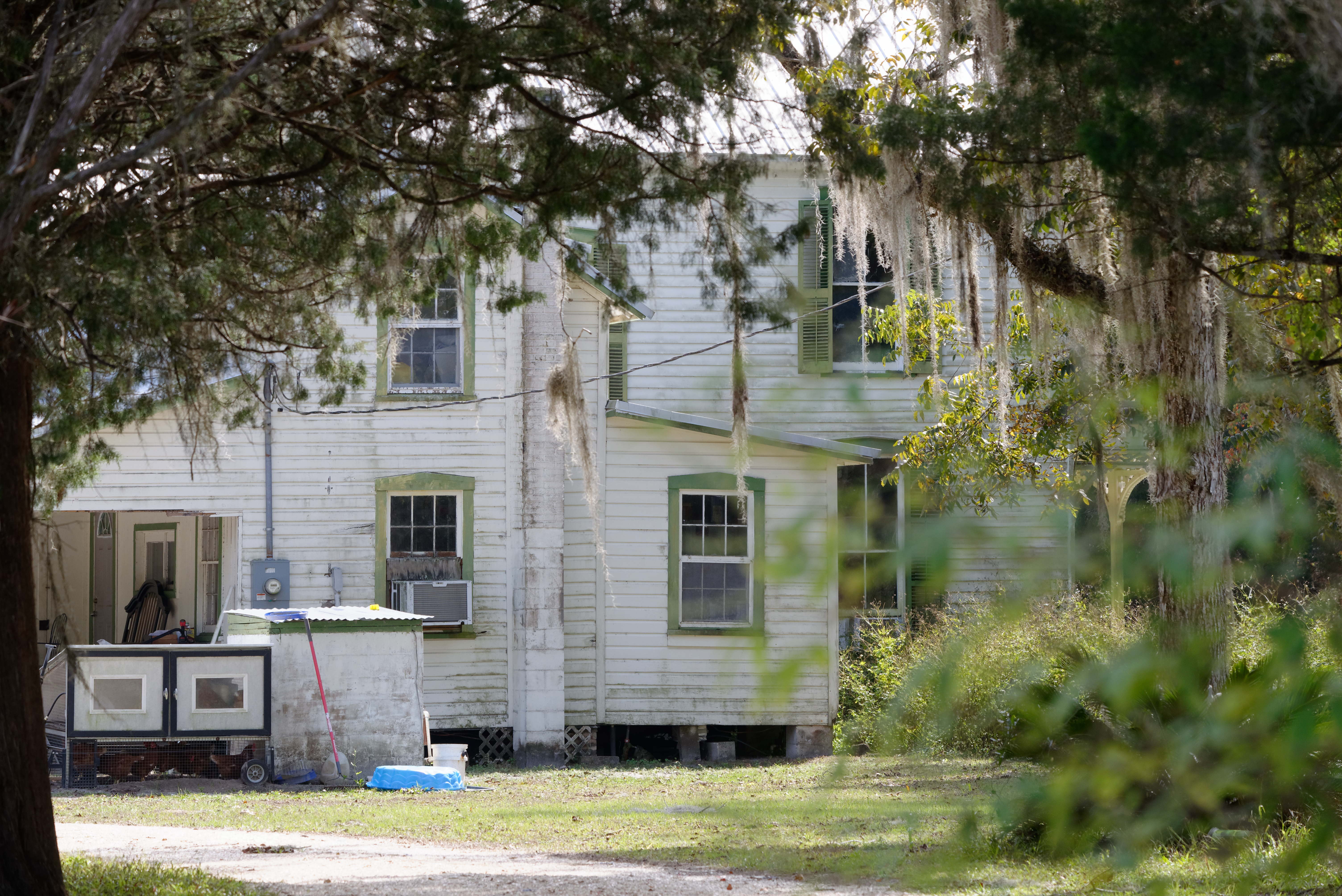
Rosewood Massacre
Nine-year-old Minnie Lee Langley watched from inside a firewood closet as her cousin Sylvester Carrier rested a rifle on her small shoulder, aimed through the kicked-in front door, and fired. Outside, a mob of armed White men riddled the Carrier house with bullets while children hid upstairs under mattresses. It was the night of January 4, 1923, in Rosewood, Florida, and the quiet whistle stop on the Seaboard Air Line Railway was about to be wiped off the map. The official death toll was eight. Survivors whispered of dozens more. For sixty years, almost nobody talked about it at all.
A Lie and a Lynching
The violence began with an accusation. On New Year's Day 1923, Frances "Fannie" Taylor, a 22-year-old White woman in the neighboring mill town of Sumner, claimed she had been assaulted by a Black man. The day before, the Ku Klux Klan had paraded through Gainesville under a burning cross and a banner reading "First and Always Protect Womanhood." A different story would emerge years later from Philomena Goins, the granddaughter of Taylor's laundress: she said she and her grandmother watched a White man leave Taylor's house by the back door that morning. But in January 1923, the accusation was enough. A mob seized Sam Carter, a local blacksmith who worked in a turpentine still, tortured him, shot him in the face, and hung his mutilated body from a tree. The mob then confronted Sylvester Carrier on a road and told him to leave. Carrier refused. He went home and told his neighbors to gather for protection.
The Carrier House Siege
On the evening of January 4, between 20 and 30 armed White men surrounded Sarah Carrier's house in Rosewood, where 15 to 25 people had taken refuge, many of them children visiting their grandmother for Christmas. When two members of the mob approached the house, shooting erupted. Sarah Carrier was shot in the head. Her son Sylvester positioned young Minnie Lee Langley in a firewood closet and used it for cover, his rifle resting on the girl's shoulder. When C. P. "Poly" Wilkerson kicked down the front door, Sylvester killed him. Henry Andrews, directly behind Wilkerson, was killed too. The standoff lasted through the night. By morning, both Sarah and Sylvester Carrier were dead inside the house. Several others were wounded, including a child shot in the eye. The surviving children were spirited out the back door into the woods, crossing dirt roads one at a time before hiding in the brush.
The Burning
News of the armed standoff drew White men from across Florida. Newspapers fanned the flames: the Miami Metropolis listed 20 Black dead and characterized the event as a "race war." The Washington Post described "heavily armed Negroes" and a "negro desperado." According to historian Thomas Dye, the idea that Black citizens in Rosewood had taken up arms was "unthinkable in the Deep South." The mob burned nearly every structure in Rosewood. James Carrier, Sylvester's brother, was partially paralyzed from a prior stroke. He returned from the swamps and asked the White mill supervisor W. H. Pillsbury for protection. Pillsbury locked him in a house, but the mob found him, tortured him, forced him to dig his own grave, and shot him dead. On January 6, White train conductors John and William Bryce, wealthy Cedar Key residents, slowed their train through the area and blew the horn, evacuating women and children to Gainesville. They refused to take Black men, fearing reprisals.
Sixty Years of Silence
An all-White grand jury in February 1923 heard 25 witnesses and found "insufficient evidence" to prosecute anyone. Survivors scattered across Florida and started over with nothing. Most took manual labor jobs. Many changed their names. A University of Florida psychologist later testified that survivors exhibited posttraumatic stress disorder made worse by decades of secrecy. In 1982, investigative reporter Gary Moore drove to Cedar Key and asked a local woman why the once half-Black town was entirely White. She replied, "I know what you're digging for. You're trying to get me to talk about that massacre." Moore later wrote that "the weeks of January 1923 seem to have dropped completely from Florida's consciousness, like some unmentionable skeleton in the family closet." As late as 1993, Black residents of nearby Chiefland would visit Rosewood but always insisted on leaving before dark. When asked why, they would not say.
Justice, Seven Decades Later
In 1993, the Florida Legislature commissioned a 100-page report from historians at Florida State University, Florida A&M University, and the University of Florida. Special Master Richard Hixson declared the state had a "moral obligation" to make restitution: "I truly don't think they cared about compensation. I think they simply wanted the truth to be known." In 1994, the legislature awarded $150,000 each to nine survivors. A state scholarship fund was later established for Rosewood descendants. In 2004, Florida declared Rosewood a Heritage Landmark and erected a historical marker on State Road 24 naming the victims. John Singleton's 1997 film brought the story to a wider audience. The last known survivor, Mary Hall Daniels, died in Jacksonville in 2018 at age 98. Vera Goins-Hamilton, not publicly identified as a survivor until late in life, died in 2020 at 100. Today, Rosewood descendants maintain the Real Rosewood Foundation and a traveling exhibit that tours internationally, housed permanently at Bethune-Cookman University in Daytona Beach.
From the Air
Located at 29.23°N, 82.93°W in Levy County along Florida's Gulf Coast, on the Big Bend. The site sits just off State Road 24 between Cedar Key and Sumner. John Wright's house, the only structure that survived the massacre, still stands. Nearest major airport is Gainesville Regional Airport (KGNV) approximately 50 miles northeast. Cedar Key lies a few miles to the southwest along the coast. The area is flat Gulf Coast terrain with scrub vegetation. Best viewed at 2,000-3,000 feet AGL. A Florida Heritage Landmark marker stands along State Road 24.