Rosie the Riveter WWII Home Front National Historical Park
The SS Robert E. Peary was assembled in less than five days. Not five weeks, not five months - five days, during a 1942 competition among shipyards to demonstrate what American workers could achieve. By 1944, the Kaiser Richmond Shipyards had refined their methods so thoroughly that building a Liberty ship by standard procedures took just over two weeks. These ships cost a quarter of what other yards charged and were completed in two-thirds the time. The secret was not machinery. It was people - thousands of women and African Americans who entered industrial work for the first time, transforming both the war effort and American society.
The Arsenal by the Bay
Richmond's four shipyards, with their combined 27 shipways, produced 747 ships during World War II - more than any other shipyard complex in the country. But ships were just the beginning. The Ford Motor Company Assembly Plant in Richmond was the largest assembly plant on the West Coast and one of only three tank depots in the entire nation. Workers there assembled approximately 49,000 jeeps and processed 91,000 other military vehicles. Fifty-five other war industries operated in Richmond, overwhelming the city's housing, roads, schools, and services. The population exploded as workers poured in from across the country, sleeping in all-night movie theaters, sharing 'hot beds' in shifts, or simply camping out until housing could be built.
The Women Who Built the Fleet
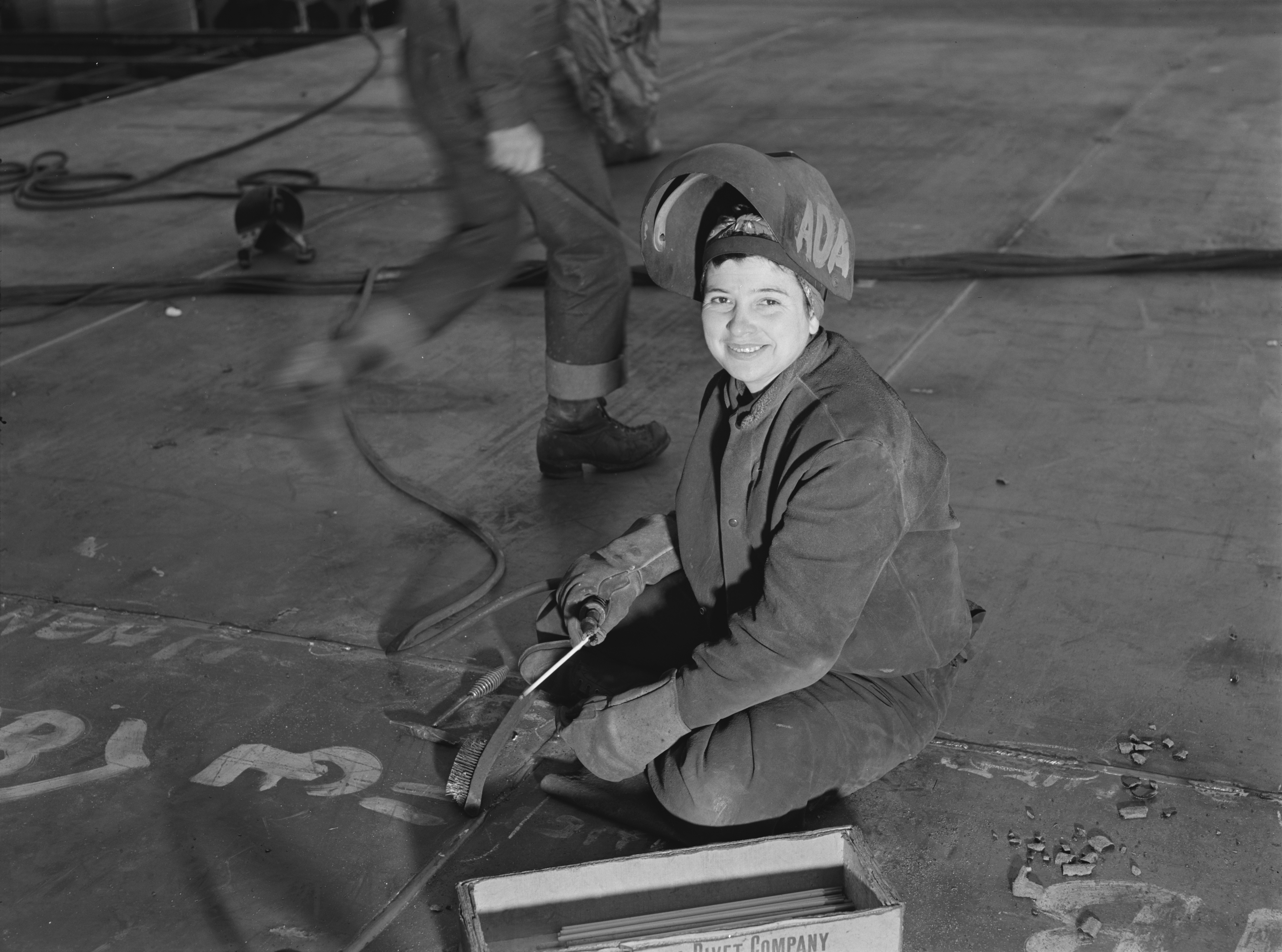
At its peak, 24,500 women worked on the Kaiser payroll in Richmond. They were riveters, welders, electricians - jobs that had been exclusively male before the war. The name 'Rosie the Riveter' came from a popular wartime song celebrating these women. On October 14, 2000, more than 100 original 'Rosies' gathered at Marina Bay Park for the dedication of a memorial in their honor. The monument, designed by landscape architect Cheryl Barton and artist Susan Schwartzenberg, stretches the length of a Liberty ship's keel. A metal pier at the water's edge represents the stern, a cylindrical framework suggests a smokestack, and the bow serves as the main monument - built from prefabricated parts just like the ships the women assembled. Thirty-nine photographs and news clippings are embedded in the structure.
Caring for the Workers
The war demanded more than just labor. The Maritime and Ruth Powers Child Development Centers were among approximately 35 nursery school units established in Richmond to care for children while their mothers worked the shipyards. Unlike Depression-era WPA day care meant for the destitute, these centers served working mothers and were staffed with nutritionists, psychiatrists, and certified teachers. The Maritime Center alone had capacity for 180 children per day; at the program's peak, 1,400 children attended citywide. The Atchison Village Housing Project, meanwhile, provided desperately needed homes. The Lanham Act of 1940 had provided $150 million for war worker housing, and the modest wood-frame buildings of Atchison Village reflected wartime constraints on time, money, and materials.
A Partnership Park
The Rosie the Riveter World War II Home Front National Historical Park is unique in the National Park system: the Park Service owns no land or buildings here. Established in 2000, it operates through cooperative agreements with private owners of historic structures - the Ford Assembly Building (now restored and housing businesses), Atchison Village, the child development centers, Kaiser Permanente Hospital, and Richmond Fire Station No. 67A. The visitor center occupies the Oil House, a small auxiliary building next to the Ford plant. The SS Red Oak Victory, one of only a few Victory ships transferred from the Merchant Marine to the Navy during the war, is preserved as a museum ship. Together, these scattered sites tell the story of how federal authorities and private industry collaborated on an unprecedented scale - a partnership that would continue into the Cold War as the military-industrial complex.
From the Air
The park is located in Richmond, California at 37.91N, 122.36W, on the eastern shore of San Francisco Bay. The former Kaiser shipyard sites and Marina Bay Park are visible along the waterfront. The Ford Assembly Building is a large industrial structure near the shoreline. Best viewed at 1,500-2,500 feet AGL. Oakland International Airport (KOAK) is 12nm south; Buchanan Field (KCCR) is 10nm northeast. The SS Red Oak Victory is moored at the Richmond waterfront and visible from the air.