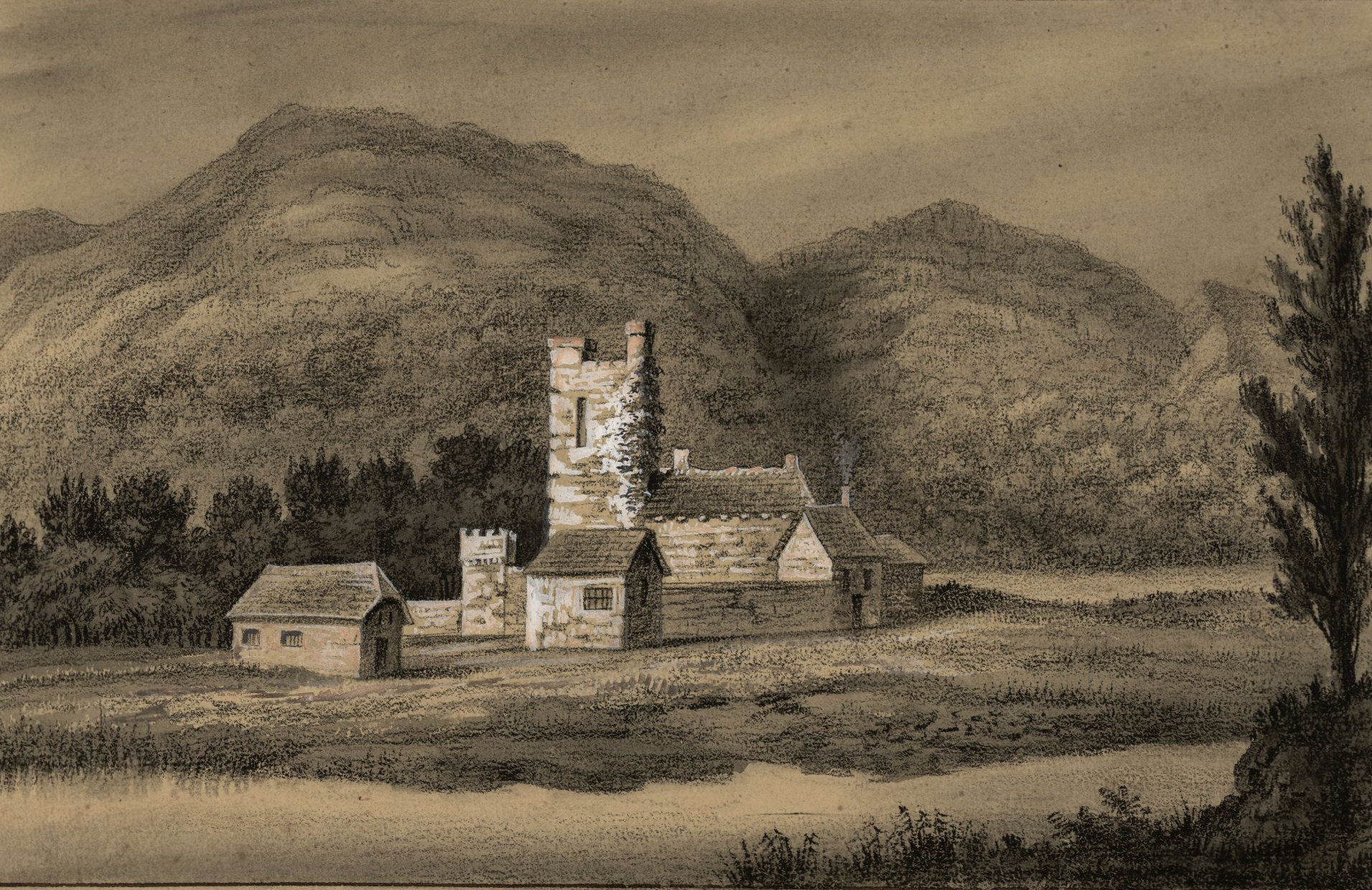
Ross Castle
There was a prophecy about Ross Castle: it could never be taken until a warship sailed on Lough Leane. The verse ran, "Ross may all assault disdain / Till on Lough Lein strange ship shall sail." In the 1650s, when Cromwell's general Edmund Ludlow marched on the castle with 4,000 foot soldiers and 200 cavalry, the garrison held firm. Ludlow could not crack it by land. So he brought artillery by boat via the River Laune and launched a waterborne assault on the lakeside stronghold. The defenders, seeing warships where no warship had business being, concluded the prophecy had been fulfilled. They surrendered. Ross Castle was among the last fortifications in Ireland to fall to Cromwellian forces.
The O'Donoghue Legacy
Ross Castle was built in the late fifteenth century by the O'Donoghues Mor, the ruling clan of the Killarney region. The tower house stands on the edge of Lough Leane in what is now Killarney National Park, its reflection shimmering in the lake on still mornings. Ownership shifted during the Second Desmond Rebellion of the 1580s, passing to the MacCarthy Mor, who leased the castle and surrounding lands to Sir Valentine Browne, ancestor of the Earls of Kenmare. The O'Donoghues left behind more than stone. According to legend, the chieftain O'Donoghue was sucked from the window of the castle's grand chamber and vanished into the lake, taking his horse, his table, and his library with him. He is said to live still in a palace at the bottom of Lough Leane, watching everything above.
Doors Built to Kill
Every feature of Ross Castle was designed to make attackers regret their approach. The front entrance was a small anteroom sealed by an iron grill called a yett, which could be chained shut from inside even if the outer door fell. Above the anteroom, a murder-hole allowed defenders to pour boiling oil or drop stones on anyone trapped below. The front door itself was constructed from two layers of thick Irish oak, the grain running at right angles -- a design that made it impossible to split the wood in a single direction. Two heavy beams backed the door into the stone walls. Narrow arrow slits at the lower floors kept attackers out while letting defenders fire through them. Only the upper windows were generous with light, positioned too high for siege ladders.
Five Floors of Power
The castle's interior reveals a strict hierarchy written into stone. The ground floor served as storage. The second floor was a spartan living space for attendants and guards, who slept on straw spread across bare stone with no furniture. The third floor held the kitchen and communal eating area. The fourth floor -- the chieftain's private quarters -- featured an innovation that reveals both wealth and paranoia: an arched stone ceiling rather than wooden beams, creating a fireproof barrier between the family's sleeping chamber and any blaze set below. The fifth floor, the great hall where the chieftain entertained, sat above this stone floor, making it the castle's last sanctuary. If fire consumed the lower levels, the stone ceiling would hold, and the chieftain's household could survive above the flames.
Between Kings and Conquerors
After the Cromwellian conquest, the Browne family managed to retain the lands by demonstrating that their heir had been too young to participate in the rebellion. By 1688, they had built a mansion house near the castle, but their loyalty to the deposed King James II after the Glorious Revolution cost them dearly. The family was exiled, the castle became a military barracks, and it remained one into the early nineteenth century. The Brownes never returned to live at Ross. Instead, they built Kenmare House near Killarney, leaving the tower to soldiers and eventually to silence. The castle is now operated by the Office of Public Works and stands as one of the best-preserved tower houses in Ireland.
The Lake and the Light
From the battlements of Ross Castle, the view across Lough Leane stretches to the mountains of Killarney National Park. Square bartizans jut from diagonally opposite corners, and machicolations -- stone projections with holes in the floor -- hang over both the front entrance and the rear wall. The remains of a square bawn with round corner towers trace the castle's original defensive perimeter. At sunset, the castle becomes one of the most photographed landmarks in Kerry, its grey stone catching amber light against the dark water. It is a scene that looks timeless, though the castle has been anything but static: it has served O'Donoghue chieftains, English garrisons, Cromwellian troops, and Williamite barracks. What endures is the lake, the stone, and the story of a prophecy that, against all reason, came true.
From the Air
Ross Castle is located at 52.04N, 9.53W on the eastern shore of Lough Leane in Killarney National Park, County Kerry. From the air, the tower house is visible on a small promontory extending into the lake. The Lakes of Killarney spread to the south and west, with the MacGillycuddy's Reeks mountain range as a dramatic backdrop. Kerry Airport (EIKY) is approximately 15 km to the north. Best viewed at 1,500-3,000 feet for castle and lake detail.