The Roswell Crash Site
In early July 1947, a rancher named Mac Brazel found debris scattered across his property northwest of Roswell, New Mexico. He reported it to the sheriff, who contacted Roswell Army Air Field. On July 8, the base public information officer issued a press release saying the Army had recovered a 'flying disc.' Hours later, the statement was retracted: it was just a weather balloon. The story faded until 1978, when UFO researchers began interviewing witnesses who remembered more than weather balloons. The Air Force eventually admitted the debris was from Project Mogul, a classified program using high-altitude balloons to detect Soviet nuclear tests. Believers counter that the government would say that. The truth - whatever it is - remains classified. What's undeniable is that Roswell became the epicenter of American UFO culture, a small New Mexico city that now welcomes tourists with alien-themed everything, all because of debris in a field 75 years ago.
The Incident
Mac Brazel found the debris on the Foster Ranch sometime around July 4, 1947. He initially ignored it; the area was remote and the debris didn't seem urgent. When he came into Roswell for supplies, he mentioned it to the sheriff. The sheriff contacted the Roswell Army Air Field, and intelligence officer Major Jesse Marcel was sent to investigate. Marcel collected the debris - metallic foil, sticks, rubber strips, and tape with flower patterns - and brought it to the base. Public information officer Walter Haut then issued the famous press release: 'The many rumors regarding the flying disc became a reality yesterday.' The phone rang off the hook. By the next day, General Roger Ramey in Fort Worth had the 'flying disc' identified as a weather balloon.
The Cover Story
The weather balloon explanation seemed implausible from the start. Why would an intelligence officer need to recover a weather balloon? Why the initial flying disc claim? The story died for three decades until UFO researcher Stanton Friedman interviewed Jesse Marcel in 1978. Marcel said the debris was 'not of this world' and the weather balloon was a cover story. Other witnesses emerged with memories of metallic debris, small bodies, and threats from the military. In 1994, the Air Force released a new explanation: the debris was from Project Mogul, a classified program using high-altitude balloon trains to detect Soviet nuclear tests. The aluminum foil, balsa wood, and tape were consistent with Mogul balloons. Believers remain unconvinced.
The Industry
Roswell has fully embraced its extraterrestrial identity. The International UFO Museum and Research Center, founded in 1991, draws over 200,000 visitors annually. Gift shops sell alien merchandise. The McDonald's is shaped like a flying saucer. Street lamps have alien eyes. Hotels advertise proximity to the crash site. The annual UFO Festival in July draws thousands for costume contests, abduction panels, and visits to debris-field locations. The city logo features a spaceship. Whether you believe aliens crashed or a balloon fell, Roswell has monetized the ambiguity brilliantly. The mystery is worth more unresolved than solved.
The Site
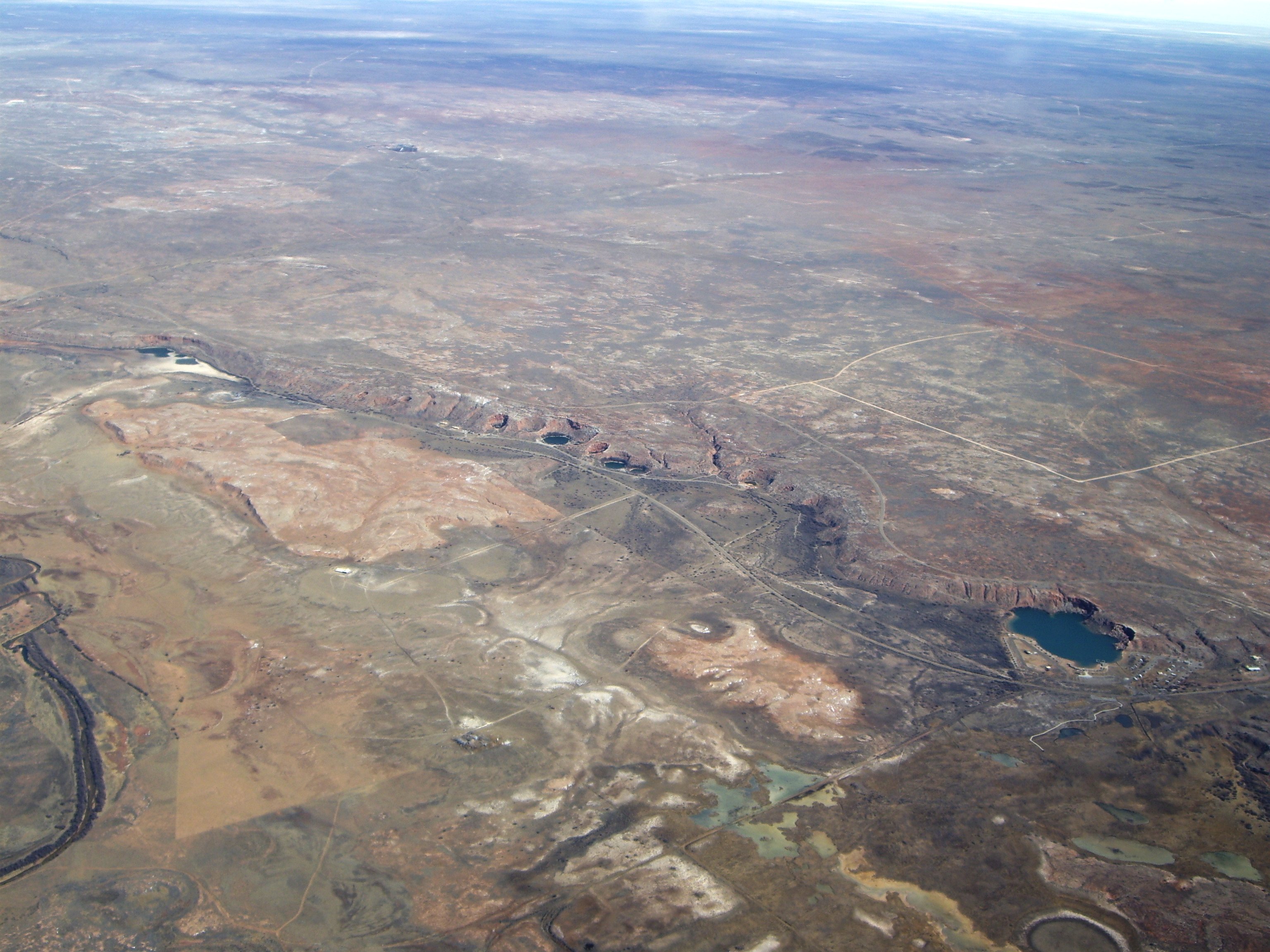
The original debris field is on private ranch land about 75 miles northwest of Roswell. The exact location is disputed - witnesses over the decades have pointed to different areas. The Foster Ranch (now the Hub Corn Ranch) occasionally permits visitors; various tour operators offer excursions. There's little to see: scrubland, a few markers, the New Mexico horizon stretching in every direction. The landscape is what you'd expect - isolated, empty, the kind of place where things could happen without witnesses. The site's emptiness is part of its power. Whatever fell here in 1947, the land has kept its secrets.
Visiting Roswell
Roswell is located in southeastern New Mexico, about 200 miles southeast of Albuquerque. The International UFO Museum and Research Center is at 114 North Main Street in downtown; admission is charged. The crash site is on private property; ask at the museum about organized tours. The UFO Festival occurs in early July, around the anniversary. Roswell has standard services - hotels, restaurants, gas stations - plus abundant alien-themed options. Roswell Air Center has limited commercial service; most visitors drive from Albuquerque. The drive across the New Mexico plains is long and monotonous, appropriate mental preparation for contemplating whatever did or didn't happen here in 1947.
From the Air
Located at 33.56°N, 104.96°W in southeastern New Mexico. From altitude, Roswell is a small city in the Pecos River valley, surrounded by arid rangeland and oil fields. The crash site is northwest of town, invisible except as empty scrubland. The terrain is classic High Plains - flat, brown, dotted with drilling rigs and ranches. Albuquerque is 200 miles northwest. Carlsbad is 75 miles south. Roswell Air Center (formerly Walker Air Force Base, where the debris was taken) is south of town. The isolation is visible from altitude - there's simply nothing out here, which is perhaps why the government chose it.