The Roswell Incident: When UFOs Became American Folklore
In early July 1947, something crashed on a ranch northwest of Roswell, New Mexico. Rancher Mac Brazel found debris scattered across his land - foil-like material, wooden sticks, rubber strips. The Roswell Army Air Field announced they had recovered a 'flying disc.' The next day, the Army retracted the statement, claiming it was merely a weather balloon. The story faded - until the late 1970s, when researchers began interviewing witnesses who claimed the government was covering up the recovery of an alien spacecraft and bodies. Roswell became the most famous UFO incident in history, spawning books, films, and an entire industry of conspiracy theories. What really crashed in the desert remains debated to this day.
The Crash
In late June or early July 1947, something fell from the sky onto the Foster ranch, about 75 miles northwest of Roswell. Rancher William 'Mac' Brazel found debris scattered over a wide area - thin, metallic foil; wooden sticks; and something resembling tape with flower patterns.
Brazel had heard radio reports about 'flying saucers' - sightings were being reported nationwide that summer. On July 7, he drove the debris to the Roswell sheriff, who contacted the Roswell Army Air Field. Major Jesse Marcel and another officer visited the ranch and collected the debris.
The Announcement
On July 8, 1947, the Roswell Army Air Field issued a press release that made headlines worldwide: 'The many rumors regarding the flying disc became a reality yesterday when the intelligence office of the 509th Bomb Group of the Eighth Air Force, Roswell Army Air Field, was fortunate enough to gain possession of a disc.'
The flying saucer craze was at its peak. A crashed disc would be sensational news. But within hours, the story changed. Fort Worth Army Air Field announced the debris was nothing but a standard weather balloon. Photos were released showing Major Marcel posing with balloon wreckage. The story died.
The Silence
For 30 years, Roswell was forgotten. The balloon explanation was accepted. UFO researchers focused on other cases. Then, in 1978, nuclear physicist and UFO researcher Stanton Friedman interviewed Major Jesse Marcel, who had since retired.
Marcel claimed the debris he'd recovered was not a weather balloon - it was something strange, something he couldn't identify. He said the debris in the Fort Worth photos wasn't what he'd found. Friedman and other researchers began tracking down witnesses, many of whom were elderly and dying. Their accounts suggested a massive cover-up.
The Stories
Witnesses came forward with increasingly dramatic claims. Some said they'd seen alien bodies - small, large-headed humanoids recovered from the crash site. Others described being threatened into silence by military officials. A mortician claimed the Army had requested child-sized coffins.
Skeptics noted that these accounts emerged decades after the event, often after witnesses had been exposed to UFO mythology. Memory is unreliable. Stories grow in the telling. But believers argued that the military had intimidated witnesses into 30 years of silence, and now, near the end of their lives, they were finally speaking.
The Truth?
In 1994, the Air Force admitted that the balloon explanation was a cover story - but not for an alien spacecraft. The debris came from Project Mogul, a top-secret program using high-altitude balloons to detect Soviet nuclear tests. The materials matched Mogul balloon components. The secrecy wasn't about aliens; it was about Cold War espionage.
True believers weren't convinced. The Air Force, they argued, was still covering up. Roswell has become more than an incident - it's a cultural phenomenon. The town hosts an annual UFO festival. The old military hospital is a UFO museum. Whether aliens crashed there or not, Roswell has become a permanent part of American mythology.
From the Air
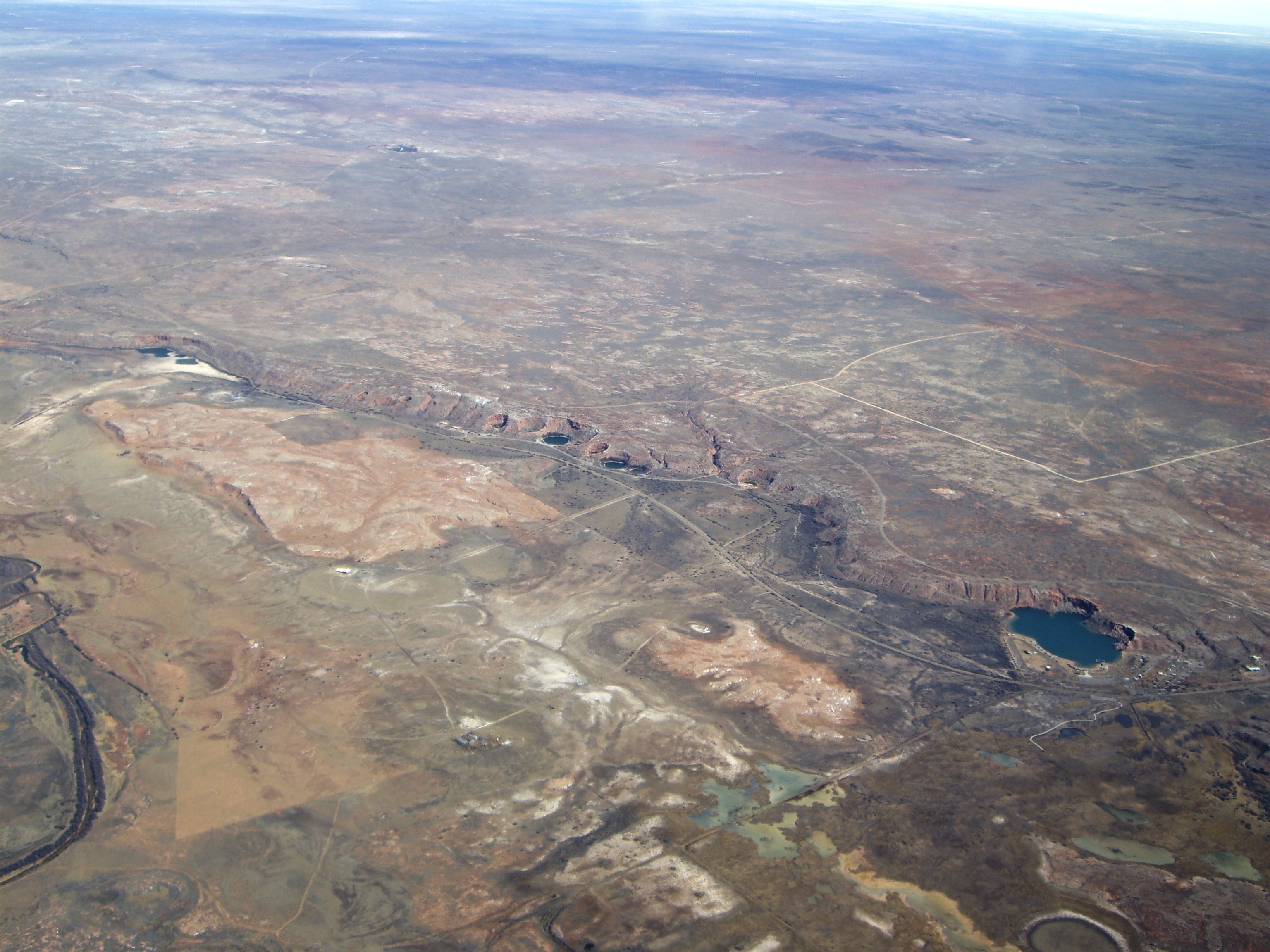
Roswell (33.39N, 104.52W) lies in southeastern New Mexico. Roswell Air Center (KROW) was formerly Roswell Army Air Field, where the debris was taken. The crash site on the Foster Ranch is about 75 miles northwest. The terrain is high desert ranching country. The International UFO Museum is downtown. Albuquerque (KABQ) is 290km northwest.