Rotterdam
Rotterdam is everything Amsterdam is not. Working rather than beautiful, modern rather than historic, industrial rather than touristic. German bombs fell on May 1940 and destroyed a medieval center that would have rivaled Amsterdam's, but what rose from the rubble gave Rotterdam its true identity. Today the city hosts Europe's largest port, handling the goods an entire continent consumes. Skyscrapers pierce a skyline where Dutch cities rarely dare to build tall. Markets, bridges, and experimental buildings crowd the waterfront. When history forces reinvention and commerce provides the resources, you get Rotterdam.
The Architecture
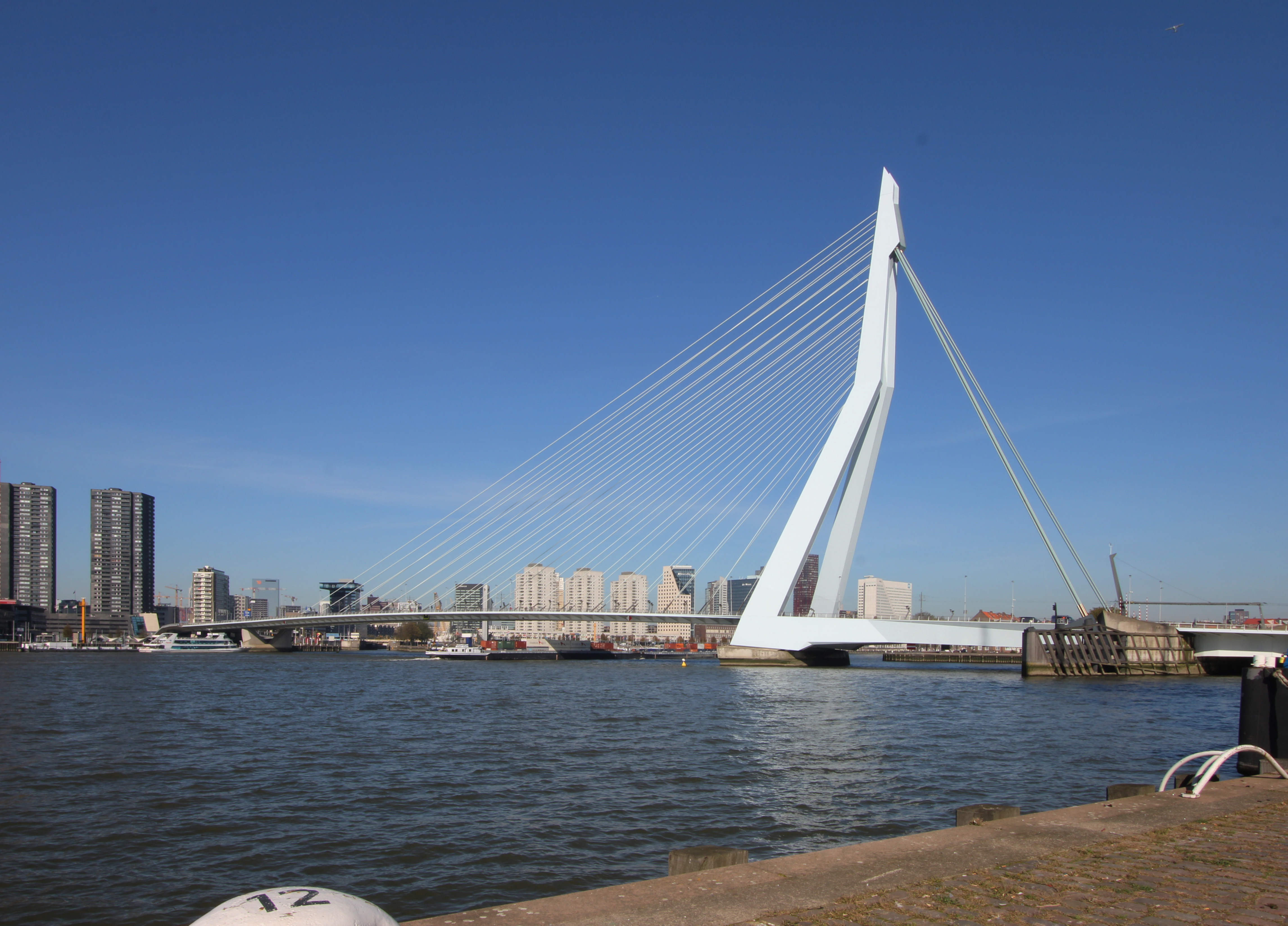
The bombing made Rotterdam's architecture possible. Without a medieval center to preserve, architects could experiment in ways no other Dutch city would allow. Piet Blom's Cube Houses tilt 45 degrees on their edges. The Markthal's apartment-arch curves over a food market. An asymmetric pylon earned the Erasmus Bridge its 'Swan' nickname. Rotterdam collects architectural statements other cities simply couldn't accommodate.
Not every experiment succeeded. Some buildings aged poorly, and urban planning often prioritized cars over people. But Rotterdam is honest about what it is: a working city that doesn't pretend to a charm the bombing destroyed.
The Port
Europe's largest port stretches across 42 kilometers of harbor, handling 450 million tons of cargo annually. A vast petrochemical complex fuels European industry along its banks. Rotterdam sits where the Rhine meets the sea, and geography made this scale of commerce inevitable. The city may not be aesthetically celebrated, but it is economically essential.
The port defines what Rotterdam is for. It provides employment, wealth, and purpose. Visitors can take port tours or climb Euromast tower for views that reveal the staggering scale below. Commerce made reinvention possible here, and the port remains Rotterdam's reason for being.
The Markets
Rotterdam's covered market, the Markthal, is a horseshoe-shaped building whose interior blazes with giant painted produce images. Above the food stalls, 228 apartments arch in a residential curve. When it opened in 2014, the building immediately became a landmark, architecture serving function while creating spectacle.
This is what Rotterdam does best: combining commerce and architecture, attempting what other cities wouldn't try. Inside, the market displays Rotterdam's diversity. Turkish, Surinamese, Indonesian, and Dutch vendors share the stalls. Walk the aisles and you taste who lives here.
The Recovery
Everything Rotterdam became traces back to 1940. The bombing killed 900 people and destroyed the city center. Fires consumed what the bombs had missed. Faced with ruins, Rotterdam chose to build new rather than replicate old, picking modernity when nostalgia would have been easier.
Resilience, pragmatism, forward orientation: this is the story Rotterdam tells about itself. Yet the recovery also erased what was lost. Photographs preserve a medieval city whose character other Dutch towns retained. Was the choice to reinvent the right one? It depends on what you value. Rotterdam is what recovery made it.
The Culture
Shipping wealth endowed museums. A diverse population generates festivals. A working-class city developed its own nightlife. The Kunsthal fills with changing exhibitions, and the Boijmans Van Beuningen collection is reopening in an innovative depot-museum. Summer brings festival after festival. Despite its industrial image, Rotterdam has plenty of culture.
It just looks different from Amsterdam's. Less established, more experimental, more willing to fail. Rotterdam's population shapes its cultural life: immigrants make the city majority-minority, young people priced out of Amsterdam arrive looking for opportunity, and creatives settle wherever working cities offer space.
From the Air
Rotterdam (51.92N, 4.48E) sits at the mouth of the Rhine-Meuse delta on the North Sea coast of the Netherlands. Rotterdam The Hague Airport (EHRD/RTM) lies 5km north with a single runway 06/24 measuring 2,200m. For major traffic, Amsterdam Schiphol (EHAM/AMS) is 57km to the north. Port facilities extend 42km toward the coast, forming one of the largest port complexes visible from the air. Look for the distinctive Erasmus Bridge and the modern skyline to locate the city center. Expect maritime weather: mild year-round with frequent cloud and rain. Strong winds can blow in from the North Sea. Terrain is low-lying, much of it below sea level.