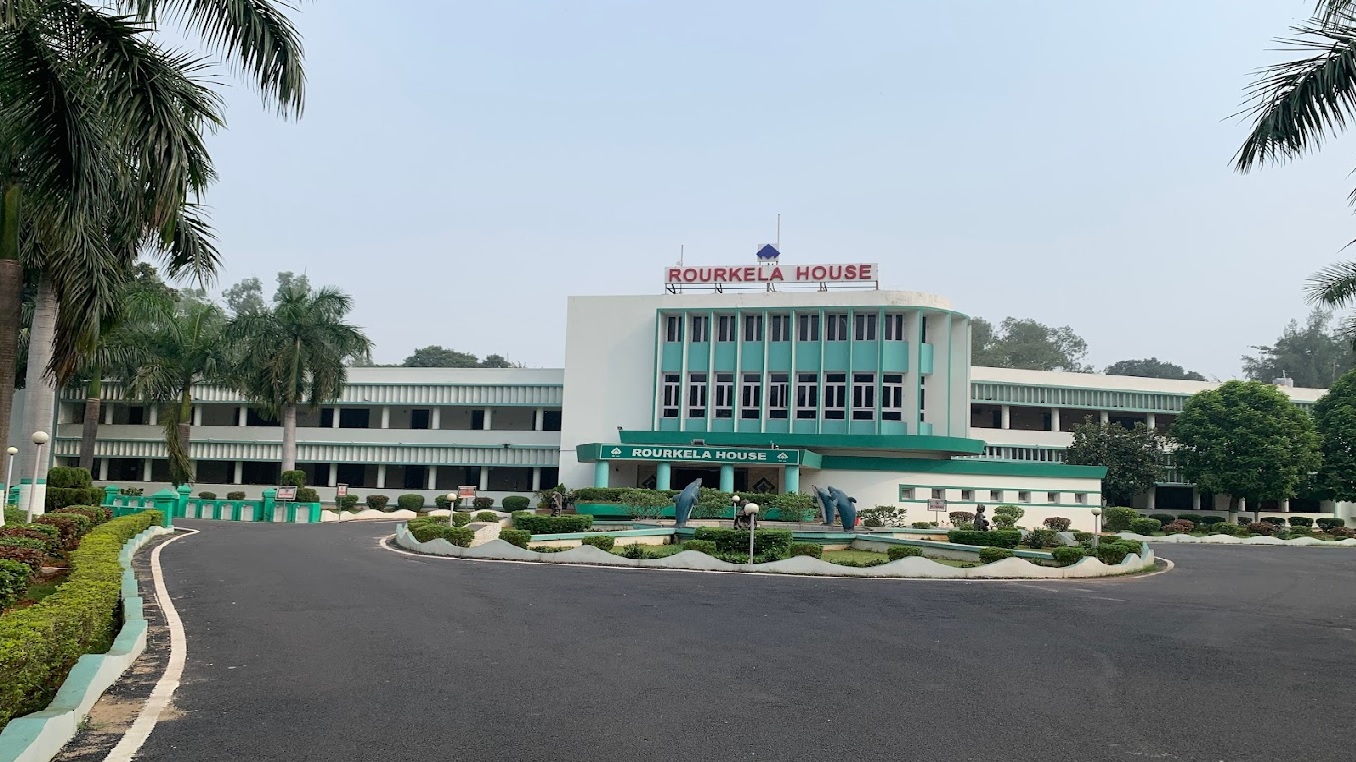
Rourkela Steel Plant
Nehru called them temples. Not the stone shrines that dot the Indian landscape, but the steel plants and dams and power stations he believed would lift a newly independent nation out of poverty. Rourkela Steel Plant, established on February 3, 1959, in the Sundargarh district of Odisha, was among the most ambitious of these temples -- and one of the most complicated. Built on 19,000 acres of land acquired from Adivasi tribal communities, financed and engineered by West Germany, and conceived during the feverish optimism of India's Second Five-Year Plan, the plant was a collision of idealism, Cold War strategy, and the human cost of industrial progress.
A Cold War Bargain
The West German involvement at Rourkela was not purely philanthropic. In the 1950s, Bonn watched Nehru's socialist rhetoric and his growing relationship with the Soviet Union with alarm. If India tilted toward Moscow, other developing nations might follow. Between 1950 and 1960, India received more than fourteen percent of all West German development aid -- a remarkable concentration of resources aimed at keeping the world's largest democracy in the Western orbit. German businessmen and bureaucrats at the Ministry of Economics saw India as a vast untapped market. The steel plant at Rourkela became the centerpiece of this courtship: German engineers and Indian workers building something together that neither could easily walk away from. Construction began in 1956, and the Germans quickly discovered that building a modern steel plant in one of India's most underdeveloped regions was harder than anyone in Bonn or New Delhi had anticipated. Logistics were poor, transportation slow, and the infrastructure for supporting a massive industrial facility simply did not exist.
Steel and Sacrifice
The land beneath the plant once belonged to the tribal communities of Sundargarh, one of Odisha's most remote and economically marginalized districts. The state government was determined to bring industrial development to the region, and the Adivasi inhabitants were displaced to make way for progress. The Mandira Dam, built between 1957 and 1959 on the river Shankha near Kansbahal, secured the enormous water supply the plant required. Electricity flowed from the Hirakud Dam. Iron ore, coal, and limestone were locally available, and the Calcutta-Bombay railway line passed through Rourkela, providing the transportation link the operation needed. Everything aligned -- except, perhaps, justice for the people whose land made it all possible. Decades later, the communities displaced by the plant and dam continued to seek recognition and compensation for what they had lost.
Firsts in Iron and Fire
Whatever its human costs, Rourkela Steel Plant compiled a record of industrial firsts. It was the first plant in Asia to adopt the energy-efficient Linz-Donawitz process of steelmaking, an Austrian innovation that used oxygen to convert molten iron into steel faster and more cleanly than older methods. It became the first SAIL plant to route one hundred percent of its production through continuous casting, eliminating the wasteful ingot-pouring process. In 2013, the plant unveiled India's largest blast furnace, named "Durga," with a useful volume of 4,060 cubic meters and a daily capacity of 8,000 tonnes of hot metal. The expansion pushed total production from 2.2 million tonnes to 4.5 million tonnes per year. Along the way, a fertilizer plant was added in 1964 to repurpose chemical residues, and a pipe plant and special plate facility arrived in the 1970s to produce steel for defense applications.
Armor and Aircraft Carriers
Rourkela's Special Plate Plant has become a critical supplier for India's defense sector, producing armored plate for the T-90 and Arjun main battle tanks and the BMP-2 infantry combat vehicle. The plant's annual defense steel capacity stands at 15,000 tonnes. Perhaps its most notable contribution came when Rourkela produced the AB/A grade steel used in INS Vikrant, India's first domestically built aircraft carrier, commissioned in 2022. The plant is also SAIL's only facility that manufactures silicon steels for the power sector and tin plates for the packaging industry. From LPG cylinders to railway wagon chassis to pipes for the oil and gas sector, Rourkela's product range reflects the ambition of a plant that was designed not just to make steel, but to anchor an entire industrial economy. A one-megawatt solar installation added in 2015, with plans for a fifteen-megawatt hydropower project downstream of Mandira Dam, signals a slow pivot toward greener energy -- a new chapter for a temple built in the age of coal and iron.
From the Air
Rourkela Steel Plant is located at approximately 22.22N, 84.86E in the Sundargarh district of Odisha. The sprawling industrial complex is clearly visible from altitude, with blast furnaces, cooling towers, and the distinctive layout of an integrated steel plant. The Mandira Dam reservoir is visible to the northwest. The nearest major airport is Rourkela Airport (VERK), a small facility, while Jharsuguda Airport (VEJH) and Biju Patnaik International Airport (VEBS) in Bhubaneswar offer larger commercial service. The Brahmani River runs nearby.