Royal Aruba Aloe
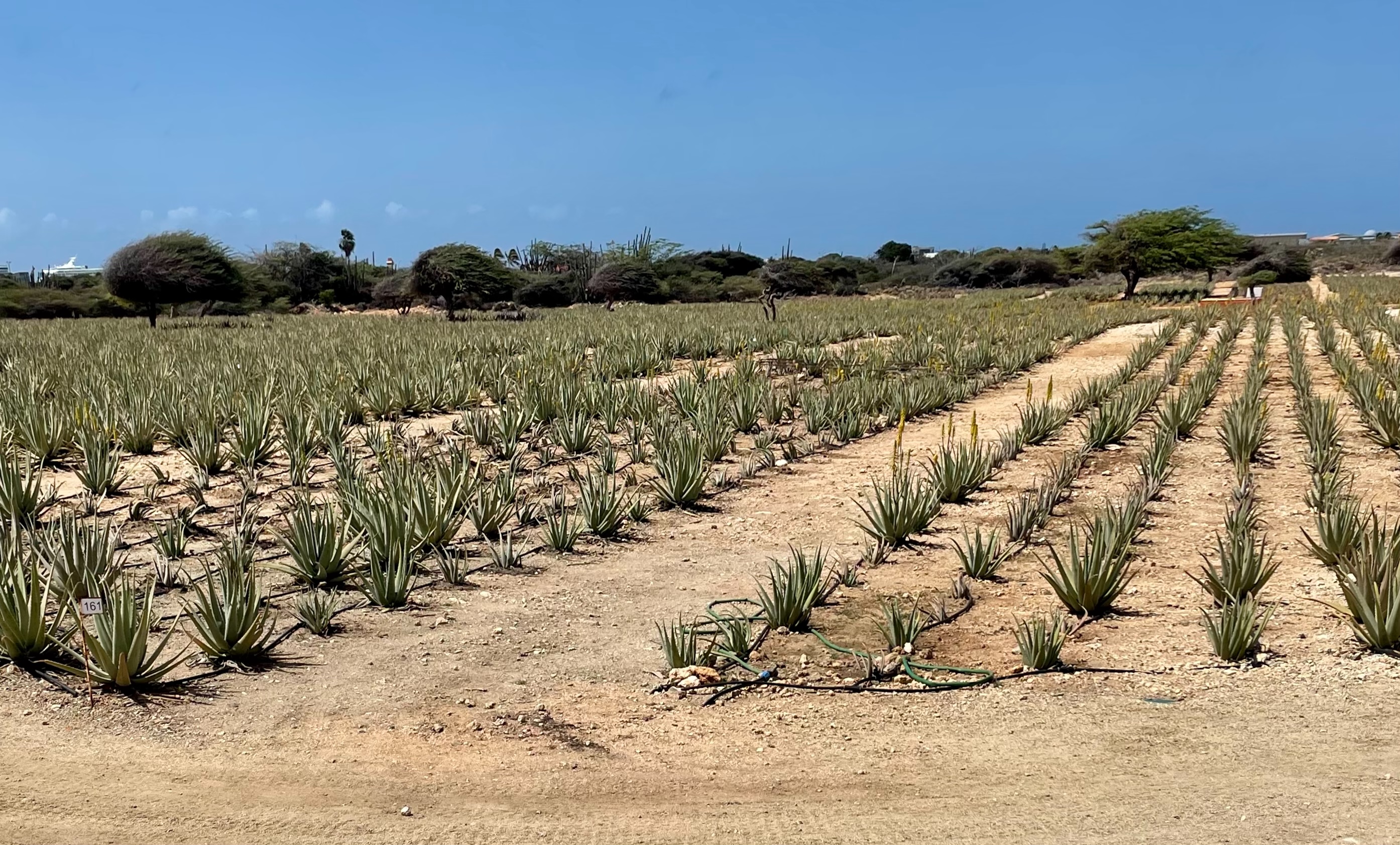
The thick, fleshy leaves do not look like much. Squat rosettes of blue-green aloe vera sprawl across the same Aruban field where Cornelis Eman first planted them in 1890, unbothered by the Caribbean sun that would wilt almost any other crop. Aloe thrives in precisely the conditions that defeat conventional agriculture: poor soil, relentless heat, rainfall so sparse that Aruba averages roughly 500 millimeters a year. Eman understood this, and he built a business around it. More than 130 years later, his descendants still run Royal Aruba Aloe from that original site in Hato, making it one of the oldest companies on the island and one of the oldest aloe enterprises in the world.
A Crop That Fits the Climate
Aruba's relationship with aloe vera stretches back well before Cornelis Eman staked his claim. By the 1840s, the governmental plantation at Socotoro in Oranjestad had already pivoted from cochineal cultivation to aloe, recognizing that the plant's tolerance for arid conditions made it one of the few commercially viable crops on an island where rain is more rumor than promise. Aloe cultivation spread across multiple plantations, becoming a pillar of the pre-oil Aruban economy. What distinguished Eman's operation was not just longevity but integration. Royal Aruba Aloe grows its aloe, harvests the leaves, extracts the gel, and manufactures finished products -- all on the same site. That vertical integration is rare in the global aloe industry, where growing, processing, and manufacturing are typically scattered across different companies and continents. Here, you can stand in the field where the plants grow and see the factory where they become sunscreen.
The Royal Stamp
In the Netherlands, the Koninklijk -- the Royal Predicate -- is one of the highest honors a business can receive. It is reserved for companies that have operated continuously for at least a century and have demonstrated sustained excellence in their field. Dutch firms from Heineken to KLM have earned the distinction. But until 2021, no company outside the European Netherlands had ever received it. Royal Aruba Aloe broke that barrier, becoming the first business in the Dutch Caribbean -- the first anywhere beyond the mother country's borders -- to carry the prefix "Royal" by royal decree. The honor acknowledged not just the company's 130-plus years of continuous operation but its role as a cultural institution: a living link between modern Aruba and the agricultural economy that preceded oil refineries, tourism, and high-rise hotels.
The Museum Next to the Field
Cornelis Eman's original aloe field still grows beside the company's museum and first retail store, which opened in 2000 in Hato. The museum offers free tours in four languages -- Spanish, English, Dutch, and Papiamento -- walking visitors through the full arc of aloe production, from cutting and packing to testing and storage. Through glass windows, visitors watch the manufacturing process in real time, an unusual transparency for a company in any industry. The tours frame aloe cultivation as something more than commerce: they present it as a craft tradition with over 170 years of history on the island, predating every resort on Palm Beach and every cruise ship at Paardenbaai. Today Royal Aruba Aloe operates 19 stores across the island, but the Hato location remains the heart of the operation -- the place where the Eman family's six generations of work remain rooted, literally, in the same soil.
From the Air
Royal Aruba Aloe's facility in Hato (12.54N, 70.04W) is located in central Aruba, between Oranjestad to the south and the hotel strip at Palm Beach to the northwest. Queen Beatrix International Airport (TNCA) is approximately 3 km to the southeast. The aloe fields are visible as organized green patches in an otherwise arid landscape. From altitude, Hato sits in the transitional zone between the capital's urban footprint and the resort development further north. Recommended viewing altitude: 1,500-3,000 ft to distinguish the agricultural plots from surrounding development.