Royal Aviation Museum of Western Canada
Somewhere on the floor of Charron Lake in northern Manitoba, a Fokker Standard Universal sat undisturbed for more than 30 years. When recovery crews finally pulled it from the water, the aircraft looked exactly as it had when it sank -- corroded, encrusted, unmistakably a ghost. Today it sits in the Royal Aviation Museum of Western Canada exactly as it appeared at the bottom of that lake, a deliberate refusal to prettify history. That instinct -- to preserve aviation's actual texture rather than polish it into nostalgia -- runs through everything in this Winnipeg museum. Aircraft hang from the ceiling and crowd the hangar floor: bush planes that opened the Canadian North, military jets that defended the Cold War frontier, one-of-a-kind prototypes that never made it past the experimental stage. Through the mezzanine windows, modern jets taxi along the runways of Winnipeg James Armstrong Richardson International Airport, connecting the museum's past tense to the present.
From a Hangar to a Home
The Western Canada Aviation Museum was incorporated in 1974, initially applying for a federal grant to establish a site at St. Andrews Airport. Those plans shifted, and the museum first set up in downtown Winnipeg near the Manitoba Museum of Man and Nature. Within a year, the collection already numbered 25 military and civilian aircraft. By the mid-1980s, the growing fleet demanded more space, and the museum relocated to Hangar T-2 at Winnipeg International Airport -- a former Trans Canada Air Lines and Transair facility with the kind of cavernous interior that aircraft collections require. The museum received its Royal designation on December 19, 2014, a mark of distinction that reflected its growing national significance. When the lease on Hangar T-2 expired in October 2018, the collection went into storage. But a federal grant in July 2019 launched construction of a purpose-built facility, which broke ground in May 2020 and was completed on August 4, 2021.
Wings Across the Collection
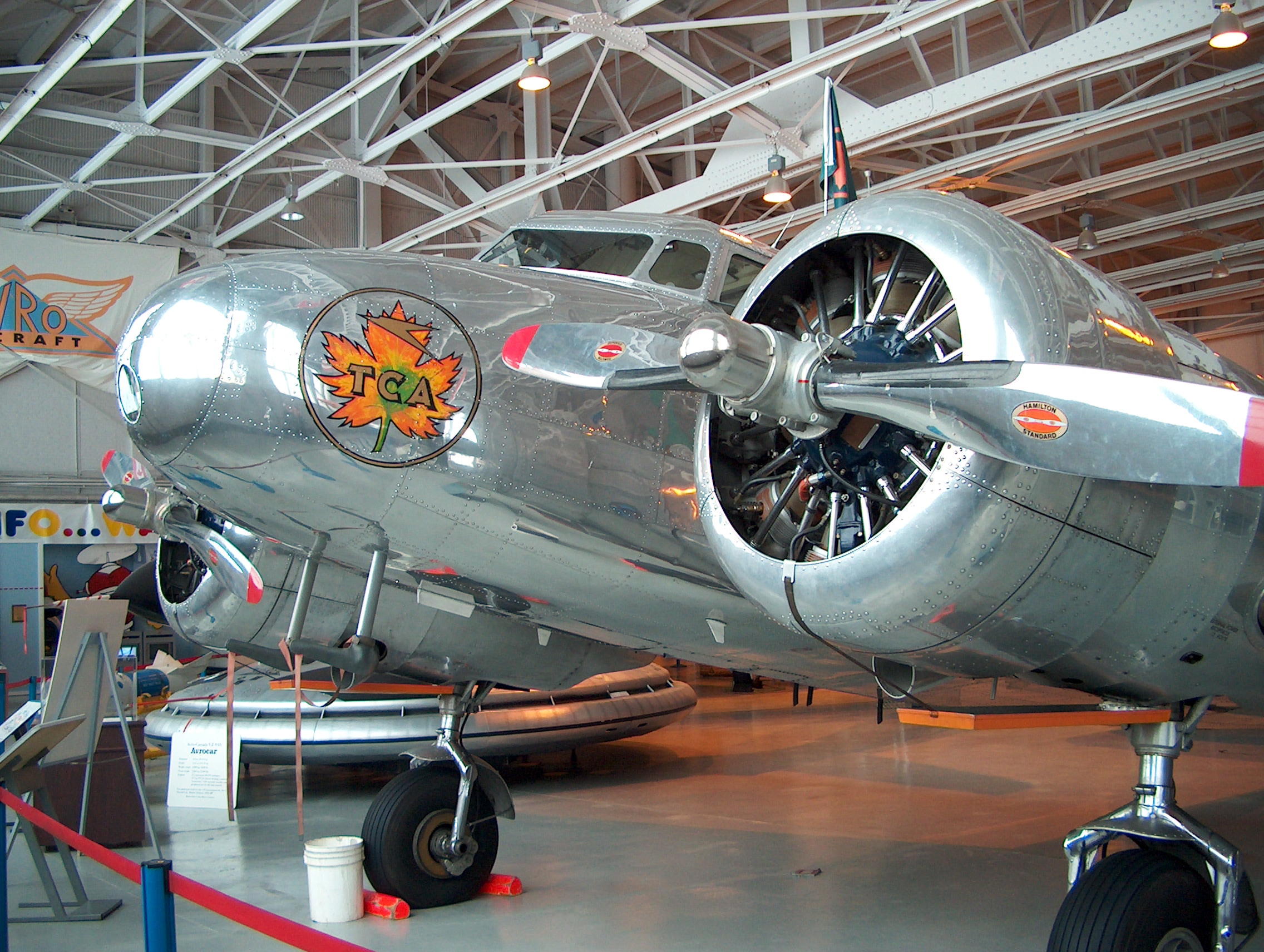
The museum's collection of over 90 historic aircraft spans the full arc of Canadian aviation. A replica of the Avrocar -- the Cold War-era flying saucer developed by Avro Canada -- represents the wilder ambitions of aerospace engineering. The Canadair CL-84, a tilt-wing aircraft that could take off vertically, is one of only a handful ever built. Bush planes dominate one section: the de Havilland DHC-2 Beaver, the Fairchild 71C, the Noorduyn Norseman, and the Stinson Reliant all served as lifelines to remote communities across the Canadian North. A Lockheed Model 10A Electra sits in Trans-Canada Air Lines livery, representing the birth of commercial aviation in Canada. The military presence includes a McDonnell CF-101 Voodoo interceptor and a Canadair CT-114 Tutor, the trainer that produced generations of Canadian pilots. Even the homegrown experiments are here: the Froebe helicopter and Froebe ornithopter, built by a Manitoba inventor who was determined to make humans fly by one method or another.
Earhart's Five Minutes
Among the museum's 70,000 artifacts, texts, and photographs, one item stands apart: a rare five-minute film of Amelia Earhart embarking on her solo transatlantic flight from Harbour Grace, Newfoundland, on May 21, 1932. Earhart became the first woman to fly solo across the Atlantic that day, landing in a pasture near Londonderry, Northern Ireland, after roughly 15 hours in the air. The footage captures a moment just before the crossing -- Earhart preparing, the aircraft waiting, the Atlantic stretching ahead. The museum's library, open to the public by appointment, also holds photographs, additional films, and audiotapes that document the broader story of aviation in Western Canada. These are not just relics; they are primary sources for the history of flight on the Canadian prairies and in the northern bush.
Ghosts and Volunteers
The museum's Restoration Department operates with the patience that damaged aircraft demand. Volunteers -- many of them retired aviation professionals -- have returned numerous aircraft to full display condition. One of their proudest achievements is a full-scale replica of a Canadian Vickers Vedette Mark V, completed in May 2002. The original Vedettes were flying boats used extensively for aerial survey work across Canada in the 1920s and 1930s, mapping a vast country from the air. The replica, bearing the registration CF-MAG, represents an era when aviation was as much about cartography as transportation. Then there is the Ghost of Charron Lake, the Fokker Standard Universal that took more than 30 years to locate and recover. The museum displays it in its lake-bottom state -- no restoration, no fresh paint, just the honest patina of decades underwater. It is a reminder that aviation history is not only about gleaming machines in flight but also about the aircraft that went down, the crews that were lost, and the landscapes that eventually gave them back.
From the Air
Located at 49.901°N, 97.225°W directly adjacent to Winnipeg James Armstrong Richardson International Airport (CYWG). The museum building is visible on the airport's east side, near the passenger terminal complex. CYWG has two runways: 13/31 (8,700 ft) and 18/36 (11,000 ft). The museum's mezzanine offers views of active runway operations. Approaching from the south or east, the airport complex is unmistakable on Winnipeg's western fringe. Downtown Winnipeg and the Portage and Main intersection are approximately 7 km to the east-southeast. Best viewed from standard CYWG approach altitudes of 2,000-4,000 feet, where both the museum and the surrounding airport infrastructure are clearly visible.