Rimba: Where Brunei's Sky Begins
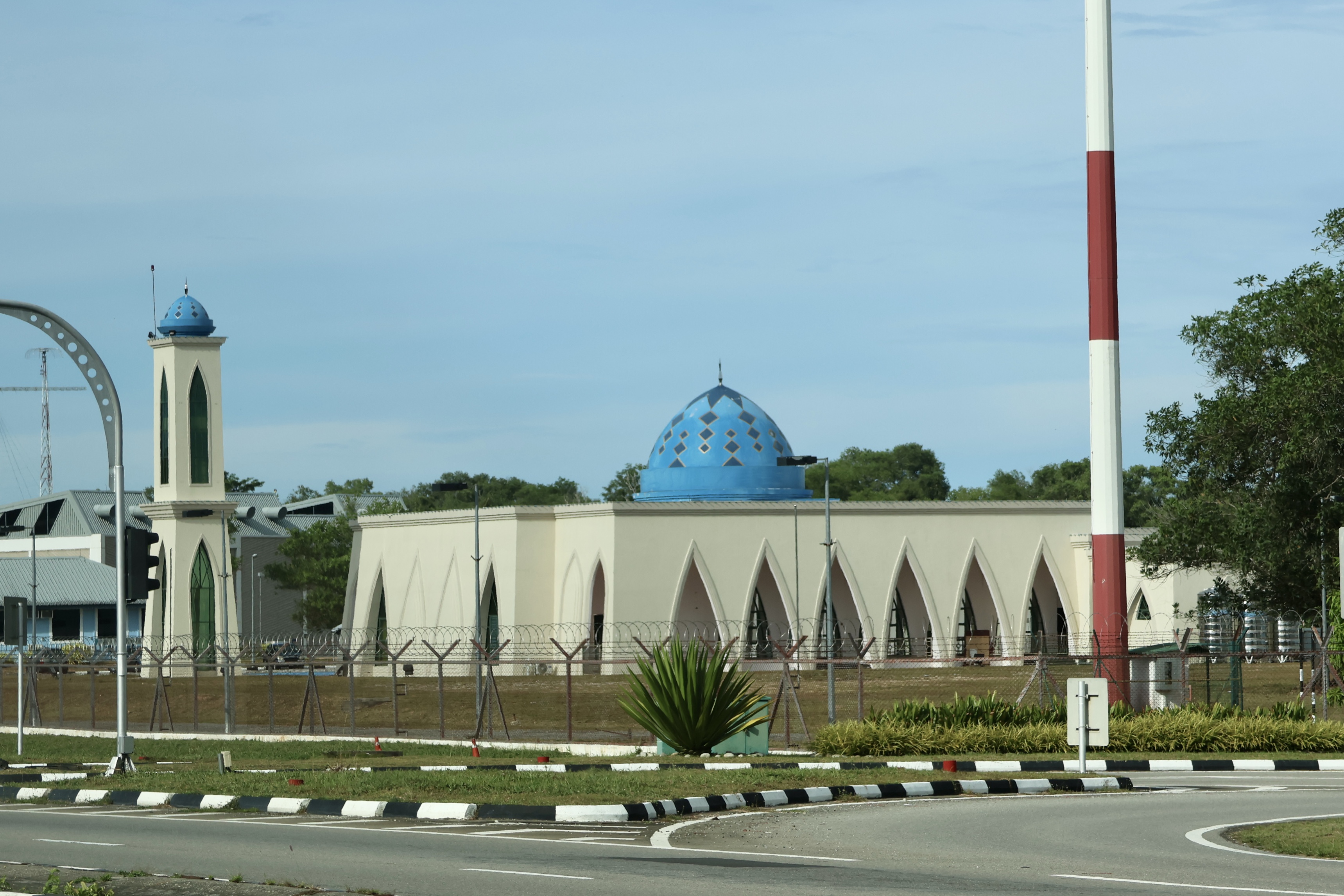
It started with doctors, not dogfights. In 1965, the government of Brunei Darussalam contracted two Sikorsky S-55 helicopters from the Worldwide Helicopter Company for a single, unglamorous purpose: getting physicians to villages that roads could not reach. Borneo's interior -- tangled, steep, and cut through by rivers that flood without warning -- had kept entire communities beyond the reach of modern medicine. The solution was vertical. A year later, three British pilots from the Royal Air Force took over the mission with Westland Whirlwind helicopters, and what had been a medical airlift quietly became a military aviation unit. That humble helicopter platoon, formed in 1966, was the seed from which the Royal Brunei Air Force would grow. Today, its operational center is Rimba Air Force Base, sharing its 3,685-meter runway with Brunei International Airport on the outskirts of the capital, Bandar Seri Begawan.
From Garrison Pads to a Proper Base
Before Rimba existed, Brunei's military aviators flew out of Berakas Garrison. In 1970, a pair of Bell 205 helicopters formed No. 1 Squadron there, and over the next decade, the Air Wing grew in small increments -- six German Bolkow BO-105 helicopters for No. 2 Squadron in 1981, a pair of Italian SIAI-Marchetti SF.260W trainers for No. 3 Squadron in 1982. Each addition moved the Air Wing a step further from its origins as a medical taxi service. The shift to Rimba gave the force a proper home, one with hangars, apron space for visiting aircraft, and a shared runway long enough to accommodate wide-body jets. The base became not just a military facility but a diplomatic stage, a place where Brunei could receive the air forces of the world on its own terms.
An International Tarmac
For a nation of fewer than half a million people, Rimba has hosted a remarkable parade of foreign military aircraft. In 2016, four Royal Air Force Eurofighter Typhoon FGR4 fighters, supported by a Voyager tanker-transport, stopped at the base -- British jets on Bruneian soil, a reminder of the old colonial ties that first brought RAF pilots to these skies. The same year, eight Republic of Korea Air Force T-50B trainers from the Black Eagles aerobatic team made a refueling stop. A year later, a Japan Air Self-Defense Force KC-767J tanker arrived on a goodwill visit, followed by an RAF A400M Atlas from No. 70 Squadron. American aircraft are regular visitors too: during the 2019 CARAT exercise with the United States, a Boeing P-8A Poseidon from Patrol Squadron 10 sat on the Rimba apron. The base functions as a kind of crossroads, where the defense relationships of a small but strategically located sultanate are made visible in aluminum and jet fuel.
The Crash at Ulu Rampayoh
Not all of Rimba's history is ceremonial. On the morning of July 20, 2012, a Bell 212 helicopter departed the base at 08:55 carrying fourteen military personnel -- three crew, two trainers, one staff member, and eight officer cadets. The helicopter never returned. It was found crashed in the jungle near Ulu Rampayoh, in the Labi area. Twelve of the fourteen aboard were killed. The Supreme Board of Inquiry of the Royal Brunei Armed Forces concluded that the cause was human error: unauthorized low-level flying that led to controlled flight into terrain, at approximately 10:15 that morning. The crash remains the deadliest peacetime incident in the Royal Brunei Air Force's history, a sharp reminder of the risks inherent in military aviation even far from any battlefield.
Blackhawks and Bolkow Farewells
Rimba has also been the stage for the Air Force's evolution in hardware. At the 2013 BRIDEX defence exhibition, Sultan Hassanal Bolkiah personally unveiled the force's newest acquisition: Polish-manufactured Sikorsky S-70i Blackhawk helicopters, a significant step up in capability for a service that had long relied on lighter rotorcraft. In contrast, the base hosted a quieter ceremony on February 5, 2022, when the Bolkow BO-105 fleet was officially decommissioned. Those six German helicopters had served since 1981 -- over four decades of flying in the tropical heat of Borneo. Their retirement marked the end of an era that stretched back to the Air Wing's early growth, when the entire military aviation establishment could be counted on two hands.
A Runway Shared, A Mission Unique
What makes Rimba distinctive is its dual identity. Commercial flights land and take off on the same 3,685-meter strip that serves the Air Force, the civilian terminal of Brunei International Airport sitting across the tarmac from military hangars. In May 2020, when China sent an Ilyushin IL-76 loaded with COVID-19 medical supplies, the cargo was processed through the Air Movements Centre at Rimba -- a military logistics facility handling a humanitarian delivery on behalf of the nation. That duality echoes the base's origins. Rimba began because someone needed to fly a doctor to a village with no road. Sixty years later, it remains a place where the practical and the strategic share the same runway, where military jets taxi past passenger terminals, and where a tiny country's air force punches well above its weight.
From the Air
Located at 4.948°N, 114.922°E, Rimba Air Force Base shares runway 03/21 (3,685 meters) with Brunei International Airport (ICAO: WBSB). The base occupies the southern portion of the airfield complex, with military hangars and the Air Movements Centre visible south of the commercial terminal. From 2,000 feet, the shared runway is clearly identifiable cutting through dense tropical vegetation in the Brunei-Muara District. The South China Sea coast lies approximately 8 km to the north. Nearby landmarks include the Sultan Omar Ali Saifuddien Mosque in central Bandar Seri Begawan, 6 km to the northeast.