Royal Dramatic Theatre
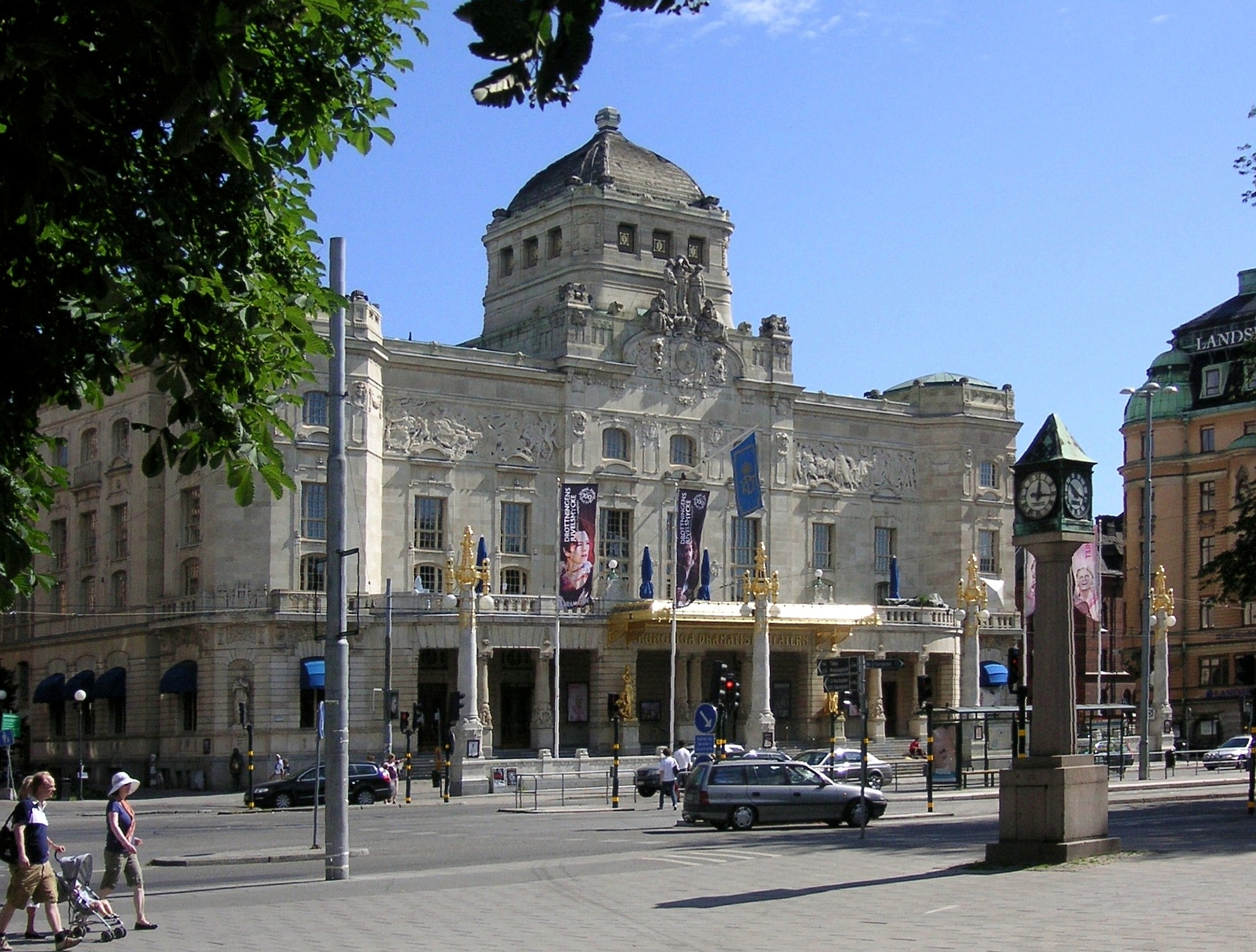
Greta Garbo was seventeen years old when she walked through the doors of Dramaten's acting school in 1922, a department store clerk with no formal training and a face that would become the most photographed in the world. She was following a path worn by generations of Swedish theatrical legends, entering an institution that had been shaping performers since 1788, when King Gustav III carved spoken drama away from opera and declared it deserving of its own royal stage. Today, the Art Nouveau masterpiece at Nybroplan stands as a monument to that vision, its white marble facade gleaming against the dark waters of Stockholm's harbor.
A King's Obsession with Drama
Gustav III was not merely a patron of the arts; he was obsessed with theater to the point of writing plays himself. When he established the Royal Dramatic Theatre in 1788, he did something unprecedented: he placed it under the actors' own governance, with decisions made by vote every fourteen days under the Royal Swedish Academy of Arts. The experiment in theatrical democracy proved chaotic. Historical accounts describe male actors arguing endlessly, actresses voting against each other out of spite, and some members counting their buttons to let fate decide. By 1803, the performers themselves begged for a traditional director. The theatre had already survived multiple homes by then, moving from the cramped Bollhuset to the Palace of Makalos, commonly called the Arsenal Theatre, where it remained until fire consumed the building mid-performance in 1825.
Marble, Masters, and Milles
The current building at Nybroplan opened on February 18, 1908, with a production of August Strindberg's Mäster Olof. Architect Fredrik Lilljekvist designed the structure as a Jugendstil jewel box, commissioning Sweden's finest artists to create its decorations. Sculptor Carl Milles contributed bronzes that still grace the exterior, while painter Carl Larsson's work adorns the interior. Prince Eugen, the artistic member of the royal family known as the 'painter prince,' personally executed some of the decorations. The main stage, Stora scenen, seats 720 in gilded splendor, but Dramaten has expanded to include five performance spaces, from the intimate 60-seat Tornrummet to Elverket, a former power station converted into an experimental stage in 1997 and now shared with the modern dance company Dansens hus.
Factory of Stars
The Royal Dramatic Training Academy operated within Dramaten until 1967, producing an astonishing concentration of international film talent. Beyond Garbo, the school graduated Ingrid Bergman, Max von Sydow, Bibi Andersson, and Gunnar Björnstrand. Director Ingmar Bergman served as Dramaten's managing director from 1963 to 1966, but his influence extended far beyond administration. Alongside brothers Olof and Gustaf Molander and director Alf Sjöberg, Bergman helped forge what critics would recognize as a distinctly Swedish theatrical style, one that combined psychological intensity with visual precision. The stage became a laboratory where Bergman developed themes and techniques he would later bring to cinema, creating works that earned Sweden an outsized influence on twentieth-century performing arts.
Survival Through Centuries
Dramaten has survived fire, strikes, competition, and shifting cultural fashions across 236 years. In 1834, actors went on strike against a new salary system, but unlike a successful action six years earlier, the government broke the strike by firing dissidents with pensions. The dismissed performers scattered across Stockholm, founding rival companies that eventually broke the royal monopoly on theater. By the 1850s, heavy competition from private theaters, particularly Albert Ranft's Swedish Theatre, forced Dramaten to modernize. The pioneering plays of Ibsen and Chekhov received their Swedish premieres here, as did Strindberg's groundbreaking late works like Till Damaskus. The institution weathered each challenge, transitioning from court financing to state support in 1881, always adapting while maintaining its core mission as Sweden's national stage for spoken drama.
A Thousand Shows a Year
Modern Dramaten presents roughly one thousand performances annually across its five stages, a staggering output for any theater. The repertoire spans from classical Swedish drama to contemporary international works, with productions often transferring to international festivals. The institution remains Sweden's largest employer of actors and theater professionals, continuing its founding purpose of developing Swedish theatrical talent. For visitors approaching from the harbor, the white marble building catches the northern light against the water, as striking now as it was when it opened over a century ago. The gilded interiors, the bronzes of Carl Milles, the ghost of Garbo in the corridors, all remain, part of a living tradition that connects Stockholm's present to Gustav III's eighteenth-century dream of a stage worthy of Sweden's soul.
From the Air
Located at 59.33°N, 18.08°E on Stockholm's waterfront at Nybroplan. The distinctive white marble Art Nouveau building is visible from the harbor approach. Nearest major airport: Stockholm Arlanda (ESSA), approximately 40km north. Stockholm Bromma (ESSB) offers closer general aviation access. Best viewed at low altitude approaching from the east over the Baltic, where the building's facade catches morning light against the water.