Royal Military College Saint-Jean
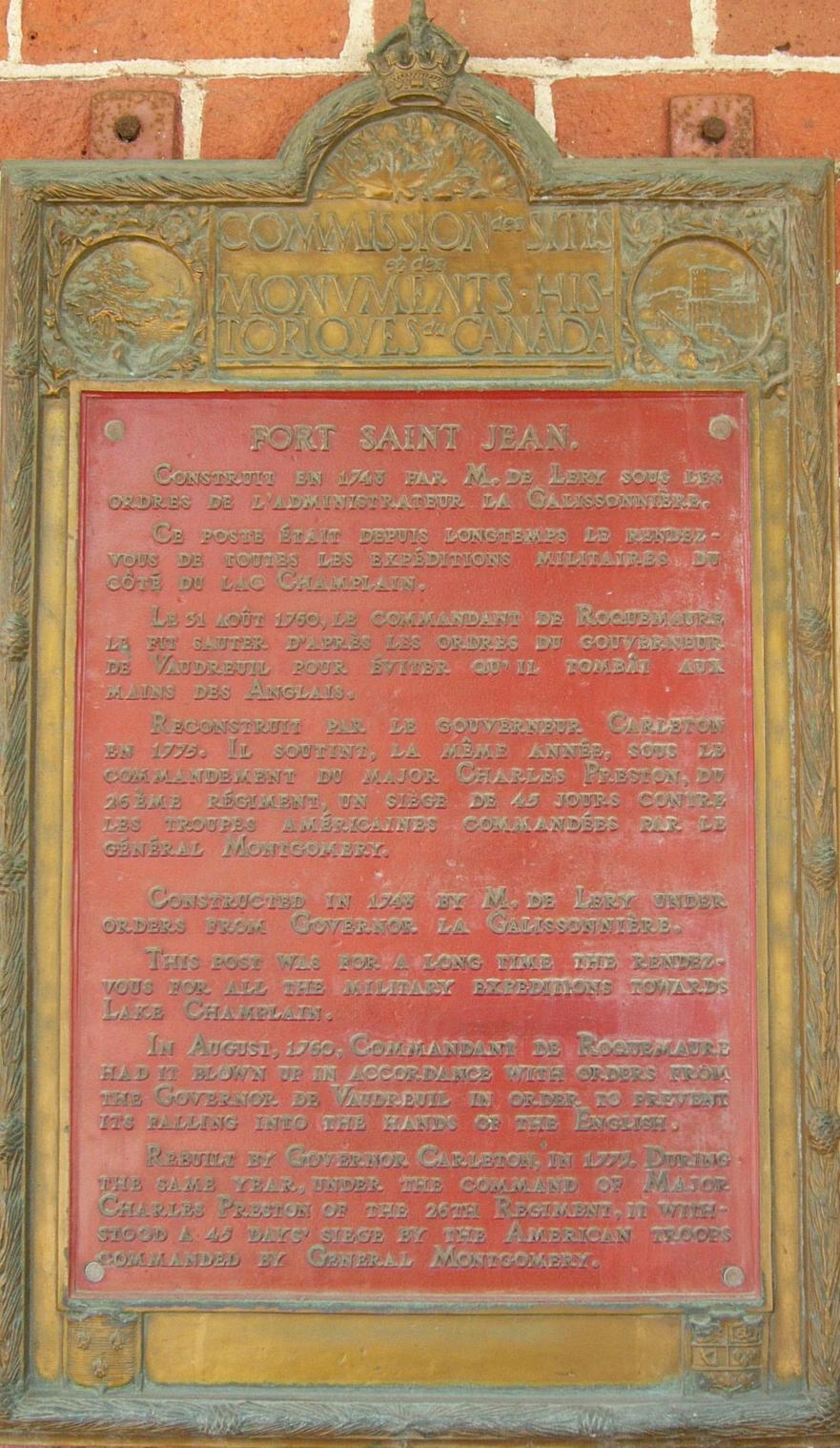
The site has been occupied by soldiers since 1666. That single fact anchors everything about the Royal Military College Saint-Jean: this is not a campus that happens to sit on historic ground -- it is a military institution that grew directly out of 350 years of garrison life on the banks of the Richelieu River. Located in Saint-Jean-sur-Richelieu, Quebec, just 40 kilometers south of Montreal, RMC Saint-Jean occupies the grounds of Fort Saint-Jean, where French colonists, British regulars, American invaders, and Canadian cadets have all stood watch over the strategic corridor between Lake Champlain and the St. Lawrence.
From Garrison to Campus
Fort Saint-Jean was established in 1666, making it one of the oldest military sites in Canada. For nearly three centuries, different forces occupied the site -- French garrisons, British regiments, a naval shipyard during the War of 1812, and Canadian units through both World Wars. The transformation from active military post to educational institution came in 1952, when the college opened as the francophone counterpart to the Royal Military College of Canada in Kingston, Ontario. The original three cadet squadrons were named Cartier, Maisonneuve, and Champlain after historical figures of New France -- a deliberate connection to the site's deep roots. Today the squadrons bear the names of local communities that themselves honor those same colonial-era figures, including a fourth squadron called Jolliet, added in 2017.
Closed, Reopened, and Reborn
In 1995, the federal government slated the college for closure in a round of military budget cuts. The announcement provoked enough political resistance that by July 1994, federal and provincial governments had already negotiated a compromise: the college would remain open but lose its degree-granting status. For over a decade, RMC Saint-Jean existed in a kind of institutional limbo -- training cadets, but unable to grant them diplomas. The federal government formally reopened the college in 2007, and on May 24, 2008, Governor General Michaelle Jean inaugurated the restored institution, presenting its new coat of arms to Commandant Colonel Francois Pion. The recovery culminated in 2021, when RMC Saint-Jean was granted independent university status and began offering a bachelor's degree in International Studies -- the first degrees issued from the campus since before the closure.
The Four Pillars
Cadets at RMC Saint-Jean live by the college's four-pillar system -- academics, athletics, military training, and bilingualism. The Commandant's Cup pits the squadrons against one another in competitions across all four pillars, building the esprit de corps that military education depends on. Officer and naval cadets are issued the distinctive scarlet uniforms that mark them as part of the Canadian Military College system. The first-year program at Saint-Jean serves a practical purpose beyond tradition: by housing first-year cadets on the Quebec campus, it frees up beds at RMC Kingston, allowing more Regular Officer Training Program cadets to attend military college rather than being sent to civilian universities. The college's academic programs in Social Science and Science are closely integrated with Kingston's undergraduate offerings, creating a pipeline from Saint-Jean's first-year experience to the senior college's degree programs.
Heritage in Stone and Bronze
Six buildings on the RMC Saint-Jean campus are recognized as Federal Heritage Buildings by the Government of Canada, a testament to the architectural legacy of the fort and its successors. The campus museum, managed by the CMR Ex-Cadet Foundation, documents more than 325 years of military history at the site. Its collections include military memorabilia, artifacts, maps, and models spanning from the French colonial period through the modern Canadian Forces. Among the campus's most notable artworks is a bronze sculpture titled Truth Duty Valour, created by Canadian sculptor William McElcheran in 1976 -- the same artist known for his whimsical Businessman sculptures found in cities across Canada. The statue was presented to the college by the commandant, staff, and cadets of RMC Kingston during a sister college visit in May 1976, a gesture that captures the close bond between the two institutions.
A Legacy of Leaders
The college has produced a remarkable roster of alumni who have shaped Canada's military and public life. Senator Romeo Dallaire, the Canadian general who commanded the UN peacekeeping force during the Rwandan genocide, studied at RMC Saint-Jean. General Jennie Carignan, who became the first woman to command the Canadian Armed Forces, also walked these grounds. Author Roch Carrier, whose short story The Hockey Sweater became one of the most beloved works of Canadian literature and whose words were quoted on the Canadian five-dollar bill (2001-2013 series), taught at the college as a faculty member. The college's Hall of Fame, inaugurated on September 7, 2013, honors those who have studied at, served on the staff of, or had notable involvement with RMC Saint-Jean since its founding in 1952. It stands as proof that a small college on the banks of a Quebec river has punched well above its weight in shaping the nation.
From the Air
Located at 45.30N, 73.25W in Saint-Jean-sur-Richelieu, Quebec, on the west bank of the Richelieu River approximately 40 km south of Montreal. The campus and historic fort grounds are visible along the riverbank. Nearby airports include Montreal-Saint-Hubert (CYHU) approximately 15 km northwest and Saint-Jean Airport (CSJ4) nearby. Best viewed at 2,000-3,000 feet AGL to see the campus layout along the river. The Richelieu River is an excellent visual reference for navigation in this area.