Royal Museum for Central Africa
In 1897, King Leopold II of the Belgians put on a World's Fair to advertise his private colony. The Congo Free State was not yet a Belgian colony - it was Leopold's personal property, recognised as such by the European powers at the Berlin Conference of 1884-85, and it had become the site of one of the most lethal extractive regimes in modern history. To convince the public that Congolese forced labour for rubber and ivory was actually a civilising mission, the king built a colonial pavilion in the Brussels suburb of Tervuren and filled it with goods, dioramas, and people. Two hundred and sixty-seven Congolese men, women, and children were brought to Belgium and made to live in a constructed "Congolese village" while crowds watched. Seven of them died during their forced stay. The exhibition's success led to a permanent museum, opened in 1910 and called the Museum of the Belgian Congo, designed by the French architect Charles Girault in the style of the Petit Palais in Paris. The building that now calls itself the AfricaMuseum was built to sell a lie. Its current staff are still trying to figure out how to live inside it.
Leopold's Private Country
Between 1885 and 1908, the Congo Free State - an area roughly the size of Western Europe - was the personal possession of one man. King Leopold II of the Belgians had argued at the Berlin Conference that someone needed to bring "civilisation" to central Africa. The other European powers, distrustful of any of their rivals owning that much territory outright, agreed to let Leopold hold it as a humanitarian enterprise in his individual capacity. What followed was, by the most careful modern estimates, the deaths of millions of Congolese people through forced labour on rubber plantations, mutilations meted out as punishment for missed quotas, famine, and disease. The historian Adam Hochschild's 1998 book King Leopold's Ghost helped bring this history back into public consciousness in the late twentieth century. By 1908, international outcry forced Leopold to hand the territory over to the Belgian state, which renamed it the Belgian Congo and continued its own colonial administration until Congolese independence in 1960. Leopold himself died in 1909. The museum he commissioned opened a year later, under his successor, King Albert I.
The 1897 Human Zoo
The phrase "human zoo" is the one the museum itself now uses. In 1897, hundreds of Congolese people were transported to Tervuren and installed in a constructed village built specifically for the World's Fair, where Belgian visitors paid to walk past them and look. The Congolese had no meaningful choice about being there. They were on display. Many of them were poorly clothed for the Belgian climate. Seven died in Belgium, and others fell seriously ill. They had names and families and entire lives that the historical record largely failed to preserve, because the framework that brought them to Europe did not treat them as people whose names mattered. This is the founding moment the museum has had to come to terms with: not just that it celebrates colonial extraction, but that its very existence began with an act of dehumanisation. Several of the colonial statues that lined the museum's interior - heroically posed Belgian colonial figures, condescending allegories of African peoples - were removed from public display in 2023 and moved to spaces visible only on guided tours, where they can be discussed in context rather than admired.
Girault's Palace
Charles Girault, the French architect of the Petit Palais in Paris, was commissioned to design Tervuren's permanent museum building. It opened officially in 1910 in a neoclassical style suited to the imperial ambitions it served - colonnaded facades, a great rotunda, formal gardens stretching into the Tervuren Forest, which is itself a piece of the much larger Sonian Forest. The interior was filled with ethnographic objects, taxidermied animals, mineral specimens, and the Leopard Man statue depicting a member of the Anioto society, displayed in a manner that emphasised the supposed savagery of African cultures rather than examining the colonial violence that brought it to Belgium. In 1934, the museum's herbarium was transferred out to what is now the Meise Botanic Garden. The adjective "Royal" was added in 1952. Independence came in 1960 and the museum was renamed once more, this time to the Royal Museum for Central Africa - an attempt to broaden the geographic scope and to soften the explicit reference to the colonial relationship that had made the institution possible.
Closed for Reckoning
By the early 2000s, even the museum's own staff agreed that the permanent exhibition had not aged well. It had, as one critic put it, "remained frozen in time" - a colonial-era presentation that no longer matched what historians, anthropologists, and the broader public knew about what Belgium had done in the Congo. A 2005 exhibition called The Memory of Congo tried to tell the story of the Congo Free State more honestly, and was praised internationally; Le Monde wrote that the museum had "pushed the public to join it in looking into the reality of colonialism." In November 2013, the entire museum closed for a complete renovation and rethinking. It reopened on 9 December 2018 under the new public-facing name AfricaMuseum. The renovated Great Rotunda now features a contemporary work by the Congolese-born artist Aime Mpane called New Breath, or the Burgeoning Congo - a counterweight to the imperial statuary the room used to celebrate. Whether the renovation went far enough has been a continuing debate, including from Hochschild himself, who gave the result a mixed review.
What Remains
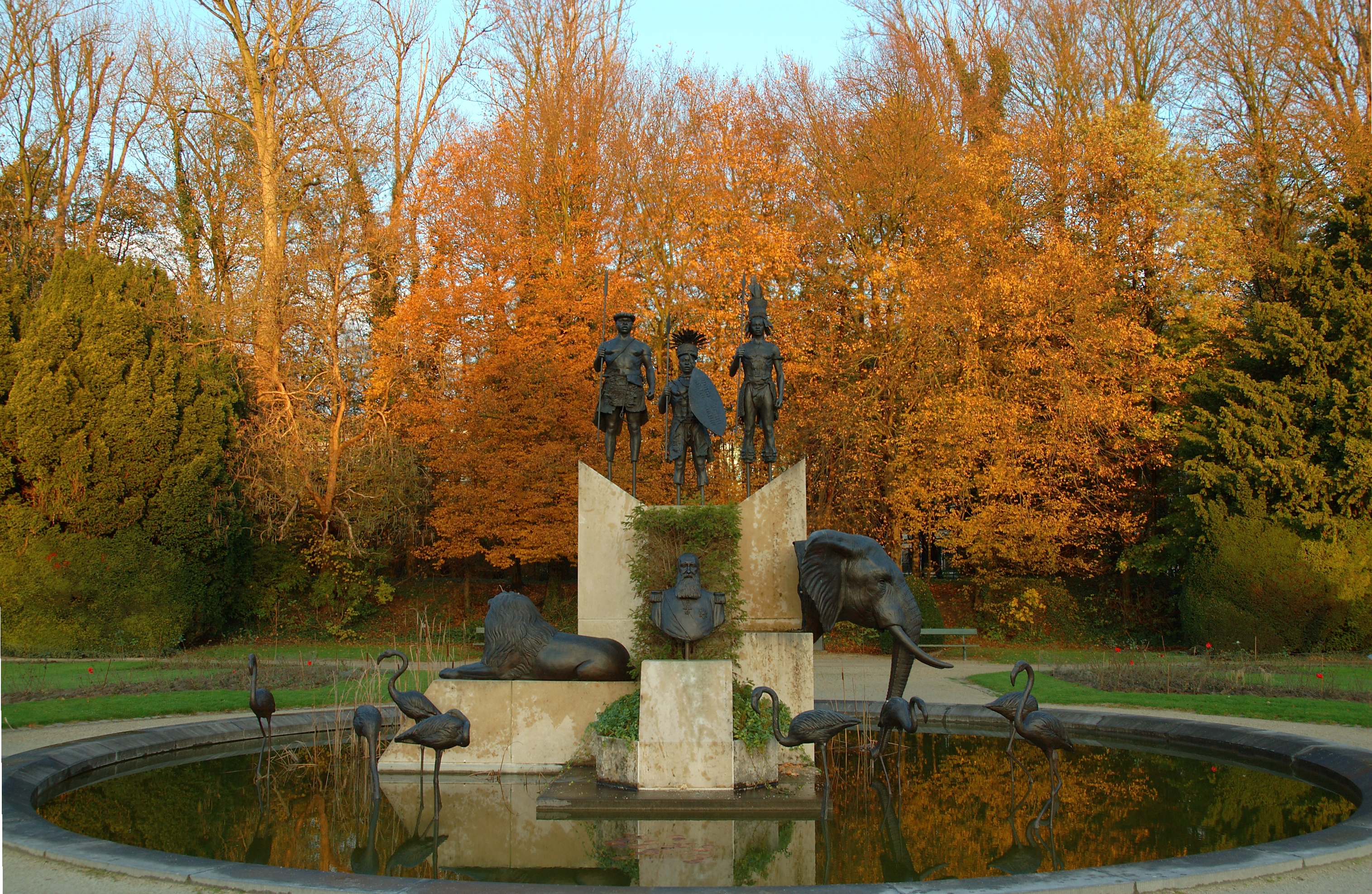
The museum holds approximately 120,000 ethnographic objects, of which roughly 700 are on display following the 2018 renovation - a deliberate reduction from the 1,400 previously shown, with each object now given more context and space. The provenance question - which objects were taken with consent, which were taken under duress, which were straightforwardly looted - is in many cases still being researched, and the institution has begun the slow work of restitution. The 2018 reopening also addressed the ongoing matter of human remains: the museum has held bones from the Congo that it should not be holding, and conversations between Belgium and the Democratic Republic of the Congo about their repatriation continue. Beyond the public exhibitions, the museum's scientific departments - zoology, geology, anthropology, history - hold collections that constitute a major research resource for Central African studies, including 6 million insect specimens, 56,000 wood samples, 8,000 musical instruments, and 2,500 hours of recordings of traditional music, the oldest of them captured on wax Edison cylinders in 1910. In the garden stands a 1997 sculpture by Tom Frantzen called The Congo, I Presume? - a half-ironic, half-reverent reference to Henry Morton Stanley's famous line. The museum is doing the work of becoming a different kind of institution. Whether that work can ever be finished is one of the questions it now leaves open for its visitors.
From the Air
Located at 50.831°N, 4.518°E in Tervuren, Flemish Brabant, about 12 km east of central Brussels. The museum is the centrepiece of an extensive formal park: Girault's neoclassical main building - a long pale colonnaded structure with a central rotunda - is set in landscaped grounds with reflecting pools that run east-west away from the building. The Tervuren Forest, a section of the larger Sonian Forest, wraps around the southern and eastern edges of the museum park. Nearest airport: Brussels Airport (EBBR), about 7 km north. From the air, the museum is most easily picked out by its formal water gardens and its position at the eastern edge of the dense Tervuren forest canopy.