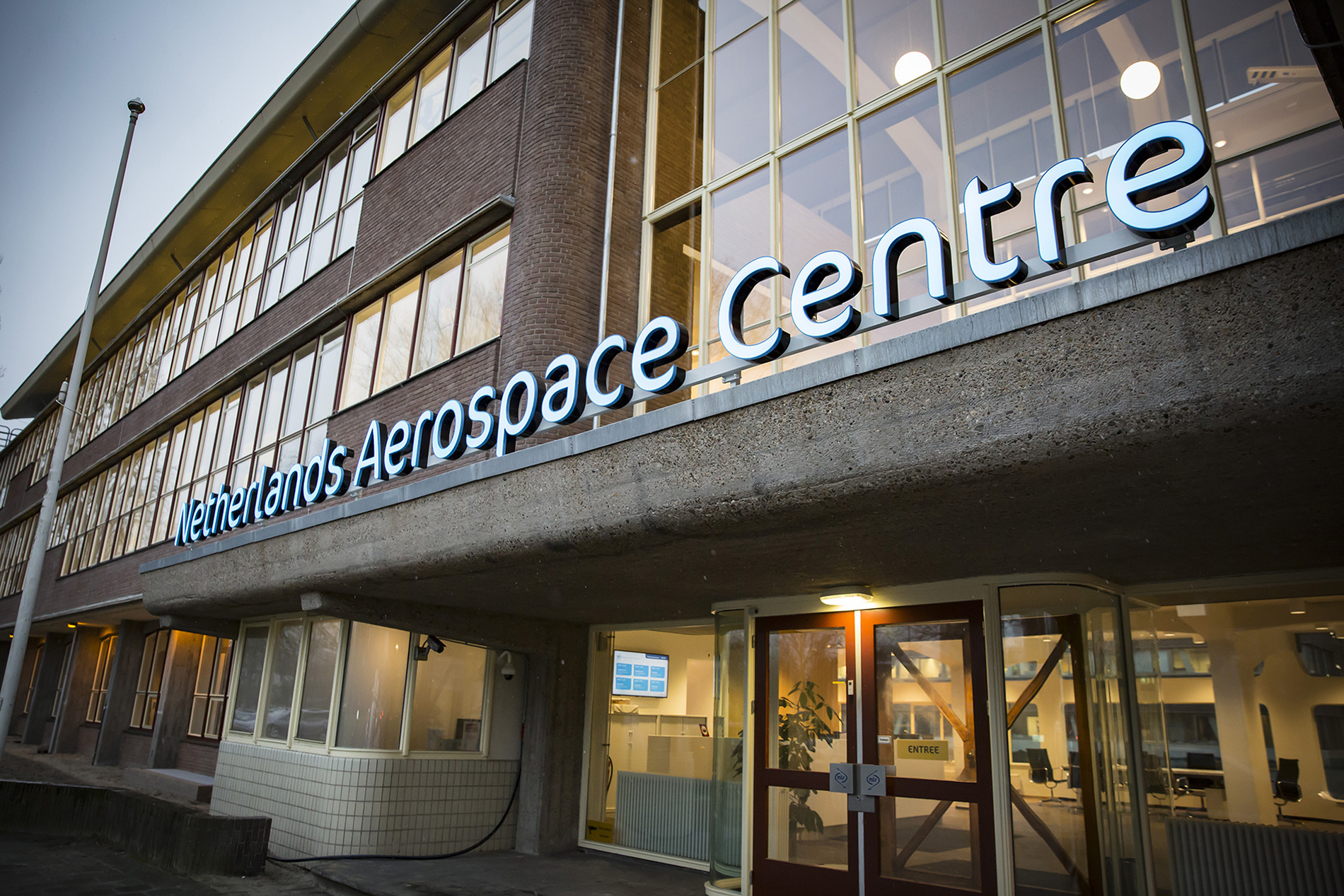
Royal Netherlands Aerospace Centre
On Saturday, 5 April 1919, less than five months after the guns went silent in France, a small group of Dutch engineers opened a laboratory in the Navy Yard in Amsterdam. The Netherlands had largely missed the first two decades of aviation history. The First World War, in which the country had remained neutral, had nevertheless made it impossible to ignore what powered flight was about to become. The Rijks-Studiedienst voor de Luchtvaart - the Government Service for Aeronautical Studies, RSL for short - opened its doors with a single Eiffel-type wind tunnel and a mandate to catch up. A century later, on the same date in 2019, the organization was granted the title "Royal" and became Royal NLR.
A Tunnel in a Navy Yard
Professor L.A. Van Royen, at the opening, urged the RSL to keep its doors open to the wider aeronautical world. The wind tunnel was the centerpiece: an Eiffel-type design that had given the engineers some trouble during construction but was ready by the time of the ribbon-cutting. For the next twenty years it would be the only working wind tunnel in the country apart from a few smaller facilities at TU Delft. Van Royen had wanted to set up a permanent laboratory in Delft, alongside the technical university. He lost that argument. Flight testing was already shaping the work of the RSL, and the engineers needed to be near Schiphol and the Fokker factory more than they needed to be near the academic department. The Navy Yard - meant to be temporary - became home until the lab moved to a new building on the Sloterweg in 1940.
Always Almost Closed
As early as 1922, the Minister of Public Works tried to shut the laboratory down. He thought the annual funding was extravagant. The argument did not end there - it continued through the next several decades, with the NLL (as it was renamed in 1937) repeatedly defending its existence against politicians who could not quite see what it was for. The Second World War made things worse: by the time Allied forces reached the Netherlands in September 1944, food and fuel had run out and the laboratory had effectively stopped functioning. It took months after the liberation on 5 May 1945 to get back to work, and even then, the political fight over funding dragged on until 1952. The institution kept its head down and built things anyway. Two closed-type wind tunnels - one large enough to simulate full powered aircraft flight - had been operating since 1940.
Building the Big Machines
International cooperation began with France in 1950, when the NLL started sharing facilities with ONERA, the French aeronautical research organization. A 1955 contract opened up to 50 percent of the High Speed Wind Tunnel's testing time to European aircraft manufacturers. In 1976 the two-nation DNW wind tunnel - a joint venture with Germany's DLR - became operational, and a low-speed facility in the Noordoostpolder followed. In 1988 the four-nation European Transonic Wind Tunnel opened, bringing in France, Germany, the United Kingdom and the Netherlands. In 1957 the NLL had quietly bought two square kilometers of land in the Noordoostpolder - the great polder reclaimed from the IJsselmeer in 1942 - and started moving operations there. The shift from Amsterdam to the polder has continued for the better part of seventy years.
A Cessna and a Simulator
The NLR shares a laboratory aircraft, a Cessna Citation II registered PH-LAB, with TU Delft. It is used for in-flight measurements, sensor testing, and validation of new avionics. The institution operates several full-scale and component-scale aerospace test rigs, including specialized facilities for composites manufacturing. NARSIM - the NLR ATC Research Simulator - exists in two forms: NARSIM-Radar for en-route air traffic control research, and NARSIM-Tower with a 360-degree visual system for airport tower controller research. The simulator is used to test ideas about how future air traffic management might work, and to train controllers in scenarios that would be impossible to recreate in real airspace. The supercomputer at the heart of the network handles the heavy aerodynamic and structural calculations the engineers cannot do on workstations.
Two Sites, Eight Hundred People
More than 800 people work at the NLR today, split between Amsterdam and a site in Marknesse about a hundred kilometers to the northeast. Two-thirds of them hold university or technical-college degrees. They are aerospace engineers, but also mathematicians, physicists, and psychologists - because flying is not only an engineering problem. The centre operates as an independent non-profit, with about three-quarters of its work coming from contracts and a quarter funded by the Dutch government for basic research. On 5 April 2019, on its hundredth birthday, the organization received the honorary "Royal" prefix from King Willem-Alexander. The wind tunnel that opened in 1919 is long gone. The argument about whether the country needs an aerospace research lab seems, finally, to have been settled.
From the Air
The main NLR Amsterdam site is at 52.34 N, 4.84 E, just south of Schiphol Airport - close enough that landings on Schiphol's 18R/36L Polderbaan runway pass within sight of the campus. The larger NLR test facility, including the LST wind tunnel, sits in the Noordoostpolder about 100 km northeast at roughly 52.71 N, 5.79 E. Nearest airport is Schiphol (EHAM) - the Amsterdam site is essentially on the airport's southern boundary. The Marknesse site is closest to Lelystad (EHLE), about 35 km southwest.