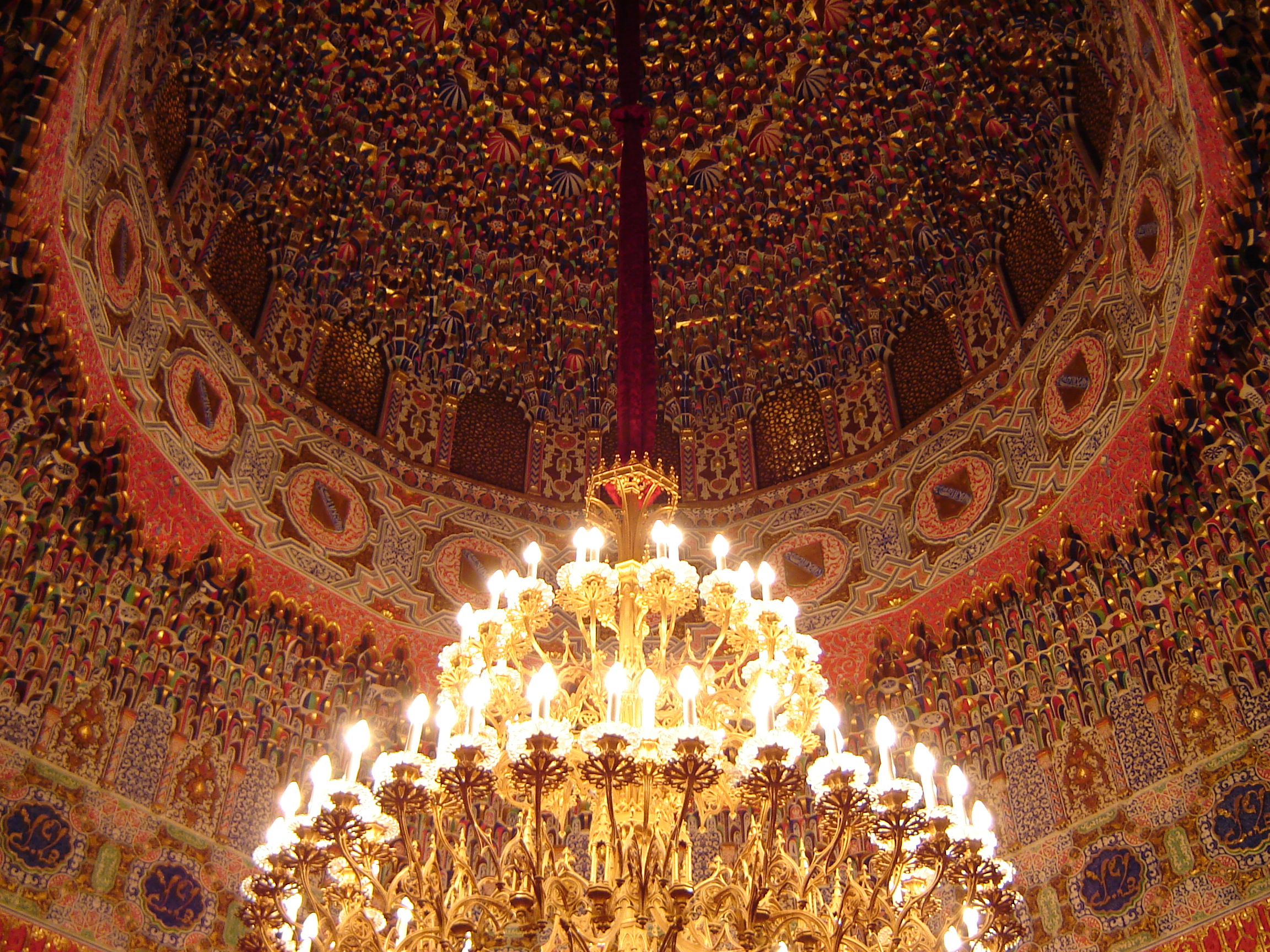
Royal Palace of Aranjuez
Six queens and consorts died within its walls. At least one revolution started in its courtyards. And for over four centuries, the Royal Palace of Aranjuez served as the place where the Spanish monarchy went to escape Madrid's heat -- and, sometimes, its politics. Situated where the Tagus and Jarama rivers converge south of the capital, Aranjuez began as a hunting lodge for the Order of Santiago in the 12th century and grew into one of the most lavish royal estates in Europe, its gardens a showcase of botanical ambition that drew specimens from the Americas, its interiors a catalog of decorative excess from the Baroque to the Rococo.
From Hunting Ground to Royal Stage
The site's transformation began in 1523, when Charles I seized the area from the Order of Santiago and designated it the Royal Woods and House of Aranjuez. His son Philip II built the palace proper, making it one of four seasonal seats of the court alongside Rascafria, El Escorial, and the Royal Alcazar of Madrid. In 1551, Charles established a botanical garden to catalog plant species arriving from the New World -- a project that was, characteristically for the overstretched Habsburg Empire, never entirely successful. The palace burned and was rebuilt, expanded and redesigned, each monarch leaving a layer of taste and ambition. Philip V brought French influence in the 18th century. Charles III added the Laborer's Cottage, a miniature palace within the grounds that became a retreat within a retreat. Ferdinand VI and Charles IV left their own marks on the interiors and gardens.
Gardens of Empire
Aranjuez's gardens are the heart of its UNESCO World Heritage designation, granted in 2001 as part of the Aranjuez Cultural Landscape. The Parterre Garden, directly in front of the palace, follows French formal design with geometric precision. The Island Garden, surrounded by the Tagus, offers shaded walks beneath centuries-old plane trees. The Prince's Garden, the largest, stretches along the river for over a kilometer and contains ornamental fountains, the Laborer's Cottage, and the Royal Barge Museum, which preserves the gilded boats once used for river excursions. These were not merely decorative spaces. They were statements of power, designed to demonstrate the monarchy's command over nature itself -- channeling rivers, importing exotic species, imposing geometric order on the Castilian landscape.
A Palace of Consequences
Aranjuez witnessed events that shaped Spain's political trajectory. International treaties were signed within its rooms. Elisabeth of Valois died here in 1568, as did Barbara of Portugal in 1758, Elisabeth Farnese in 1766, and three more royal consorts in the decades that followed. In 1808, the Mutiny of Aranjuez -- a popular uprising against the deeply unpopular minister Manuel Godoy -- forced Charles IV to abdicate in favor of his son Ferdinand VII, setting in motion the chain of events that led to Napoleon's intervention in Spain and the devastating Peninsular War. The palace was witness to history at its most intimate and its most violent, a place where dynastic ambitions and popular rage collided within the same carefully landscaped grounds.
From Crown to Commons
In 1931, during the Second Spanish Republic, the royal estate was declared an Artistic Historical Monument and opened to the public for the first time. From 1977 to 1983 it served as a state guest house, hosting visiting dignitaries in rooms that still bore the decoration of their royal occupants. Today the palace houses a museum on its ground floor, and its management falls to Patrimonio Nacional, the public agency that oversees Spain's crown properties. Visitors walk through rooms where Bourbon monarchs once held court, past porcelain rooms and silk-wallpapered chambers, and out into gardens where the sound of the Tagus still provides the background music that Philip II heard when he first chose this spot as a place to rest.
From the Air
Located at 40.037N, 3.611W at the confluence of the Tagus and Jarama rivers, approximately 48 km south of Madrid. The palace and its extensive formal gardens are clearly visible from the air as a large green estate contrasting with the surrounding agricultural land. Recommended viewing altitude 3,000-5,000 ft AGL. Nearest major airport: Madrid-Barajas (LEMD), approximately 50 km north-northeast. The distinctive river confluence and geometric garden patterns make Aranjuez easy to identify from altitude.