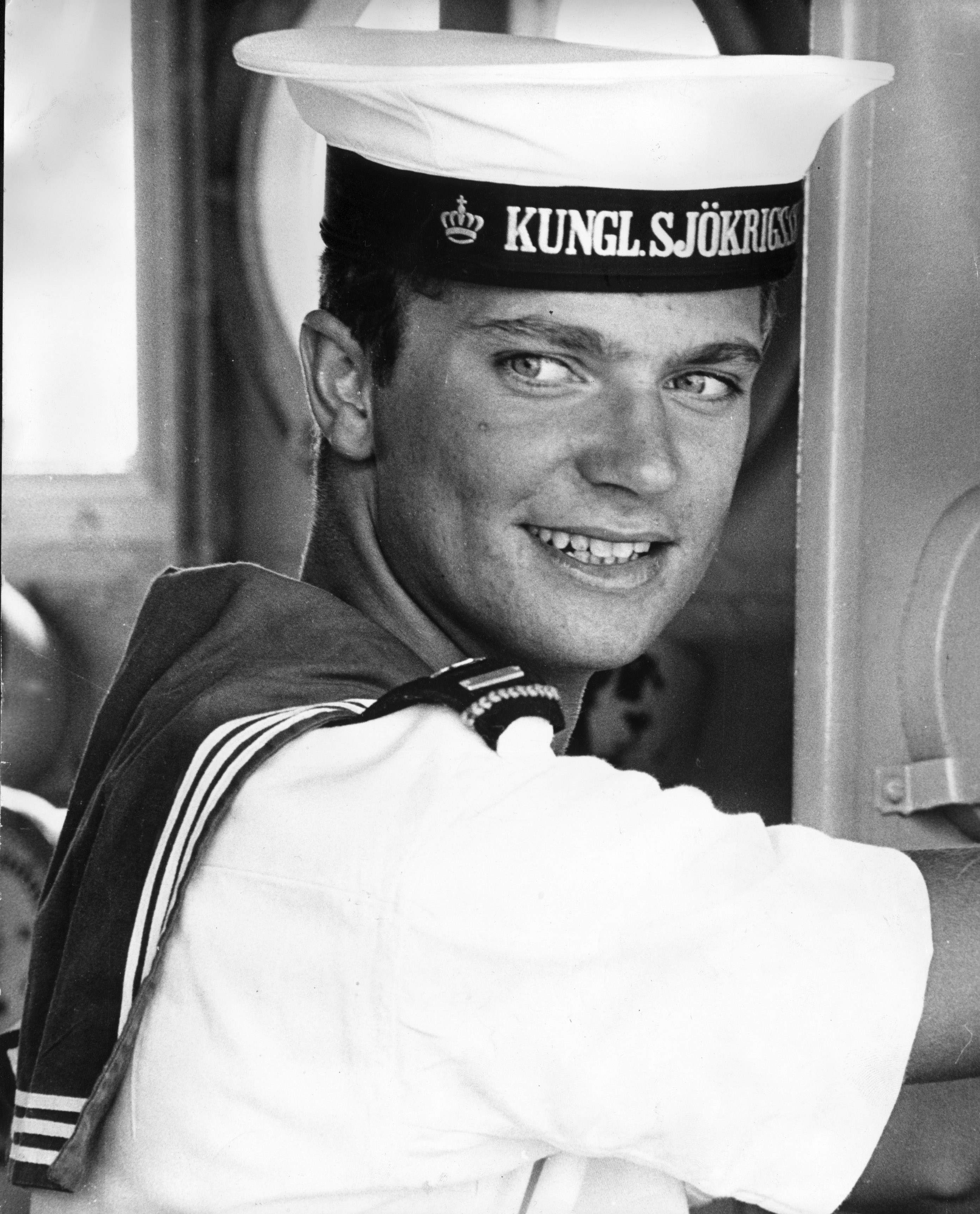
Royal Swedish Naval Academy
In 1761, the Swedish Navy faced an awkward problem: not all of its cadets possessed the mind and qualities to become naval officers. The solution was distinctly eighteenth-century. The sea cadet school at Karlskrona was converted into a reformatory, blending maritime discipline with moral correction. This peculiar episode captures something essential about the Royal Swedish Naval Academy, an institution that spent 231 years improvising solutions, surviving catastrophes, and wandering across Sweden's geography before finally closing its doors in 1987. Its buildings remain, repurposed for peacetime, while its coat of arms an azure shield with a golden anchor over crossed gunbarrels lives on at the Swedish Naval Warfare Centre.
From Tennis Court to Admiralty
Swedish naval education began informally in 1683, when a charter required prospective officers to pass an exam, though the only training available came from the Mate's and Artillery Schools in Karlskrona established by Admiral H. Wachtmeister. King Adolf Frederick personally funded a cadet corps in 1748, but it failed to produce adequate officers and ceased operations by 1756. That year, a proper sea cadet school finally emerged at the Admiralty in Karlskrona, named Cadette Corpsen vid Ammiralitetet i Carlskrona, with the explicit purpose of bringing viable subjects to the navy. The reformatory conversion five years later was a brief detour. More consequential was the conflagration of 1791, which destroyed the school entirely and forced naval education to merge with army training at Karlberg Palace in Stockholm.
The Wandering Academy
For the next 150 years, naval officer training ricocheted between institutions and cities. The Royal War Academy at Karlberg took over in 1792, but aspirants could also graduate through special assessment commissions in Karlskrona or advanced courses at the mate, skipper, and artillery schools. By 1862, when the War Academy became a general military application school, the organization had descended into such disorder regarding entry age, education, and training that officials declared it unsuitable for teaching serviceable naval professionals. The academy sought its own identity, finding temporary homes in Stockholm's eastern reaches. A Renaissance-style building designed by Axel Fredrik Nyström opened in 1879, its sumptuous three-story facade considered indecorous for a military setting on its island location, complete with a skylight turret intended as an observatory.
Castle by the Lake
The Naval Academy's final home arrived in 1943 when it took possession of Näsby Castle, a property near Stockholm that satisfied the institution's unusual requirements. The location placed teachers within reach of specially trained officers in the capital. More importantly, the grounds offered sufficient land and direct lake access, allowing cadet ships to anchor in Näsby Bay. For 44 years, from January 11, 1943, until closure in 1987, generations of Swedish naval officers trained within the castle grounds, which expanded with additional buildings during this period. Under regulations from March 26, 1943, the academy head reported directly to the Chief of the Navy, overseeing staff from both naval and coastal artillery branches alongside civilian instructors.
Traditions Cast in Bronze
The academy developed rich ceremonial traditions during its final decades. Its coat of arms, formally blazoned as azure with an anchor erect cabled surmounting two gunbarrels of older pattern in gold, served the institution from 1867 until 1987. The Swedish Navy Staff College then adopted the arms until 1998, and the Swedish Naval Warfare Centre has displayed them since 2005. Musical traditions evolved as well: in 1944, the Sjökrigsskolemarsch by Åkerman became the unit march, only to be replaced on February 10, 1976, by the Reginamarsch by Urbach. The academy shared this march with the 11th Helicopter Squadron and the East Coast Naval Base, weaving its identity into the broader fabric of Swedish naval culture.
Afterlives of Naval Architecture
The academy's various buildings have found new purposes in peacetime. The 1879 Renaissance-style structure that Vice City Architect Nyström designed for Skeppsholmen now houses Nordregio, an organization established by the Nordic Council of Ministers in 1997 to address regional development issues across northern Europe and the Baltic. The ornate facade that seemed excessive for nineteenth-century military education suits twenty-first-century Nordic cooperation. Näsby Castle continues its existence outside military hands. The academy's closure in 1987 ended a 231-year tradition of Swedish naval officer education that had survived every challenge except the post-Cold War reorganization of Swedish defense forces. The anchor and crossed gunbarrels remain, carried forward by institutions that inherited pieces of the academy's mission if not its name.
From the Air
Located at 59.32°N, 18.08°E in central Stockholm. The 1879 academy building on Skeppsholmen island is visible from harbor approaches, while Näsby Castle lies northeast of the city center near the lake. Nearest major airport: Stockholm Arlanda (ESSA), approximately 40km north. Stockholm Bromma (ESSB) offers closer general aviation access. Skeppsholmen island is easily identifiable from the air as a small island connected to the mainland by bridge, with several historic buildings including the former academy.