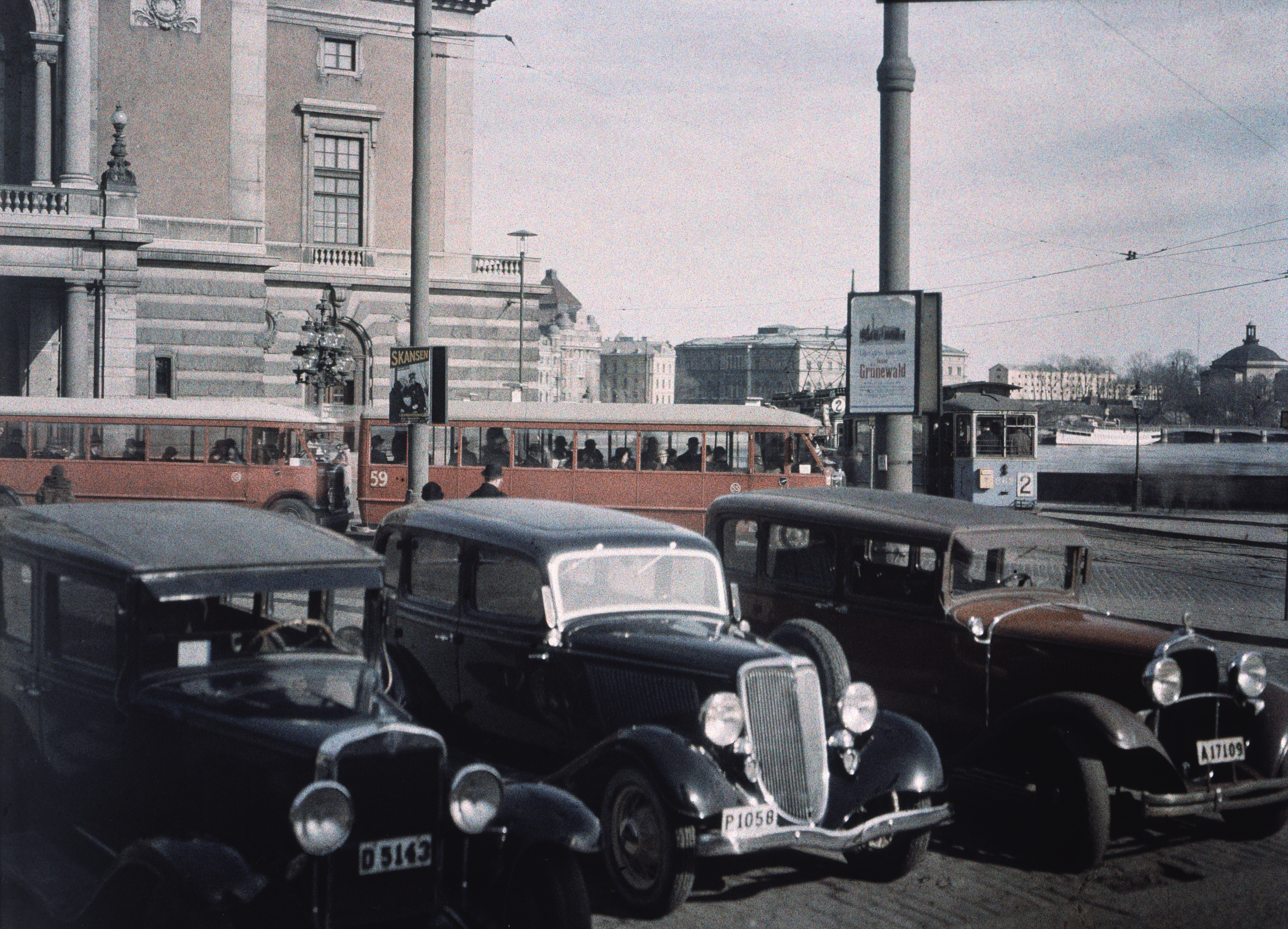
Royal Swedish Opera
On the night of March 16, 1792, King Gustav III adjusted his mask and stepped into the crowded foyer of his beloved opera house. He had built this temple of the arts himself, commissioning architect Carl Fredrik Adelcrantz to create something worthy of enlightened Stockholm. The Gustavian Opera, with its Corinthian columns and oval auditorium, had become the cultural heart of Sweden. That night, amid the swirl of anonymous masks and the strains of music, an assassin's pistol would end the king's life and transform this building into something immortal. The murder would later inspire two famous operas: Daniel Auber's 'Gustave III' and Giuseppe Verdi's 'Un ballo in maschera.' Today, standing on Gustav Adolfs torg, the successor building continues a tradition of artistic excellence that stretches back 250 years.
A King's Vision Made Stone
Gustav III believed that a truly civilized nation required its own opera sung in its own language. On January 18, 1773, he founded the Royal Swedish Opera alongside the Royal Swedish Academy of Music, and the company gave its first performance that same day - 'Thetis and Phelée' with Carl Stenborg and Elisabeth Olin, marking the first native-language opera ever performed in Sweden. For years the company performed in Bollhuset, a converted tennis hall, but Gustav dreamed bigger. Construction began in 1775 on a purpose-built opera house, and on September 30, 1782, the Gustavian Opera opened with Johann Gottlieb Naumann's 'Cora och Alonzo.' The building was magnificent: a four-tiered oval auditorium with excellent acoustics, neoclassical medallions adorning the foyer, and the royal crown topping its Corinthian portico. Gustav also introduced public masquerade balls here, inspired by the famous opera balls of Paris - cheap to attend, open to anyone wearing a mask, and somewhat scandalous in reputation.
Murder at the Masquerade
The scandal that would forever define the Gustavian Opera came ten years after its opening. On March 16, 1792, during one of those ill-reputed masquerade balls, Jacob Johan Anckarstrom shot King Gustav III in the opera's foyer. The king lingered for thirteen days before dying from his wounds. The assassination shocked Europe and cast a shadow over the building that never fully lifted. The opera closed immediately but reopened on November 1 that same year, a decision many found shocking. Gustav's son, King Gustav IV Adolf, despised the opera - perhaps because his father had been murdered there - and particularly resented that the scene of the assassination had become a place of entertainment. When a frivolous play was performed for his queen in 1806, he shut the building down entirely. It remained dark until 1809, and even after his deposition, the opera did not fully reopen until May 1812. The murder's cultural afterlife proved enduring: Auber's opera premiered in 1833, and Verdi's masterpiece followed in 1859.
The Oscarian Renaissance
By the late 19th century, the original opera house had served Stockholm for over a century, but its age was showing. In 1892, the Gustavian Opera was demolished to make way for a new building designed by Axel Johan Anderberg. Six years later, King Oscar II inaugurated the new house on September 19, 1898, with a production of Franz Berwald's 'Estrella de Soria,' honoring the Swedish opera tradition Gustav III had championed. The building that stands today is a majestic neo-classical structure with 'Operan' written in golden letters above its central arch. Inside, a magnificent gold foyer called Guldfoajen leads to an elegant marble staircase ascending to a three-tiered auditorium seating 1,200 - somewhat smaller than the original but no less grand. The Royal Box, reserved for King Carl XVI Gustaf's family, occupies pride of place in the first tier above the orchestra pit.
Five Centuries of Music
The Royal Swedish Orchestra, Kungliga Hovkapellet, predates even Gustav III's opera company by nearly 250 years. Royal accounts from 1526 mention twelve musicians - wind players and a timpanist - making it one of the oldest orchestras in Europe. This ensemble has accompanied some of the greatest voices in operatic history: Jussi Bjorling, whose pure tenor defined Swedish singing for a generation; Jenny Lind, the 'Swedish Nightingale' who captivated 19th-century audiences across Europe and America; Birgit Nilsson, whose dramatic soprano conquered Wagner's most demanding roles; and contemporary stars like Anne Sofie von Otter and Nina Stemme. The Royal Swedish Ballet, also founded by Gustav III in 1773, shares this historic stage. Today, most productions are sung in original languages with Swedish subtitles, though the tradition of Swedish opera that Gustav championed continues with select productions in the native tongue.
Heart of Royal Stockholm
The Royal Swedish Opera occupies one of Stockholm's most prestigious addresses. Located in Norrmalm on the eastern edge of Gustav Adolfs torg, it faces the former Arvfurstens palats, now the Ministry for Foreign Affairs. The Norrbro Bridge connects this cultural quarter directly to the Royal Palace, while nearby stands the Sager House, official residence of Sweden's Prime Minister, and the Parliament House. This concentration of royal, governmental, and cultural institutions creates a powerful civic center that reflects Sweden's history and values. From the opera's steps, one can trace the journey from absolute monarchy through constitutional reform to modern democracy - all while standing where a king's artistic vision quite literally changed history, inspiring masterworks that are still performed on stages worldwide.
From the Air
Located at 59.33N, 18.07E in central Stockholm on the north bank of Norrstrom. The neo-classical building sits prominently on Gustav Adolfs torg, easily visible from low altitude approaches. Stockholm Bromma Airport (ESSB) lies 7km northwest; Arlanda International (ESSA) is 37km north. The opera house is part of a recognizable cluster including the Royal Palace across Norrbro Bridge and the green dome of the Stockholm Cathedral (Storkyrkan). Best viewed on approaches from the east over the Baltic or during circuits around Gamla Stan.