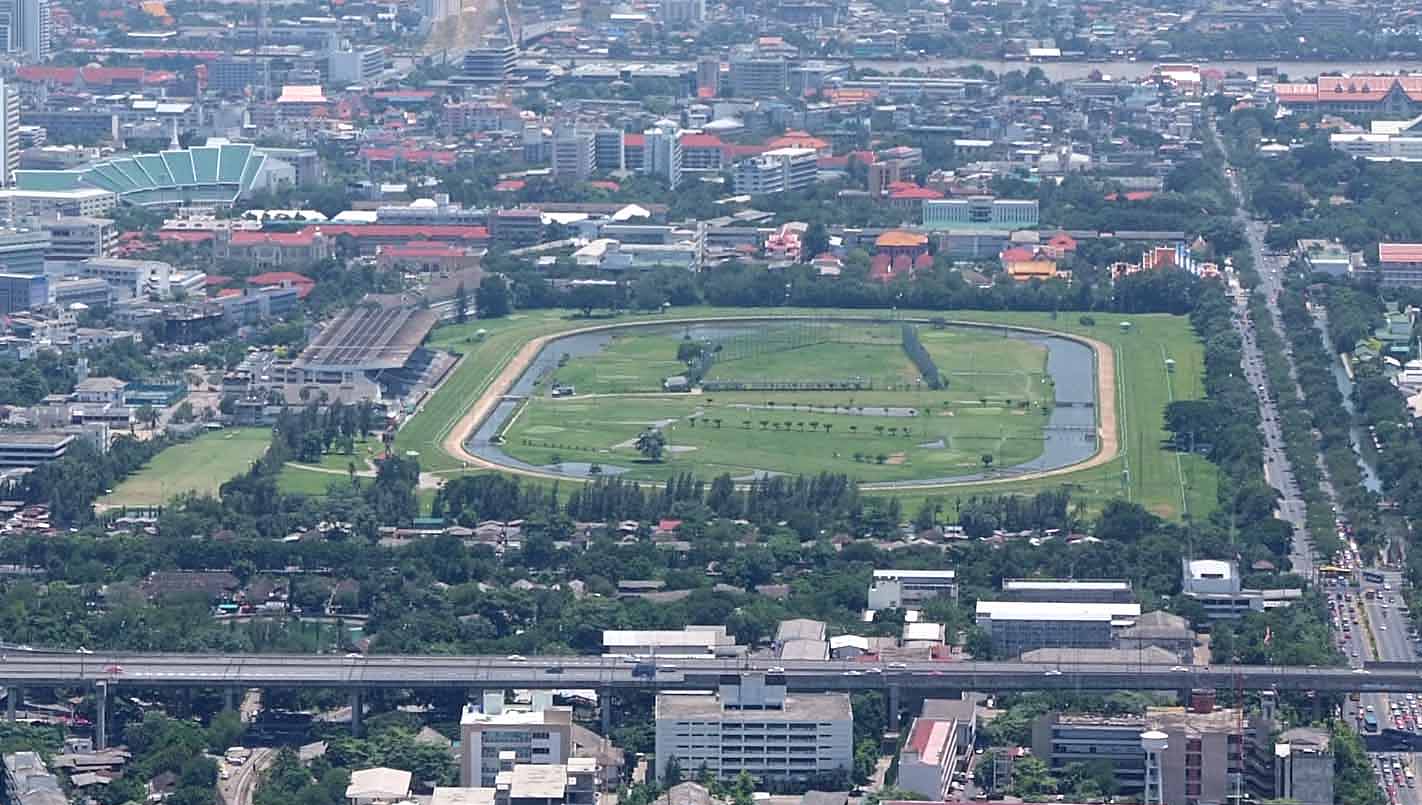
Royal Turf Club of Thailand
On 16 September 2018, the last horse crossed the finish line at Nang Loeng Racecourse. The crowd numbered perhaps five thousand -- a ghost of the thirty thousand who had once packed the grandstands. Within months, the bulldozers arrived. A century of aristocratic sport, political backroom dealing, and billions in gambling revenue ended not with a scandal but with an expired land lease. The Crown Property Bureau wanted the 200 rai back. The Royal Turf Club of Thailand, founded in 1916 by a group of nobles who considered the existing Royal Bangkok Sports Club insufficiently exclusive, had run out of time and out of favor.
A King's European Souvenir
Horse racing arrived in Siam because King Chulalongkorn visited Europe in 1897 and liked what he saw. Regular races began at the Gymkhana Club, which later became the Royal Bangkok Sports Club in the Pathum Wan District. The king personally sponsored the sport, presenting a royal cup for annual competitions. By 1916, a group of aristocrats decided they wanted their own venue -- a parallel institution with its own track, its own social hierarchy, its own grandstands. The Royal Turf Club took shape on 200 rai of land bounded by Phitsanulok, Rama V, Si Ayutthaya, and Sawankhalok Roads. Beyond the racecourse itself, the grounds included a golf course operated as the Royal Dusit Golf Club, a swimming pool, tennis courts, a fitness center, and dining facilities. One building, believed to have been King Vajiravudh's royal stable or more likely an indoor dressage arena, won the ASA Architectural Conservation Award in 1984 -- a Neoclassical gem with a large pillarless central hall covered by a steel tied truss roof.
Sundays at the Track
By mid-century, horse racing had become so popular that the government grew alarmed. In 1949, with two races held every weekend at both the Royal Turf Club and the RBSC, officials worried about excessive gambling among the poor and ordered races limited to Saturdays, alternating monthly between the two clubs. The restrictions loosened and tightened over the decades -- each club was eventually allowed one race per week, then in 1982, the schedule was reduced to one race per week alternating between venues. At the Nang Loeng course, races ran on Sunday afternoons, unless an uposatha -- a Buddhist sabbath -- fell on that day, in which case Saturday substituted. Tickets came in three tiers: lower grandstand, upper grandstand, or air-conditioned VIP box. Nobody under twenty was admitted. Outside the gates, vendors sold food, cigarettes, programme booklets, and rented binoculars. One of the most distinctive businesses was shoe rental -- the dress code prohibited open shoes, and not every patron arrived properly shod.
Where Generals Made Deals
The racecourse was never only about horses. It functioned as a nexus of Thai elite power, a place where military officers, politicians, and business figures met on neutral ground with cash flowing freely through the betting windows and influence flowing through the owner boxes. Most of the stable owners were politicians or senior businesspeople, and the provincial stable owners held honorary memberships that made the club effectively the central hub of Thailand's racing world. In 1973, after the 14 October uprising toppled the military government, the National General Assembly convened on the racecourse grounds to select members for drafting a new constitution. Forty years later, in 2012, the anti-government group Pitak Siam used the racecourse for demonstrations -- led by General Boonlert Kaewprasit, who also happened to be the club's honorary secretary. The administration was marked by cronyism, and the club accumulated a tax debt of approximately 1.5 billion baht between 2000 and 2015.
From Turf to Memorial Park
The end came bureaucratically. The Crown Property Bureau terminated the land lease in 2018, and the Royal Turf Club's executive board announced plans to find a new site and continue operations. Whether those plans materialized is another question. What is certain is that the Nang Loeng grounds were razed and redesigned as King Rama IX Memorial Park, honoring the late King Bhumibol Adulyadej. The Bureau of the Royal Household unveiled the park designs in 2021, transforming a century-old venue of aristocratic leisure and political maneuvering into public green space dedicated to the memory of a beloved monarch. The trajectory is distinctly Thai: a sport introduced by one king to imitate European habits, cultivated by aristocrats for generations, reclaimed by the Crown, and returned to the people as a park named for a king. The horses are gone. The deal-making moved elsewhere. The land endures.
From the Air
Located at 13.762N, 100.517E in Bangkok's Dusit district. The former racecourse site, now King Rama IX Memorial Park, is a large open space bounded by Phitsanulok, Rama V, Si Ayutthaya, and Sawankhalok Roads -- visible from the air as a rectangular green clearing among dense urban blocks. Best viewed at 2,000-3,000 feet. The Dusit Palace complex and Ananta Samakhom Throne Hall are nearby to the south. Nearest airports: Don Mueang (VTBD) approximately 14 nm north; Suvarnabhumi (VTBS) approximately 18 nm east-southeast.