Rozan-ji: Where Murasaki Shikibu Wrote the World's First Novel
Every February, on the afternoon of Setsubun, three demons take the stage at Rozan-ji. One red, one green, one black -- representing greed, hatred, and ignorance -- they stomp and snarl to the pounding of taiko drums and the wail of horagai conch shells. They lunge at the audience, interrupting prayers, sowing theatrical chaos. Then the priests begin the goma fire ritual, and the demons are driven back, defeated, exorcised. The largest of them, now painted white, kneels and gently lays a sacred sword on the shoulders of audience members, praying for their healing. It is a ceremony that has played out for centuries at this unassuming temple on the eastern edge of the Kyoto Imperial Palace -- a place whose quiet grounds hold connections to the imperial family, one of Japan's greatest literary figures, and a National Treasure document more than a thousand years old.
Birthplace of The Tale of Genji
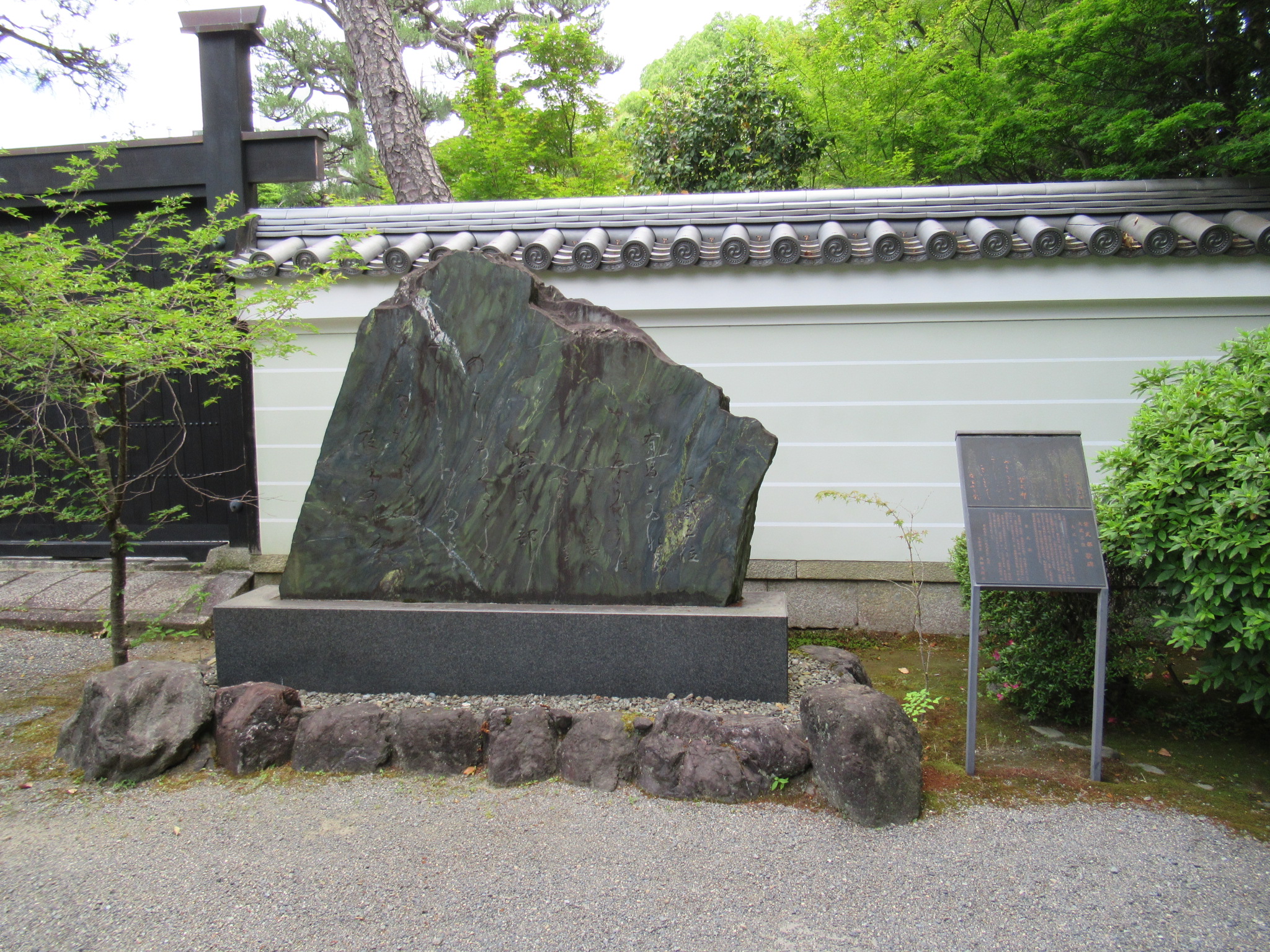
Rozan-ji's temple grounds sit on what was once the mansion of Fujiwara no Kanesuke, a Heian-period nobleman. His great-granddaughter, Murasaki Shikibu, was born here around the year 978, grew up within these grounds, married, and gave birth to her daughter in this same location. Murasaki would go on to write The Tale of Genji, widely considered the world's first novel, a sprawling narrative of court life, romantic intrigue, and human impermanence that influenced Japanese literature for a millennium. The connection between Rozan-ji and Murasaki was not confirmed until 1965, when a Japanese historian identified the site as her former residence. Since then, the temple has become a pilgrimage site for Genji enthusiasts from around the world, though nothing of the original villa survives and the temple's present location is not where the mansion originally stood. The rock garden, known as the Genji Garden, honors the connection with plantings of Japanese bellflowers -- delicate purple blooms that echo the color associated with Murasaki's name.
A Temple That Survived Nobunaga
Founded in 938 by Ryogen, the powerful abbot of Enryaku-ji on Mount Hiei, Rozan-ji was originally located in the Funaokayama neighborhood south of Daitoku-ji. It was one of only four temples granted an okurodo -- a private Buddhist chapel for the Imperial Family -- placing it under direct imperial protection. That protection proved critical during one of Kyoto's most violent periods. When Oda Nobunaga launched his assault on Kyoto's Buddhist institutions and besieged Mount Hiei, Rozan-ji was specifically targeted as a Tendai temple. It was saved by a nyobo hosho, an official imperial document recording the emperor's orders, written by a female court member. The document shielded the temple from destruction. In 1573, Toyotomi Hideyoshi reorganized Kyoto and relocated Rozan-ji to its present site on Teramachi Street, beside the Imperial Palace.
Burned, Rebuilt, and Rebuilt Again
Fire has been both enemy and architect of Rozan-ji. The relocated temple was devastated in the Kyoto fire of 1708 during the Hoei era, and burned again in 1788 during the catastrophic Great Fire of Kyoto in the Tenmei era. The present structure dates to 1794, rebuilt during the Kansei era using materials salvaged from a portion of the Sento Imperial Palace -- the retired emperor's residence. The reconstruction was completed under the directive of Emperor Kokaku, ensuring the temple retained its imperial connections. Within these rebuilt walls, Rozan-ji holds one of the National Treasures of Japan: the testament of Ryogen to his pupil Jinzen, written in 972. The temple grounds also contain imperial mausoleums, including the tombs of both parents of Emperor Kokaku -- his father, posthumously recognized as Emperor Kyoko, and his birth mother Oe Iwashiro -- as well as the grave of the master sculptor Jocho, whose work defined Japanese Buddhist sculpture.
The Three Poisons on Stage
The Setsubun demon dance at Rozan-ji is more than spectacle -- it is a theatrical rendering of core Buddhist philosophy. The three colored oni embody the three poisons that Buddhist teaching identifies as the root of all suffering: the red demon of greed, the green demon of hatred, and the black demon of ignorance. Their rampage through the audience mirrors how these afflictions disrupt daily life and spiritual practice. The goma fire ritual that defeats them is a purification ceremony with roots in esoteric Buddhism, where offerings are burned in a sacred fire to consume spiritual impurities. The tsuinashi -- the priest who conducts the exorcism -- drives the demons from their colored forms into a single white form, representing purification. The healing ceremony that follows, where the now-gentle white demon touches a sacred sword to audience members' shoulders, transforms the very embodiment of suffering into an instrument of compassion. Visitors line up to tell the white demon which part of their body needs healing, and it prays over them -- a ritual that collapses the distance between Buddhist doctrine and lived human experience.
From the Air
Located at 35.023N, 135.764E on the eastern side of the Kyoto Imperial Palace in the Kamigyo-ku district. From 3,000-5,000 feet AGL, look for the large rectangular grounds of the Kyoto Imperial Palace; Rozan-ji sits along Teramachi Street on the palace's eastern boundary. The Kamo River runs north-south approximately 500 meters to the east. Nearest major airport is Osaka Itami (RJOO), approximately 25 nautical miles southwest, with Kansai International (RJBB) about 50 nautical miles to the south.