Ruakuri Cave
Wild dogs gave this cave its name. Between 400 and 500 years ago, local Maori discovered a pack of them living in the entrance of a deep limestone cave in the Waitomo country and called the surrounding area Te Ruakuri, the Den of Dogs. What they found deeper inside was not wild but sacred. The cave became an urupa, a burial site, and the entrance where ancestors were laid to rest became tapu, too consecrated for ordinary passage. When tourism arrived in the early twentieth century, the sacred entrance was closed. Visitors now enter through a modern spiral drum ramp built at a respectful distance from the burial site, descending underground in a slow, deliberate helix that prepares them for what waits below: a world of stalactites, underground rivers, hidden waterfalls, and ceilings pinpricked with the blue-green glow of living light.
The Den Reopens
Ruakuri first opened to the public in 1904, when James Holden began guiding visitors through its chambers. For 84 years, tourists explored the cave that Holden had helped reveal to the outside world. Then, in 1988, a legal and financial dispute shut the operation down. The cave sat closed for 17 years. When it finally reopened in 2005, it returned with a difference that set it apart from every other show cave in the Southern Hemisphere: full wheelchair accessibility. The spiral entrance ramp, built away from the tapu burial area, descends gradually enough that visitors in wheelchairs can experience the underground environment without assistance on stairs or ladders. The decision honoured both the sacred nature of the original entrance and a modern commitment to making the natural world available to everyone.
Stone Gardens and Popcorn Walls
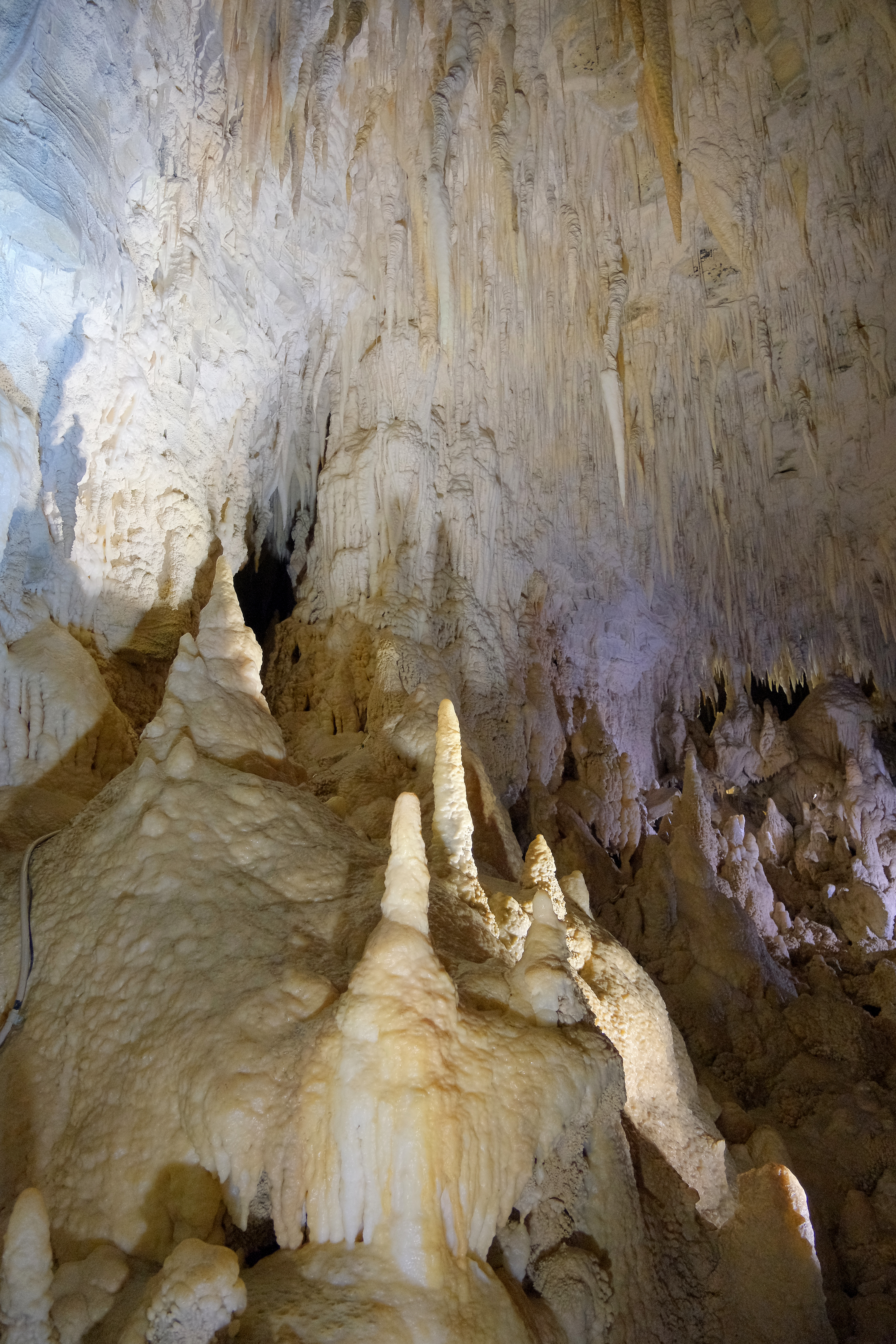
The guided tour begins with the long spiral descent, a transition from daylight to a world shaped by water and time over millions of years. The first chamber opens into a forest of stalactites and rare limestone formations, some covered in nodular growths the locals call popcorn, a rough coral-like texture that looks like something from a reef rather than a cave. Underground rivers thread through the rock, and a waterfall only about a metre and a half tall fills the passage with a sound far larger than its size, amplified by stone walls that concentrate every splash and echo. Fossils from the era when this region lay beneath the sea are embedded in the rock, remnants of the marine organisms whose compressed skeletons became the limestone itself. Holdens Cavern, the Drum Passage, the Pretties, and the Ghost Passage each offer distinct formations and atmospheres.
Light Where There Should Be None
The glowworms are the reason Maori considered this place sacred. In a world of total darkness, where no sunlight has penetrated for millions of years, the larvae of fungus gnats cling to the cave ceiling and walls, emitting a steady blue-green bioluminescence. They are predators. Each larva lowers sticky silk threads to catch insects that fly toward the light, and when prey runs scarce, they eat each other. The effect, when artificial lights are switched off and eyes adjust, is of a low, close sky dense with stars. It is the presence of life and light in a place that should hold neither that struck early Maori as something beyond ordinary explanation. Two adventure tours have operated through the cave since 1987, giving visitors the chance to wade and crawl through less-developed passages where the glowworms are undisturbed by the regular tourist traffic, their light undimmed.
From the Air
Ruakuri Cave is located at 38.27S, 175.08E in the Waitomo district of the North Island's King Country, very close to the more famous Waitomo Glowworm Cave. From the air, the karst landscape of sinkholes and collapsed dolines hints at the extensive cave systems below the green pastureland. The nearest significant airport is Hamilton (NZHN), approximately 75 km to the north. The area sits roughly midway between Auckland and New Plymouth. Low-level flight over the Waitomo valley reveals the meandering streams that feed these underground systems. Visibility is generally good, though fog can settle in the valleys, particularly in early morning.