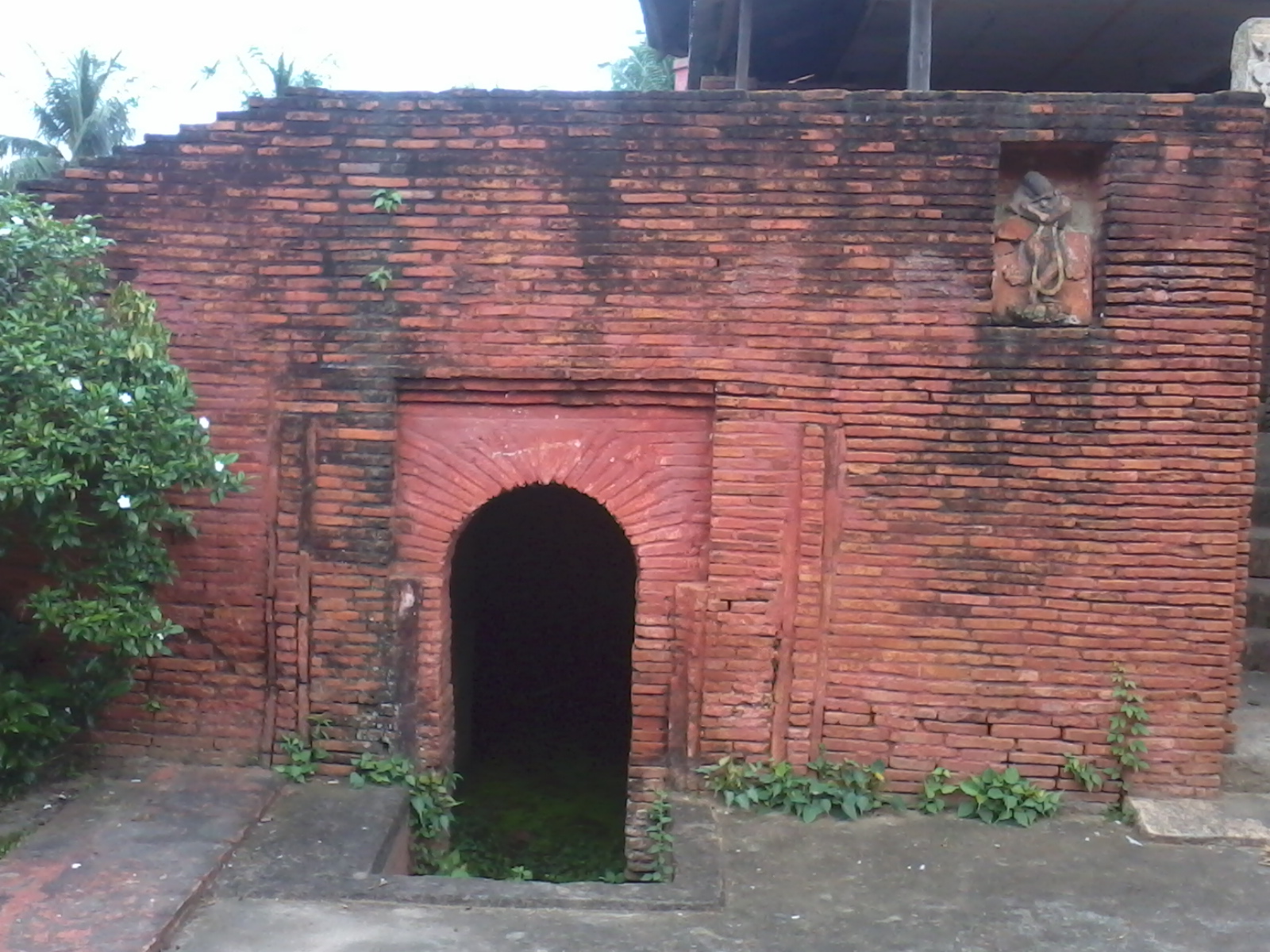
Rudreswar Temple
Four hundred thousand soldiers gathered at Guwahati in the early eighteenth century, and their king never led them anywhere. Swargadeo Rudra Singha, ruler of the Ahom Kingdom, had spent the latter years of his reign assembling the largest army Assam had ever seen - warriors from the hills and plains, the kings of Cachar and Jaintia among them - all for a westward campaign against the Mughal Empire. His ambition was to push Ahom borders to the Karatoya River, the ancient frontier of the Kamarupa kingdom. Some accounts suggest he dreamed of reaching the Ganges itself. In August 1714, before the expedition could march, illness struck him down in his camp on the north bank of the Brahmaputra. The spot where he died would become the site of a temple bearing his name: Rudreswar.
A Son's Tribute in Stone
Pramatta Singha, Rudra Singha's second son, chose a deliberate form of memorial. Rather than a tomb or a monument to conquest, he commissioned a temple to Lord Shiva at the exact site where his father had died. Completed in 1749, thirty-five years after Rudra Singha's death, the temple received a Shiva Linga named Rudreswar after the fallen king. The village that grew around it took the same name. Pramatta Singha endowed the temple with a large area of land and arranged for priests and attendants to maintain continuous worship - a living memorial rather than a silent one.
Where Ahom Meets Mughal
The temple's architecture tells its own story of cultural exchange. Designed as a blend of Ahom and Mughal building traditions, the structure takes its form from a Mughal mausoleum - fitting, perhaps, for a temple born from a campaign planned against the Mughals themselves. Underground chambers open from the front of the temple, their original purpose uncertain, though they likely served as storage for the supplies that kept daily worship functioning. Above them sits the Manikut, the "jewel hut" that houses the Shiva Linga. The builders incorporated drainage and ventilation systems into the stonework, engineering that speaks to careful planning. Ahom-period stone inscriptions once set into the surrounding brick wall have been removed for preservation in a museum, but the structure itself remains a rare architectural hybrid - a monument to the interplay between two empires that spent centuries as rivals.
Echoes of an Army Camp
The landscape around the temple still carries traces of Rudra Singha's encampment. A pond called Konwari Pukhuri - the "princess pond" in Assamese - sits nearby, its name recalling the queens and princesses who bathed there while the king prepared for war. To the east, another pair of ponds once bore the name Hiloidari Pukhuri, named for the musketeers and artillerymen who camped beside them. These water features, quiet and overgrown now, once served an army that stretched across the riverbank. The place names preserve a memory that the temple itself does not explicitly tell: this was not always sacred ground but a staging area for a military expedition that history never allowed to happen.
Shaken but Standing
The temple has endured more than the passage of centuries. When the Ahom Kingdom fell and British rule took hold in Assam, Rudreswar lost much of its endowed land and the income that sustained it. Two devastating earthquakes - in 1897 and again in 1950 - inflicted severe damage on the upper structure, leaving it partially ruined. Local worshippers, unwilling to let the temple die, built a rough shelter of wood and corrugated tin over the Manikut so that religious ceremonies could continue. The Archaeological Survey of India eventually took the site under its protection, and the Assam state government has undertaken restoration work, though the rebuilding remains incomplete. What stands today is both a ruin and an active place of worship - a temple that has refused to be abandoned, sustained by the same community devotion that Pramatta Singha first set in motion nearly three centuries ago.
From the Air
Located at 26.21°N, 91.72°E on the north bank of the Brahmaputra in North Guwahati, Assam. Best viewed at 3,000-5,000 feet AGL. The Brahmaputra River provides the primary visual reference, with the temple situated on the northern bank opposite central Guwahati. Nearest major airport is Lokpriya Gopinath Bordoloi International Airport (VEGT) in Guwahati, approximately 15 km to the southwest.