Russian Arctic National Park
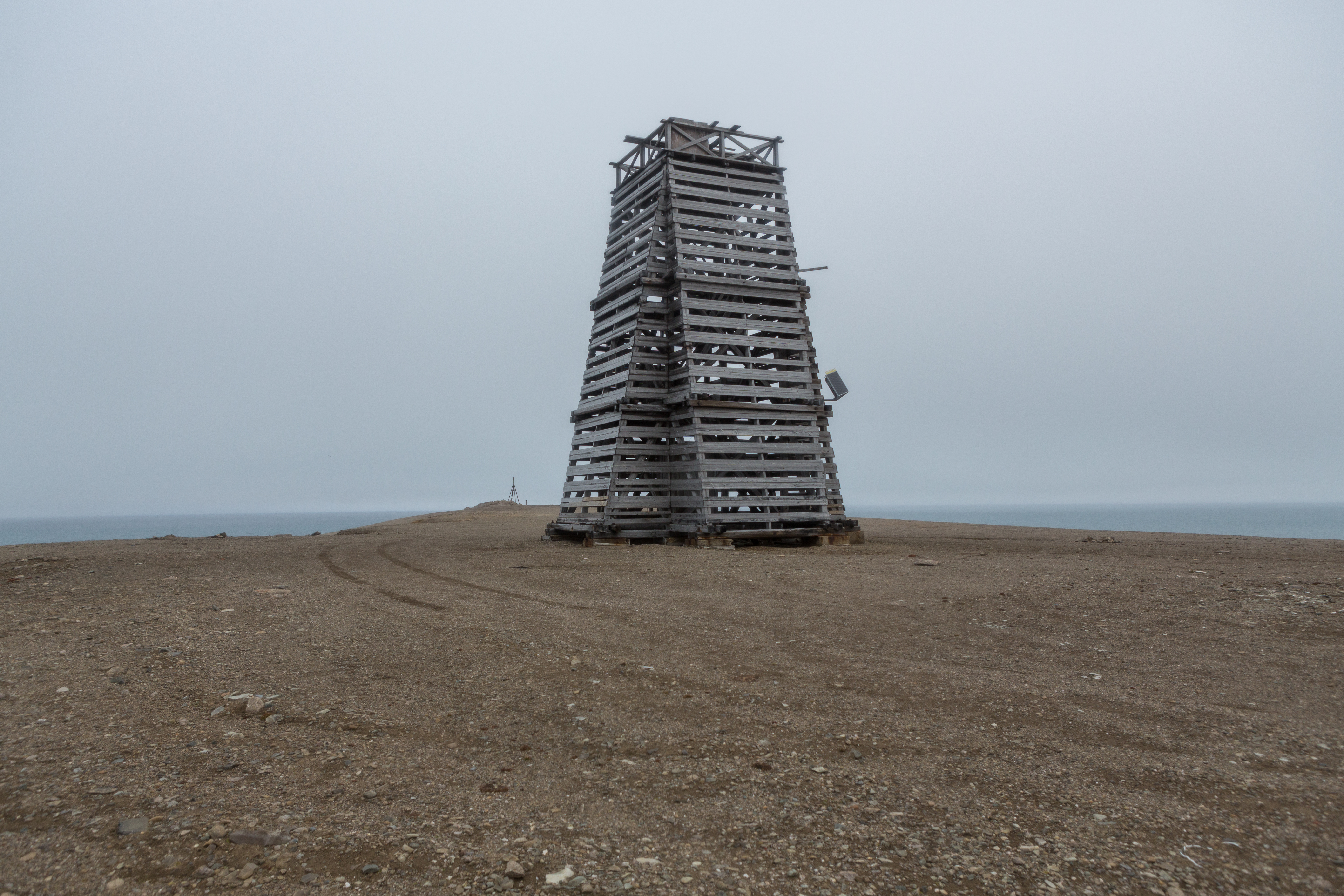
When Vladimir Putin visited Novaya Zemlya in 2010, the year after the national park was established, he looked around at the landscape and described it as a "giant rubbish tip." He was not wrong. Decades of Soviet military and industrial occupation had left behind a quarter million barrels of petroleum products, a million abandoned metal drums, rusting radar installations, dilapidated vehicles, and grounded aircraft. Creating Russian Arctic National Park had been the easy part. Cleaning it up would take three years and 1.5 billion rubles.
A Park Born of Political Will
Plans for protecting northern Novaya Zemlya and Franz Josef Land circulated through Russian government channels for years before becoming reality. When the park was officially established on June 15, 2009, the ceremony included optimistic statements about Arctic tourism — but Franz Josef Land and Victoria Island were excluded from the initial boundaries, a compromise that left ecologists disappointed. Putin announced the park himself, framing it as an opportunity for development. Within two years, Franz Josef Land was added. By 2016, a major expansion brought the total to approximately 74,000 square kilometers of land and sea — an Arctic wilderness roughly the size of Ireland. The park now covers the northern portion of Novaya Zemlya (Severny Island) and the entire Franz Josef Land archipelago.
The Long Work of Cleaning Up
The Soviet military left a particular kind of legacy in the high Arctic: infrastructure built without any plan for its removal, in a place where nothing biodegrades quickly and everything rusts. The cleanup project that began in 2012 confronted this reality at scale. Workers removed more than 100,000 tonnes of waste from Franz Josef Land and northern Novaya Zemlya — barrels, machinery, fuel residue, structural steel, aircraft parts. The Arctic cold that had preserved the debris also preserved the toxins within it. For a park established partly to accommodate tourism, the tourism could not begin in earnest until the evidence of the previous occupants was removed. The work took years. In some locations it continues.
Where the Megafauna Still Roam
Beneath the Cold War archaeology, the ecology of Russian Arctic National Park is remarkable. The park protects critical habitat for polar bears and serves as a key calving ground for bowhead whales — one of the longest-lived animals on Earth, with individuals documented at over 200 years old. Gray whales also appear in park waters. Walrus rookeries line the rocky shores, and the region holds one of the largest seabird colonies in the Northern Hemisphere, with cliffs stacked with thick-billed murres, kittiwakes, and fulmars. Seal haul-outs crowd the ice edges. This is a place where the marine food web, if left alone, still functions at something close to its original scale. The park's designation as a protected area for marine mammals is among the most significant in Russia.
The Ice at the Center
The heart of the park is glacial. Severny Island's ice cap covers forty percent of that island's surface and is the largest glacier by area and by volume in Europe — an Arctic fact that surprises many European visitors who picture their continent ending at the Ural Mountains. Franz Josef Land, to the north, is even more dramatically glaciated: eighty-five percent of its surface lies under ice. The park's sea area extends across waters where ice conditions shift with the season, opening summer channels that allow occasional expedition ships, then closing again into the solid pack of winter. The border between frozen and open water moves every year — and in recent decades, it has been moving in directions that scientists watch with attention.
From the Air
Russian Arctic National Park centers on approximately 75.70°N, 60.90°E, encompassing Severny Island (Novaya Zemlya) and Franz Josef Land further north at around 80°N. From altitude, the ice cap of Severny Island is clearly visible, its white expanse interrupted by dark coastal fjords and rocky headlands. Franz Josef Land, if approached, appears as a cluster of ice-covered islands. No civilian airports serve the park interior; the nearest is Rogachevo Air Base (ULWW) on southern Novaya Zemlya. Arctic atmospheric conditions are highly variable — instrument flight rules and cold-weather precautions apply at all times. Viewing altitude 15,000–35,000 feet offers the broadest perspective on the park's extent.