Ryutaku-ji
"What is the sound of one hand?" The question that became the most recognized koan in Zen Buddhism was formulated by Hakuin Ekaku, the fiery reformer who relocated this temple to Mishima in 1761. Ryutaku-ji, nestled in the hills of Shizuoka Prefecture, carries the weight of that lineage: a place where Zen was stripped back to its austere essentials, where the Rinzai school was pulled from the edge of extinction, and where, centuries later, a chain of remarkable abbots would export that hard-won wisdom to meditation halls in Manhattan and the suburbs of Paris. It is a small temple with an outsized reach, its influence measured not in the size of its grounds but in the depth of its silences.
Lost Records, Long Memory
The temple's early history is more legend than ledger. Its records have been lost, but temple tradition holds that Kukai, the founder of Shingon Buddhism, established it during the Heian period at what is now Atago in Tokyo. Somewhere in the upheaval of the Keicho era, between 1596 and 1615, it converted from Shingon to the Rinzai school of Zen. But the temple as it exists today owes its identity to one man: Hakuin Ekaku, who in 1761 relocated it to Mishima and infused it with his radical, back-to-basics approach to Zen practice. Hakuin believed that the Rinzai school had grown complacent, weighed down by ritual and hierarchy. He demanded a return to zazen and koan study, practices that forced practitioners to confront the limits of rational thought. His most famous creation, the koan of the single hand, remains the first puzzle assigned to novice monks in Rinzai Zen to this day.
Ruin and Revival
Hakuin's intensity did not guarantee the temple's survival. Although Ryutaku-ji was reconstructed during the early Meiji period, it had deteriorated to near ruins by the Taisho era. Japanese Buddhism was struggling against the forces of modernization, and many rural temples fell into neglect. It took the determination of Gempo Yamamoto, a Zen master who combined fierce discipline with practical organizational skill, to rebuild Ryutaku-ji into a functioning monastery. Yamamoto restored both the physical structures and the rigor of practice, creating the foundation that would make the temple internationally significant in the decades to come. Without his intervention, the temple that Hakuin had made into a center of Rinzai reform might have simply dissolved into the hillside.
The Poet Who Crossed the Pacific
Soen Nakagawa became abbot of Ryutaku-ji in 1954 and led the temple for three decades. He was, by most accounts, an extraordinary and unpredictable figure. A gifted calligrapher and haiku poet, he earned the nickname "the 20th Century Basho," after the wandering master who elevated haiku into high art. But Nakagawa's restlessness extended beyond poetry. He traveled to the United States thirteen times, helping to found the New York Zendo Shobo-ji and its training monastery in upstate New York. He was known for rejecting the stiff formalism that had calcified Japanese Zen institutions, preferring an approach rooted in solitary practice and spontaneous, sometimes bewildering, teaching methods. When Nakagawa died in 1984, his ashes were divided: part interred at Ryutaku-ji, part in New York. The gesture was deliberate, a physical expression of the bridge he had spent his life building between Japanese and American Zen.
A Temple Without Borders
Nakagawa's successors continued his international vision. Kyudo Nakagawa served as abbot from 1990 until his death in 2007, simultaneously leading the Soho Zendo on West Broadway in New York City. He held two worlds in balance: the quiet monastery in the hills of Mishima and the bustling meditation center in one of Manhattan's most vibrant neighborhoods. When Eizan Goto became abbot in 2008, the reach extended further still. Goto also serves as Zen Master of Centre Assise, a meditation center near Paris. A temple that began as a Shingon foundation in Heian-era Tokyo, was reborn in the hills of Mishima by a radical reformer, nearly crumbled to nothing, and then sent its teachings across the Pacific and the Atlantic. Ryutaku-ji's story is one of relentless reinvention, driven always by the conviction that the questions Hakuin posed in the 18th century still demand an answer.
From the Air
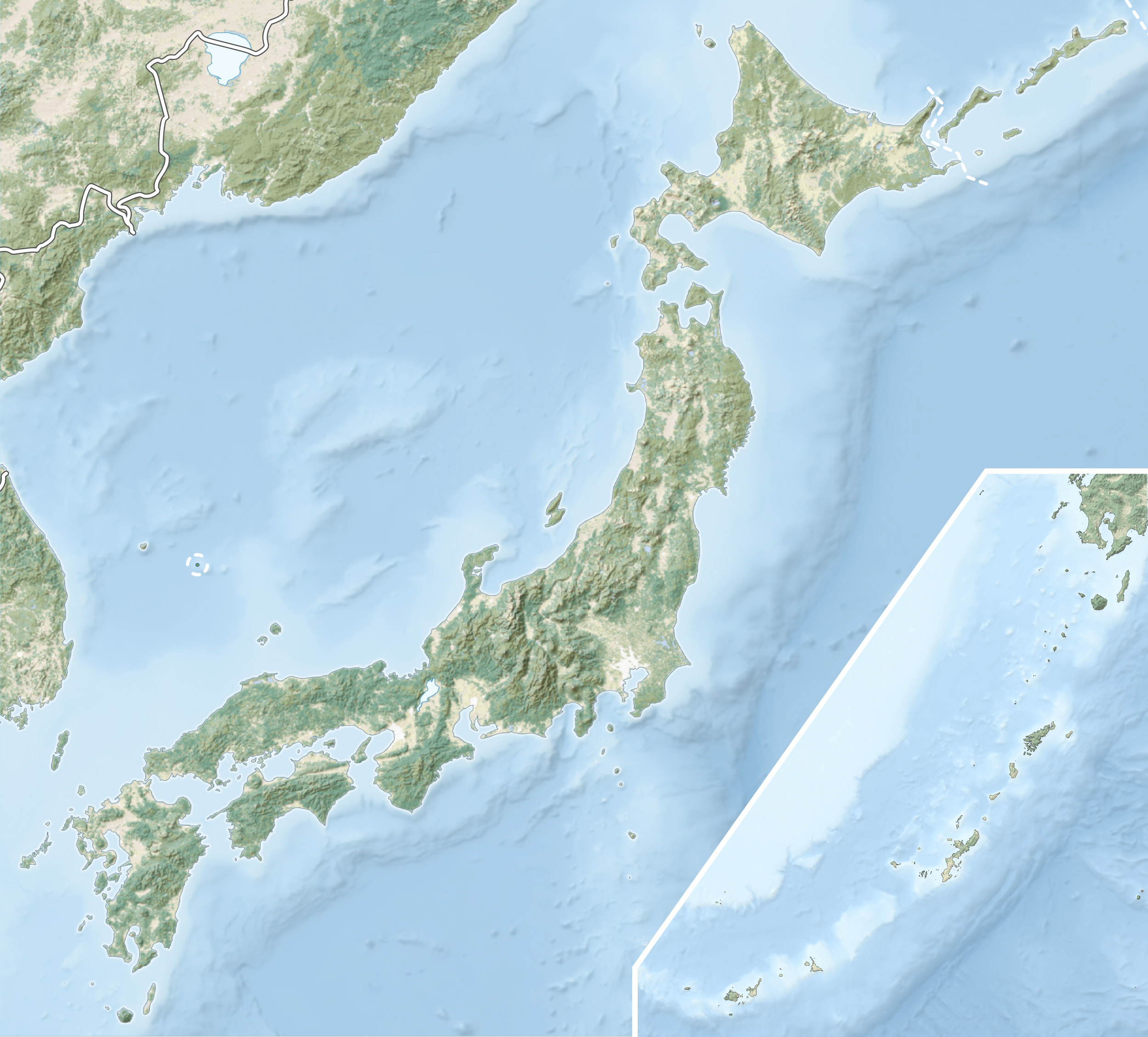
Located at 35.146N, 138.928E in the hills east of Mishima, Shizuoka Prefecture. The temple sits in a forested area at the base of the Hakone mountains, making it difficult to spot individually from altitude. Look for the town of Mishima at the foot of the mountains, south of the distinctive cone of Mount Fuji. Best viewed at 2,000-3,000 feet AGL. Nearest airport: Mt. Fuji Shizuoka Airport (RJNS), approximately 65 km to the west. Tokyo's Haneda Airport (RJTT) is about 95 km to the northeast.