Ryojun Guard District
Of all the military installations that have operated from the harbor at Lushunkou, the Ryojun Guard District may be the most revealing -- not for what it accomplished but for how many times Japan could not decide what to do with it. Activated in 1904, downgraded in 1914, deactivated in 1922, reactivated in 1933, upgraded in 1941, and deactivated again in 1942, the base's status oscillated with every shift in Pacific power politics. Its commander received his commission directly from the Emperor, yet the posting spent more years mothballed than operational.
A Prize Won Twice
The port of Ryojun -- the Japanese pronunciation of the Chinese characters for Lushun -- had a long and violent association with the Imperial Japanese Navy before it became a formal Guard District. Japan first seized the harbor during the First Sino-Japanese War in December 1894, only to be forced to abandon it in February 1896 when Russia, France, and Germany issued the Triple Intervention. Russia promptly occupied the port and developed it into its most important naval base in the Far East. Japan took it back after the Battle of Port Arthur in 1904 and proclaimed the Ryojun Naval District. But the base lacked the shipyards, armories, and training facilities that other Japanese naval districts possessed -- for those capabilities, Ryojun depended on the Sasebo Naval District, over a thousand kilometers away across the Sea of Japan.
The Accordion Base
The Guard District's bureaucratic history reads like a barometer of Japan's strategic anxieties. In 1904, when Japan needed every naval asset it could muster against Russia, Ryojun was a full Naval District. By March 1914, with no peer competitor in the western Pacific, it was reduced to a third-echelon naval port. During World War I, it served as a staging point for operations against Germany's East Asia Squadron at Qingdao. When the Washington Naval Treaty of 1922 limited naval forces, the port was deactivated entirely on 1 December of that year. Japan's creation of the puppet state of Manchukuo in 1932 revived the base's purpose: it was reactivated in April 1933 to patrol the coastline of its new client state. On 20 November 1941, with war against the United States imminent, Ryojun was upgraded to full Guard District status. Less than two months later, on 15 January 1942, it was deactivated once more -- Japan now controlled the entire western Pacific and no longer needed a defensive base at Lushunkou.
Guarding the Approaches
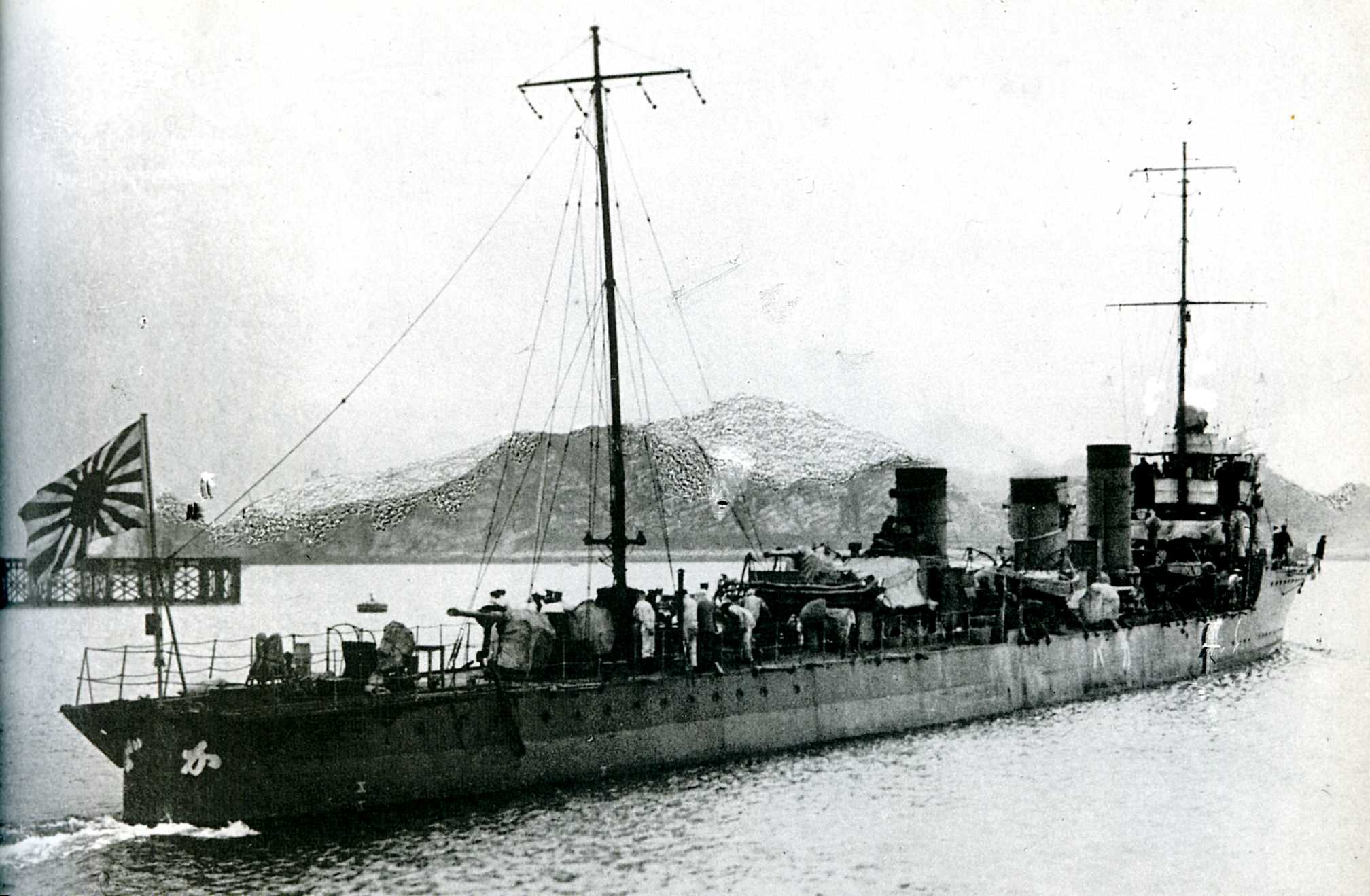
When operational, the Ryojun Guard District served a specific and important role: controlling the strategic seaward approaches to Manchukuo and northern China, and patrolling the Yellow Sea and Chinese coastlines. Guard Districts were second-tier naval installations -- below the full Naval Districts with their shipyards and training schools but above ordinary port facilities. They maintained docking, fueling, and resupply capabilities along with a small garrison force of ships and naval land forces. In concept, the Guard District was similar to the United States Navy's Sea Frontiers system, providing regional defensive coverage rather than offensive striking power. At the time of the attack on Pearl Harbor, Ryojun's order of battle consisted of Minesweeper Division 32 -- a far cry from the fleets that had battled for control of this harbor just four decades earlier. The base was finally disbanded in 1943, and Soviet forces would occupy the harbor two years later.
From the Air
Located at 38.81N, 121.24E on the shores of Lushunkou harbor at the southern tip of the Liaodong Peninsula. The naval facilities are visible from altitude along the harbor's southern shore. Dalian Zhoushuizi International Airport (ZYTL) is approximately 37 km northeast. The Yellow Sea extends to the southeast, with the Bohai Sea to the west. The strategic geography is best appreciated at 4,000-8,000 ft, where the peninsula's position guarding the Gulf of Bohai becomes clear.