Sa'at Tower
Every hour, bells ring from a four-faced clock tower in the center of Tabriz. The sound carries across Sa'at Square, where it has measured time for the people of this city since the 1930s. Sa'at means "clock" in Persian, and that is exactly what this tower does: it keeps time. But in a city that has been conquered, liberated, occupied, and rebuilt across millennia, even the act of counting hours becomes political. The Sa'at Tower has served as a government office for a short-lived Soviet-backed republic, as Tabriz's municipal seat, and as a museum. Its bells have tolled through occupation and independence, through earthquake and revolution.
An Eagle in Stone
The Sa'at Tower and its attached Municipality Palace cover approximately 9,600 square meters across three floors, with 6,500 square meters of built infrastructure. The exterior is carved stone, and the building's floor plan follows the silhouette of a flying eagle with outstretched wings. This design echoes the architectural conventions of pre-World War II Germany, a stylistic choice that places the building firmly in the modernist ambitions of 1930s Iran, when Reza Shah Pahlavi was rapidly transforming the country's infrastructure and civic architecture. The clock tower itself rises 30.5 meters above the square, its four clock faces oriented to be readable from every direction. Construction photographs from the 1930s show the tower's steel frame rising above a dusty cityscape, a deliberate statement of modernity anchored in one of Iran's most ancient cities.
Occupation and Liberation
Before the tower had aged even a decade, it became a tool of foreign ambition. During World War II, Soviet and British forces occupied Iran, and Soviet-backed separatists established the Azerbaijan People's Government in Tabriz in late 1945. The Sa'at Tower's municipality building served as a government office for this short-lived entity. The original bell atop the tower was damaged during the Russian military presence in Tabriz during the war and had to be replaced. When Iranian troops recaptured the city in December 1946, reasserting central authority over Azerbaijan province, the building returned to its intended purpose as the Tabriz municipal headquarters. The scars of occupation lingered. Replacing a damaged bell is a small repair, but it marked a larger restoration: the city's right to govern itself from its own clock tower.
Clumsy Renovations
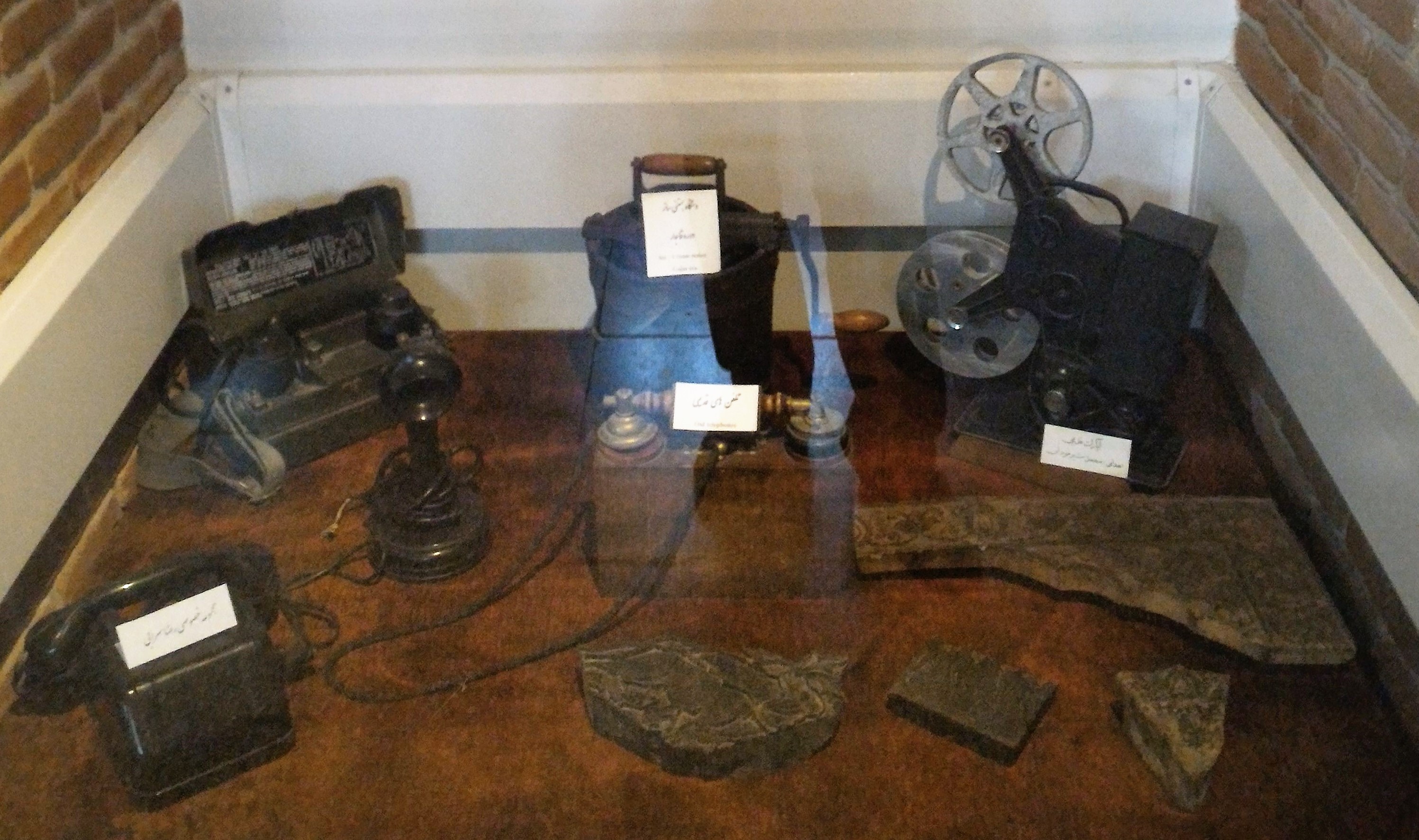
Preservation has not always been handled with care. During the 1980s, workers attempting to install an elevator damaged one of the building's patios. The dome crowning the tower was reconstructed in 2008, but the replacement substituted khaki-colored fiberglass for the original silver dome, altering the tower's appearance against the Tabriz skyline. These modifications frustrated residents who valued the tower not just as a functional building but as a civic symbol. Still, the structure endured. Since 2007, portions of the building have housed the Municipal Museum, which displays artifacts from Tabriz's urban history, including the municipality's collection of handwoven rugs shown in the main hall and old telephone equipment from the city's early communications infrastructure.
Where the City Gathers
Sa'at Square, surrounding the tower, has become the natural gathering point for civic celebration and observance. Every year on March 20, the Iranian new year of Nowruz, a large Haft-sin display is assembled behind the tower. The Haft-sin table, with its seven symbolic items beginning with the Persian letter "sin," transforms the governmental square into a communal living room for the entire city. Since 2014, Tabriz has also participated in Earth Hour by extinguishing the tower's lights, plunging the clock faces into darkness for sixty minutes. The gesture is small but visible: the building that marks every hour of every day goes deliberately silent, reminding the city that time itself can pause for a cause.
Tabriz's Heartbeat
Clock towers serve a function that smartphones have largely made redundant, yet the Sa'at Tower remains central to Tabriz's identity. It appears on postcards, in civic logos, and in the mental geography of anyone who has navigated the city center. The golden key of Tabriz, a ceremonial artifact displayed inside the museum, reinforces the tower's role as the symbolic threshold of the city. From the western garden, you can see the full sweep of the municipality building spreading out from the tower's base, its stone-carved facade blending the severity of 1930s institutional architecture with the Persian tradition of civic grandeur. The bells continue to ring. In a city that has endured Mongol invasion, Ottoman occupation, Russian bombardment, and revolutionary upheaval, the simple act of marking the passing hours is itself a declaration: Tabriz persists, and it keeps its own time.
From the Air
Located at 38.074N, 46.296E in central Tabriz, Iran. The 30.5-meter clock tower is a recognizable landmark from low altitude, situated in Sa'at Square near the city center. Tabriz International Airport (OITT) is approximately 20 km northwest. The city sits in a valley between the Eynali mountains to the north and Mount Sahand to the south, both visible at cruising altitude. Best viewed during clear conditions at lower altitudes for detail on the tower and surrounding square.