Sa'dabad Complex
In the entrance courtyard of Sa'dabad, a pair of bronze boots stand on a pedestal -- all that remains of a monumental statue of Reza Shah, toppled after the 1979 Revolution. The boots have become one of Tehran's more darkly comic landmarks, a fitting introduction to a complex where two dynasties built palaces, lost power, and left behind a sprawling estate that now belongs to the public. Spread across 80 hectares in the Shemiran district of northern Tehran, nestled against the foothills of the Alborz Mountains, Sa'dabad holds 18 palaces and pavilions, each telling its own chapter of Iran's turbulent modern history.
A Dynasty's Garden
The Qajar shahs first claimed this forested hillside in the 19th century, drawn by the cool air and abundant springs that made northern Tehran a refuge from the capital's summer heat. But it was Reza Shah, founder of the Pahlavi dynasty, who transformed the estate in the 1920s into a proper royal compound, purchasing surrounding lands and commissioning European-influenced palaces for his growing family. He lived here from the 1920s until his forced exile by the Allies in 1941. His son Mohammad Reza Shah expanded the complex further in the 1970s, making the White Palace his official residence. On New Year's Eve 1977, President Jimmy Carter visited Tehran and toasted the Shah at a state dinner held at the Niavaran Complex. Within a year, the revolution had swept the monarchy away.
Palaces Behind Every Gate
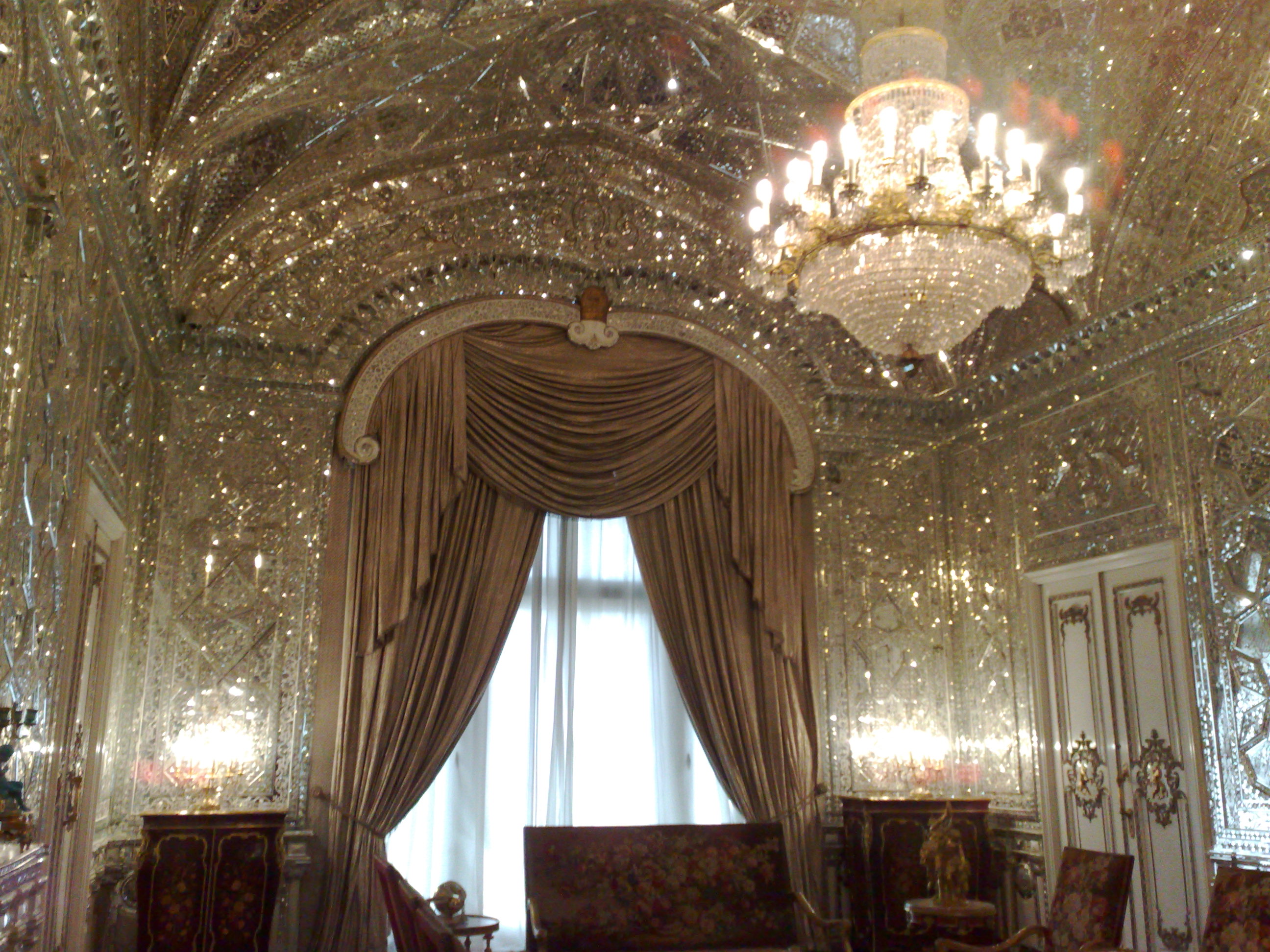
Sa'dabad is not one palace but many. The Green Palace, often called the most beautiful in Iran, dates to the Qajar era and takes its name from its distinctive green stone facade. Inside, the walls blaze with mirror work and Persian tilework across two distinct architectural styles. The White Palace, at 7,000 square meters the largest building in the complex, served as the official residence of Mohammad Reza Shah and Shahbanu Farah. Renamed the Palace of the Nation after the revolution, its grand halls now display royal furnishings and ceremonial artifacts. Then there are the private residences -- palaces named for princesses and princes of the Pahlavi line: Shams, Ashraf, Leila, Farahnaz. Each has been converted into a museum with its own focus, from calligraphy to military history to the Omidvar Brothers Museum, which chronicles the adventures of Iran's first world travelers.
Seven Gates, Two Eras
The complex has eight gates, each with its own history. Reza Shah entered through the Nezamie Gate. His son preferred the Gate of Darband Street. The Zaferanie Gate now serves the Iranian presidency, because Sa'dabad remains a working government site. The Office of the President of the Islamic Republic operates from several palaces within the grounds, and at least one building -- the Palace of the Shah's Mother, where Reza Shah spent his final years before exile and where his wife Tadj ol-Molouk lived until 1979 -- is reserved for state guests and closed to the public. Visitors navigate between the accessible museums and the off-limits presidential quarters, a physical reminder that the complex serves two masters: history and the present government.
Where Power Changed Hands
Walking the tree-lined paths and qanat-fed gardens of Sa'dabad, the scale of what was lost becomes tangible. Natural forest still covers much of the compound, and the streams that attracted the Qajar court still run through it. But the political drama embedded in these grounds is what lingers. This is where the Pahlavi dynasty lived its private life, where foreign leaders came to pledge support for a regime that would not survive the decade, and where, after the revolution, the new republic chose not to demolish but to convert -- turning symbols of monarchy into museums for the people. The Cultural Heritage Organization of Iran now manages the public portions, and on any given day, Iranian families stroll past the palaces that once held a dynasty's secrets, taking selfies where shahs once held court.
From the Air
Located at 35.817N, 51.424E in the Shemiran district of northern Tehran, against the Alborz foothills. The complex's 80-hectare forested grounds are visible as a large green area in the urban landscape. Nearest major airport is Tehran Imam Khomeini International (OIIE) approximately 55 km to the south, and Mehrabad International Airport (OIII) approximately 15 km south. Recommended viewing altitude 5,000-8,000 ft AGL.