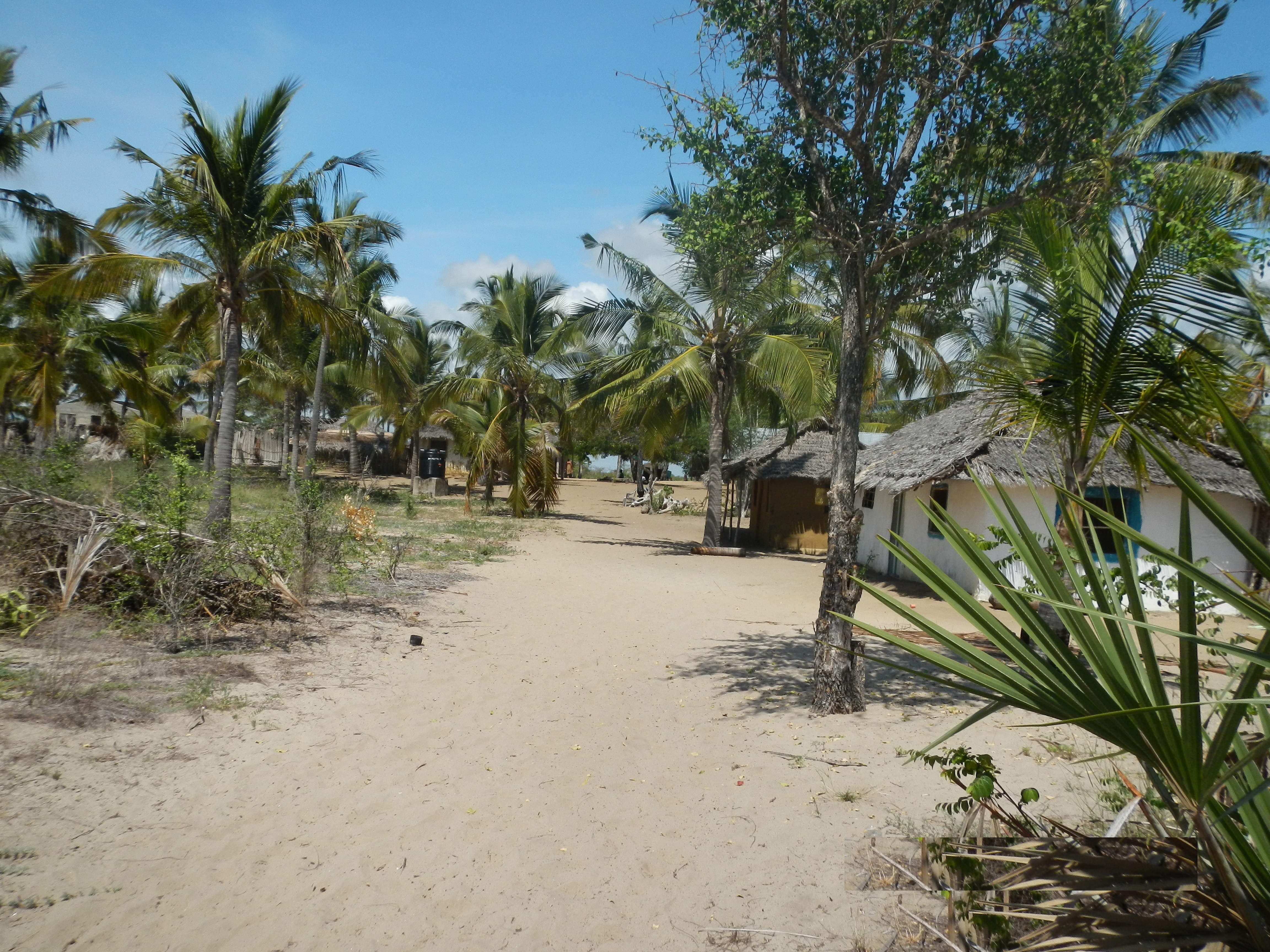
Saadani National Park
Nowhere else in East Africa do elephants walk on ocean beaches. Saadani National Park is the only place where the savanna meets the Indian Ocean shoreline without a road, a fence, or a resort in between. Lions prowl through coastal thickets. Hippos wallow in the Wami River within a few kilometres of the surf. Cape buffaloes graze in clearings where the salt air mixes with the scent of sun-baked grass. It is Tanzania's only coastal national park, gazetted in 2005, and its existence is both a conservation triumph and one of the country's most contentious land disputes.
An Invitation That Changed Everything
The story begins in the late 1960s, when the village of Saadani -- particularly its sub-village Uvinje -- asked the Tanzania Wildlife Division for help. Indiscriminate killing of wildlife had become rampant in the area, and the villagers wanted it stopped. From this partnership, the Saadani Game Reserve was established, with an explicit agreement: the Wildlife Division would manage conservation while respecting the land rights of Saadani's coastal sub-villages, including Uvinje and Porokanya. For decades, it worked. Villagers supported conservation efforts, and wildlife populations stabilized. Then, in the late 1990s, the Tanzania National Parks Authority arrived with plans to upgrade the reserve into a full national park -- Tanzania's first and only coastal one. In the process, TANAPA redrew the boundaries to include Uvinje's and Porokanya's prime coastal lands, claiming these had always been part of the reserve. The villagers disagreed.
Whose Land, Whose Park?
When Saadani National Park was officially gazetted in 2005, it encompassed the former game reserve, the Mkwaja ranch area, the Wami River corridor, and the Zaraninge Forest. It also encompassed coastal territory that Saadani village insists was never part of the original reserve. Spatial analysis supports their claim -- the vagueness of the original gazette language left room for reinterpretation, and TANAPA appears to have exploited that ambiguity. For more than a decade, Saadani village has refused every offer of compensation, demanding the return of their traditional coastal lands instead. At least four adjacent villages have pursued formal advocacy to reassess park boundaries. The dispute challenges a common assumption about conservation conflicts -- that communities can be bought off. Saadani's residents have made clear that their connection to their coastal territory runs deeper than any amount of money. Their spatial-cultural attachment to the land, they argue, is inseparable from their collective welfare.
Where Savanna Meets the Sea
The park itself is remarkable for its ecological range. Four of the Big Five -- lions, elephants, Cape buffaloes, and leopards -- are present, along with Masai giraffes, Lichtenstein's hartebeest, waterbucks, blue wildebeest, sable antelopes, hippos, and crocodiles. Colobus monkeys swing through the Zaraninge Forest canopy while yellow baboons forage along the Wami River banks. Since gaining national park status, wildlife populations have been increasing after years of decline under the former hunting block. The park has been designated a Lion Conservation Unit since 2005. Rainfall is bimodal -- long rains from March through June, short rains from October to December -- with peak temperatures reaching 29 degrees Celsius. February and July are the driest and best months for visits, though the park remains accessible year-round. The coastal climate keeps temperatures moderate compared to Tanzania's inland parks.
Conservation at a Crossroads
The irony of Saadani's situation is stark. The very communities that invited conservation into the landscape in the 1960s now find themselves in opposition to the park authority. Poaching has increased sevenfold in recent years, and TANAPA has been unable to gain the cooperation of surrounding villages in combating it. At least 10 of the 17 villages adjacent to the park maintain their own community-conserved areas, covering roughly 20 percent of the area identified as parkland. These villages have deep environmental awareness and a proven track record of conservation. But rather than integrating village conservation efforts into a broader landscape strategy, park authorities view the community-conserved areas as places where poaching occurs. The disconnect is a case study in how top-down conservation can undermine its own goals. Saadani's wildlife is recovering, but the human relationships that made conservation possible in the first place remain badly damaged.
From the Air
Located at approximately 6.00S, 38.75E along the Tanzanian coast between Dar es Salaam and Tanga. From cruising altitude, the park is visible as a swath of green coastal wilderness between the Indian Ocean and the interior plains, distinct from the cultivated land surrounding it. The Wami River cuts through the park, emptying into the ocean. Nearest airports are Julius Nyerere International Airport (HTDA) in Dar es Salaam, approximately 100 km to the south, and Tanga Airport (HTTG) to the north. Bagamoyo is visible along the coast to the southeast. Zanzibar appears across the channel.