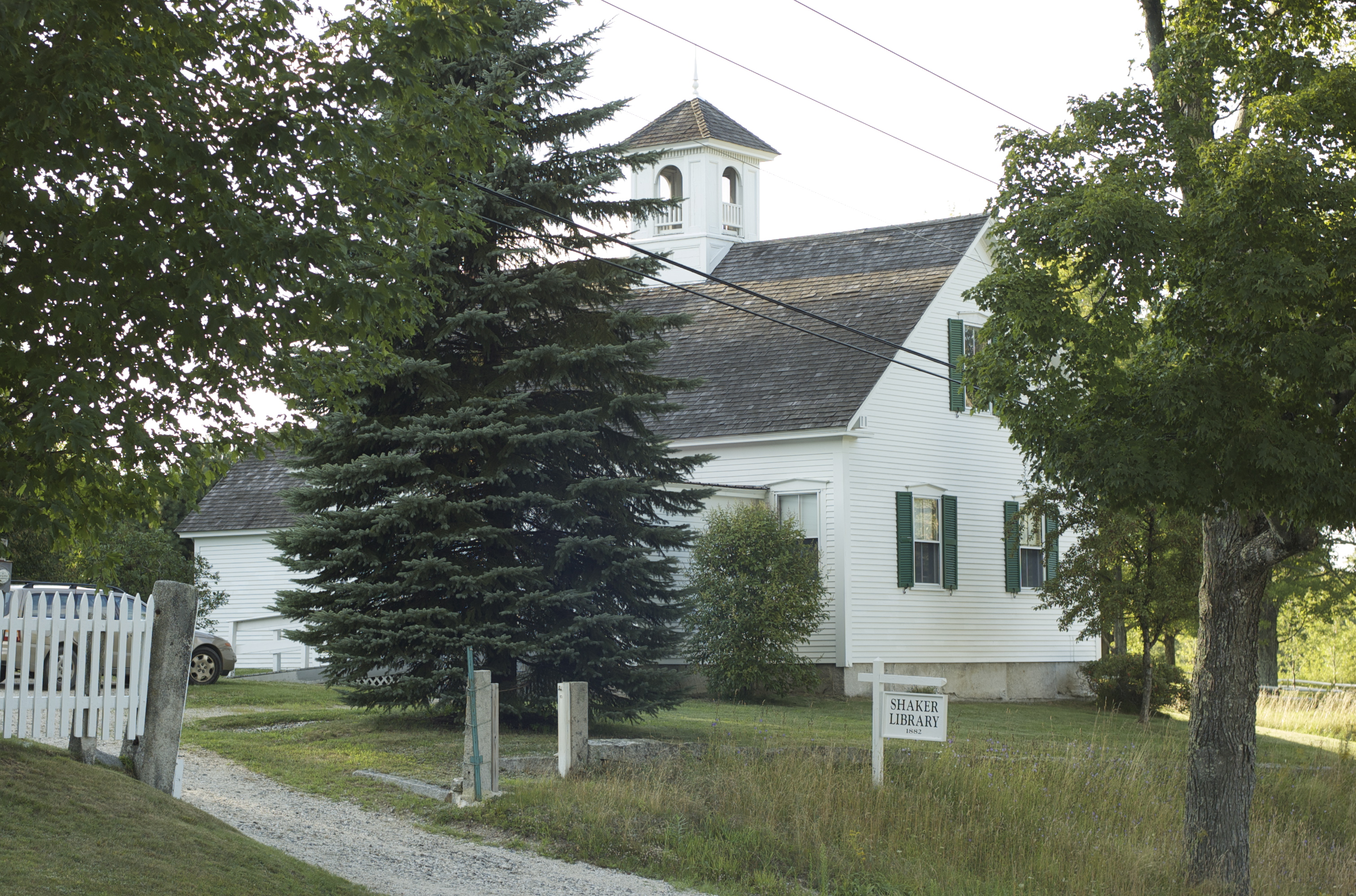
Sabbathday Lake Shaker Village: The Last Believers
Three people hold an entire religion together. At Sabbathday Lake, tucked between the towns of New Gloucester and Poland in central Maine, the world's last active Shaker community rises each morning to the sound of the Great Bell on the Dwelling House. The bell rings at 7:30 am, just as it has for over two centuries, calling the faithful to breakfast, then to prayer, then to work. The Shakers who built 19 communal villages across America, who attracted some 17,000 converts, who peaked at 6,000 members in 1840 - all of that history has narrowed to this single place, these few hands, this quiet persistence beside a lake in Maine.
A Faith That Arrived by Ship
The Shakers crossed the Atlantic in 1774, fleeing England for Colonial America in pursuit of religious freedom. They were formally known as the United Society of Believers in Christ's Second Appearing, but everyone called them Shakers for their ecstatic, trembling worship. They built their first village at New Lebanon, New York, then spread across ten states - Maine, New Hampshire, Massachusetts, Connecticut, New York, Kentucky, Ohio, Indiana, Georgia, and Florida. Their communities were models of order and ingenuity, governed by a radical premise: celibacy, shared property, confession of sins, and equality between men and women. They maintained their numbers not through birth but through conversion and the adoption of orphans. It worked, for a time.
Thompson's Pond Plantation
Shaker missionaries arrived at what was then called Thompson's Pond Plantation in 1782. The first converts came from Gorham, Maine, and within a year the community had swelled to over two hundred members. By 1850, the village had grown to encompass 26 large buildings, including the meetinghouse built in 1794 and the Brethren's Shop, which still contains a working blacksmith forge and woodworking operation. A large Central Dwelling House went up in 1883. But the numbers told a different story. By 1850, only 70 Shakers remained in the Sabbathday Lake Church Family. The 1880 census counted 43. By the 1930s, roughly 30. The trajectory was unmistakable, and yet the community endured.
The Covenant in the Safe
In 1988, Eldress Bertha Lindsay made a striking declaration about membership: 'To become a Shaker you have to sign a legal document taking the necessary vows and that document, the official covenant, is locked up in our safe. Membership is closed forever.' She was speaking from the Canterbury, New Hampshire community, which had declared the covenant sealed. But Sabbathday Lake disagreed. They kept their doors open, welcoming novices who wished to explore the life. The tension between the two communities defined Shaker identity in the late twentieth century. Sabbathday Lake chose hope over resignation, and time proved them right - in 2025, Sister April Baxter joined, bringing the membership to three.
Days Measured by Bells and Prayer
The daily rhythm at Sabbathday Lake has the quality of ritual refined by centuries. Breakfast follows the Great Bell at 7:30. Morning prayers begin at 8:00 - two Psalms, Bible readings, communal and silent prayer, and a Shaker hymn. Work starts at 8:30 and pauses at 11:30 for midday prayers. Lunch at noon is the main meal. Afternoons return to labor until supper at 6:00. Wednesdays bring a 5:00 pm prayer meeting followed by a Shaker Studies class. The Shakers own everything communally and confess their sins to each other. Visitors come regularly, and the community teaches them soapmaking and bookbinding - workshops that help keep the village financially alive.
Preserving What Remains
The Sabbathday Lake Shaker Museum holds 13,000 artifacts - furniture, oval boxes, woodenware, metalwork, textiles, visual arts, herbal and medicinal products - representing every Shaker community known to have existed. The collection places special emphasis on Maine's Shaker heritage, including the communities at Poland Hill, Gorham, and Alfred. In October 2005, the Shakers entered into a conservation trust with the state of Maine and several conservation groups, selling easements on their lakeside property to prevent development. The $3.7 million plan allows the village to continue operating as long as Shakers remain. What happens after that falls to a nonprofit board, the United Society of Shakers, Sabbathday Lake Inc. The first Sunday of August, they still celebrate Mother Ann Lee, commemorating the English Shakers' arrival in America in 1774. The congregation sings. A Mother Ann cake is presented. The tradition continues.
From the Air
Located at 43.99°N, 70.37°W near New Gloucester, Maine. From the air, the village appears as a cluster of white and pale buildings along the eastern shore of Sabbathday Lake, surrounded by farmland and forest. The 26-building complex and open fields are distinctive against the wooded Maine landscape. Nearest airport is Portland International Jetport (KPWM), approximately 25 nm to the south-southeast. Auburn-Lewiston Municipal Airport (KLEW) is about 15 nm to the northwest. Best viewed at 2,000-3,000 feet AGL for detail of the village layout. The lake itself serves as a useful visual reference.