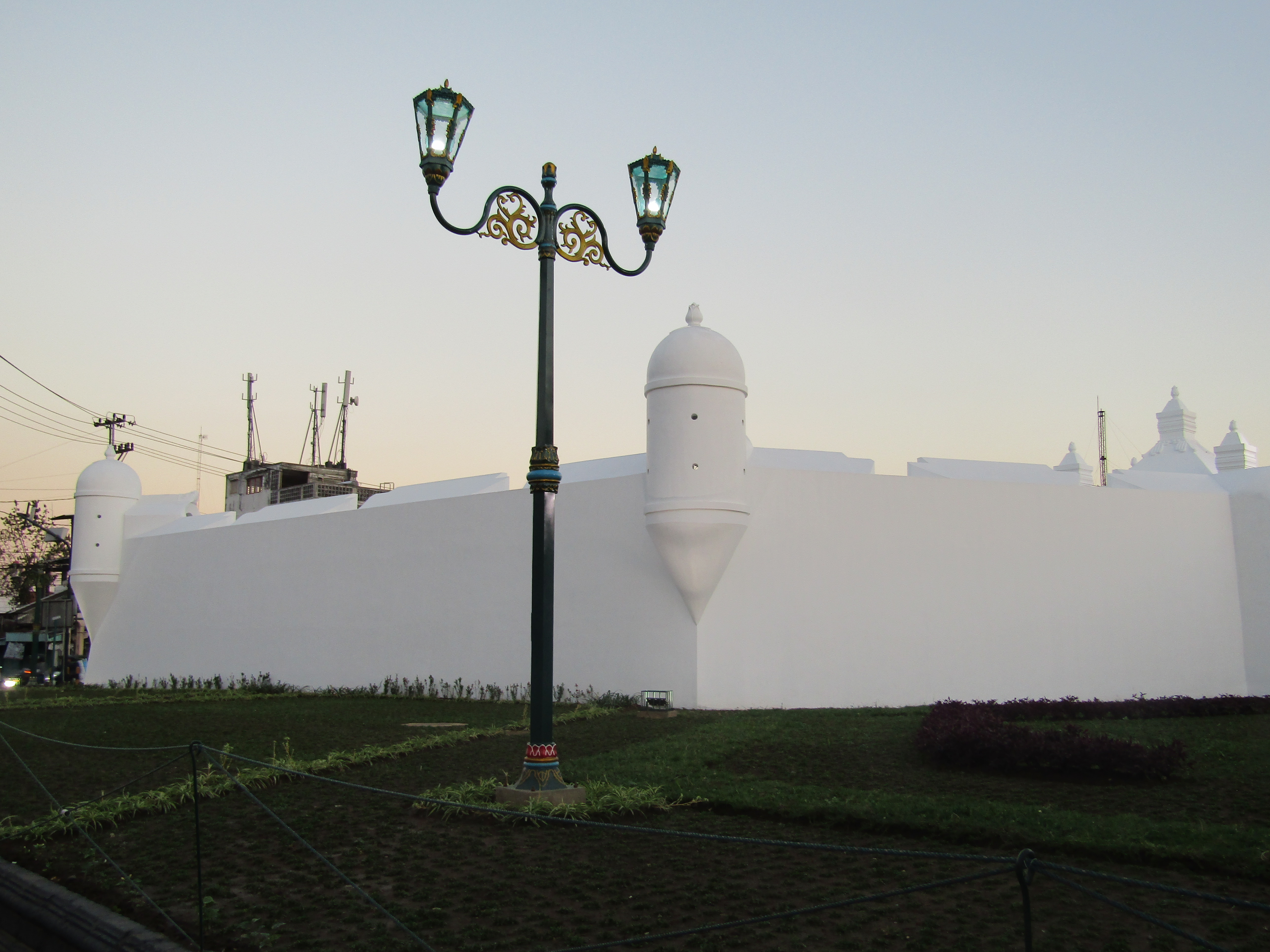
The Sack of Yogyakarta
They left a single Quran. That detail, recorded in a Javanese account of what happened on 20 June 1812, says more about the sack of Yogyakarta than any casualty figure. British and Sepoy troops spent four days stripping the keraton -- the royal palace -- of everything they could carry: jewel-encrusted keris daggers, gold jewelry, gamelan instruments, government archives, and thousands of Babad manuscripts recording centuries of Javanese history. Nobles and their retainers were forced to carry the loot themselves. When the soldiers were finished, they had emptied not just a treasury but a civilization's memory, leaving behind one holy book and a silence that Yogyakarta calls Geger Sepoy -- the Sepoy tumult.
A Collision of Empires and Egos
The crisis began with a handover. In August 1811, Britain invaded Java and overthrew the Franco-Dutch colonial government, inheriting a political landscape they barely understood. Central Java was divided between two native states -- the Yogyakarta Sultanate and the Surakarta Sunanate -- both of which had suffered territorial losses under the previous colonial governor, Herman Willem Daendels. Sultan Hamengkubuwono II saw the British arrival as an opportunity: he deposed his own son, Prince Regent Surojo, who had been installed during Franco-Dutch rule, and began reasserting royal authority. The new British resident in Yogyakarta, John Crawfurd, responded with hostility, alienating the sultan and urging his superior, Stamford Raffles, to remove Hamengkubuwono II entirely. Raffles hesitated. He commanded barely a thousand troops on all of Java, while Yogyakarta could raise ten thousand fighting men. But both sides began preparing for a confrontation they considered inevitable.
Bamboo Ladders Before Dawn
The assault came on 20 June 1812, after British forces under Robert Rollo Gillespie marched inland from Semarang. The attacking force numbered roughly a thousand men -- grenadiers of the 59th and 78th Regiments, Bengal Sepoys, Madras Horse Artillery, and five hundred soldiers of the Legiun Mangkunegaran under the Javanese prince Mangkunegara II. Against them stood an estimated six thousand defenders, though a British major on the scene inflated that number to seventeen thousand. Gillespie divided his columns into three. The main thrust came from the east, where Sepoys carried bamboo scaling ladders provided by Yogyakarta's own Kapitan Cina, Tan Jin Sing -- a betrayal from within. Defenders spotted the eastern column and opened fire with artillery, but the Sepoys managed to lower a drawbridge and pour into the compound. At the south gate, heavy resistance ended when the Javanese commander Raden Tumenggung Sumodiningrat fell. By the time British troops reached the inner court, Hamengkubuwono II and his entourage stood dressed in white, waiting to surrender.
Four Days of Plunder
The assault killed 23 British soldiers and wounded 76, including Gillespie himself, who took a bullet in his left arm. Yogyakartan casualties numbered in the hundreds. What followed was worse than the battle. British forces looted the keraton for more than four days, seizing treasure valued at over 850,000 rixdollars. Gillespie personally pocketed 74,000 Spanish dollars. Soldiers stripped jewelry from noblewomen and pried jewels from ceremonial keris daggers. But the cultural plunder cut deepest: Babad chronicles, government archives, manuscripts covering centuries of Javanese literary and political history -- all were carried away. Many ended up sold or donated to the British Museum and other institutions in London. The gamelan instruments of Hamengkubuwono II, crafted in 1752, were dismantled and scattered. In Yogyakarta, the event became known not by its military name but by the chaos that defined it: Geger Sepoy.
Exile and Aftermath
Hamengkubuwono II and two of his sons were shipped to Penang in July 1812. His son Surojo was installed as Sultan Hamengkubuwono III the day after the assault and promptly signed a treaty ceding territories and accepting the creation of the semi-independent Pakualaman, carved from Yogyakartan lands. The sultanate's military was gutted. Most soldiers were dismissed, and with no livelihood, many turned to banditry. The humiliation planted seeds that would sprout thirteen years later in the Java War of 1825-1830, when Prince Diponegoro -- a member of the royal family -- led a five-year rebellion against Dutch colonial rule that cost an estimated 200,000 Javanese lives.
Manuscripts That Have Not Come Home
More than two centuries later, the looted manuscripts remain a live diplomatic issue. The modern Yogyakarta Sultanate has repeatedly petitioned the British government for their return. As of 2023, the British Library had provided digital copies of 120 manuscripts -- a gesture the sultanate has acknowledged while pointing out that an estimated 7,500 physical manuscripts sit in British archives. The gap between 120 digital scans and 7,500 originals captures the unresolved weight of the sack. Yogyakarta has rebuilt its palace, restored its gamelan traditions, and maintained the hereditary sultanate into the twenty-first century. But the Babad texts that recorded how it all began -- the chronicles of dynasties, the philosophical treatises, the literary works of a civilization -- remain in collections thousands of miles from the keraton where they were written.
From the Air
Located at 7.81S, 110.36E in the heart of Yogyakarta, Java. The keraton compound is a large rectangular complex visible in the old city center. Fort Vredeburg, where British troops staged the assault, is immediately to the north. Adisucipto International Airport (WARJ) lies approximately 9 km east. Mount Merapi (2,930m) dominates the northern skyline. Best viewed at 3,000-5,000 feet in clear conditions.