McClellan Field: The Workshop That Armed the Pacific
In March 1942, sixteen B-25 Mitchell bombers landed at McClellan Field outside Sacramento. Their crews knew only that they were there for modifications. The man in charge was Lieutenant Colonel Jimmy Doolittle, and the modifications were preparations for the most audacious air raid of the war: a one-way bombing run against Tokyo, launched from the deck of an aircraft carrier. The Doolittle Raiders practiced their impossibly short carrier takeoffs at Willows Airport, ninety miles north, where a runway had been painted to resemble a flight deck. McClellan armed the planes. Within weeks, they were on the USS Hornet, heading toward Japan. It was the most dramatic chapter in the long story of a base that spent six decades as the Air Force's critical Western workshop.
Building the Arsenal
Construction of the Pacific Air Depot began in 1935, making it one of only four air depots in the entire country. By April 1938, the main complex was complete: administrative buildings, barracks, warehouses, and a hospital spread across the flat Sacramento Valley floor northeast of the city. Renamed the Sacramento Air Depot that same year, the base underwent rapid expansion as war clouds gathered over Europe and the Pacific. Assembly lines were established to repair and overhaul fighter aircraft, starting with the Lockheed P-38 Lightning and the Bell P-39 Airacobra. In 1940, a third line was added for the Curtiss P-40 Warhawk. The depot operated like a factory in reverse, taking battered fighters apart and putting them back together, ready for combat.
Gateway to the Pacific War
When the Japanese attacked Pearl Harbor in December 1941, McClellan shifted into overdrive. P-40 fighters, Martin B-26 Marauder medium bombers, and Boeing B-17 Flying Fortress heavy bombers began arriving at the field to be armed, equipped, and shipped overseas. Some B-17s came directly from the Boeing factory. During the war years, most Army Air Forces planes destined for the Pacific Theater were prepared at McClellan, making the Sacramento depot one of the most consequential military installations on the West Coast. In 1943, the operation expanded again with the creation of the Sacramento Air Depot Control Area Command, which oversaw not just McClellan but a network of depots and sub-depots across the central Pacific supply chain. After victory, McClellan became a storage center, its tarmac crowded with rows of Boeing B-29 Superfortresses waiting to learn whether they would fly again or be scrapped.
Cold War Workbench
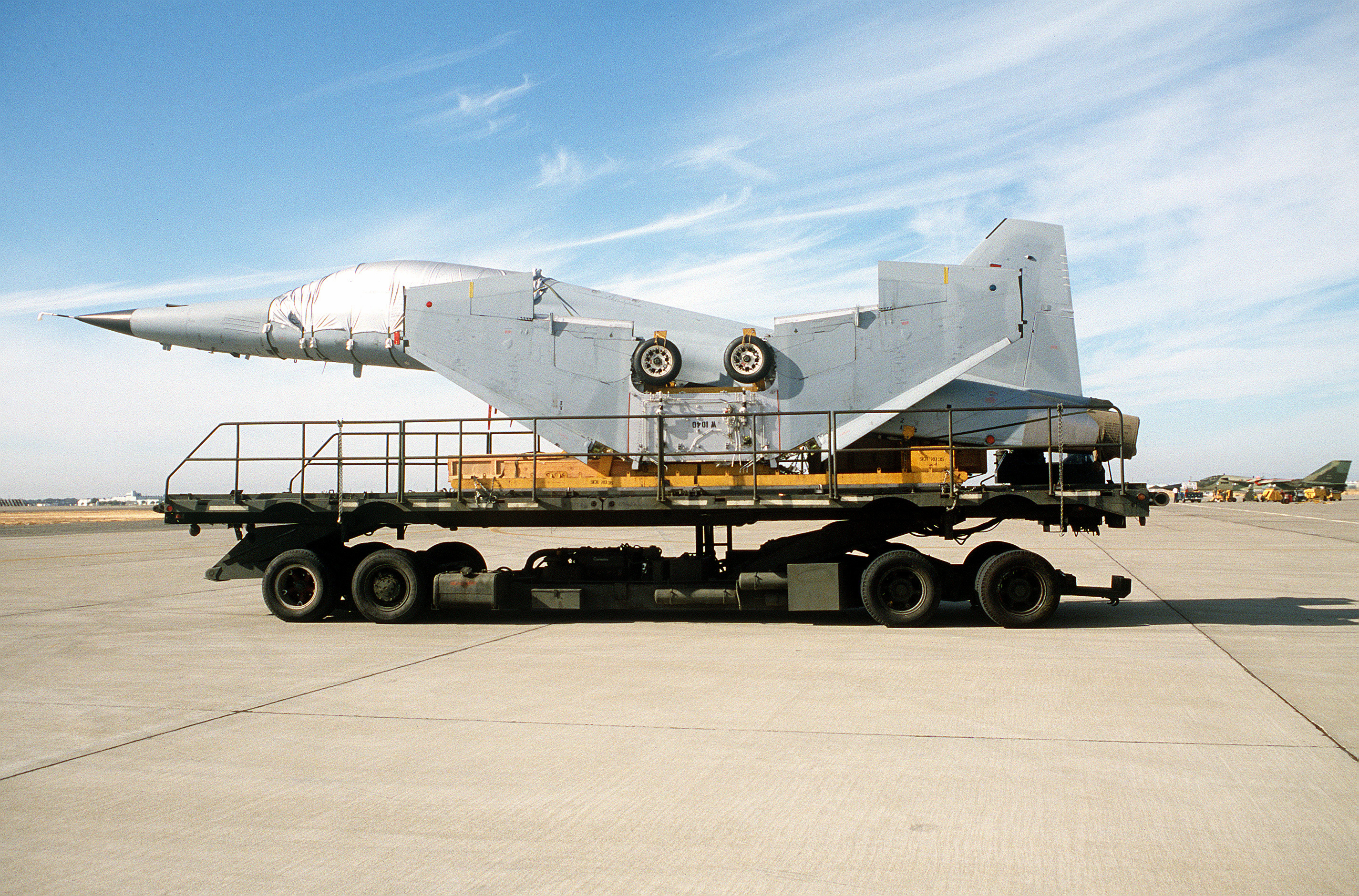
The base was renamed McClellan Air Force Base in 1948, and its mission continued through four decades of Cold War. As an installation of the Air Force Logistics Command and later the Air Force Materiel Command, McClellan maintained the overhaul capability that had made it indispensable during wartime. Throughout the 1980s and into the early 1990s, the base served as the primary depot for overhauling the General Dynamics F-111 swing-wing bomber and its variants, the FB-111 strategic bomber and the EF-111 electronic warfare aircraft, as well as the Fairchild Republic A-10 Thunderbolt II. The 2874th Test Squadron, assigned from 1988 to 1992, conducted flight tests on aircraft returning to active service after depot maintenance, ensuring that overhauled jets met combat standards before rejoining operational squadrons.
Red Flag and the Electronic Frontier
McClellan's role extended beyond wrenches and rivet guns. The base hosted a tenant Boeing WC-135 weather reconnaissance unit and provided electronic warfare support for Operation Red Flag, the Air Force's premier air combat exercise held at Nellis Air Force Base in Nevada. A small detachment of F-111D and F-111F aircraft from the 431st Test and Evaluation Squadron at Nellis was also stationed at McClellan, keeping the base connected to the cutting edge of tactical aviation even as its primary mission remained maintenance and logistics. The combination of heavy industrial overhaul capability and tactical test operations made McClellan unusual among Air Force installations, a place where grease-stained mechanics and test pilots shared the same flight line.
Closing the Hangar Doors
The 1995 Base Realignment and Closure Commission marked McClellan for shutdown, ending sixty years of continuous military aviation operations. The Sacramento Air Logistics Center was formally inactivated on July 13, 2001. The closure rippled through the Sacramento economy, eliminating thousands of civilian jobs and leaving behind an environmental cleanup challenge that the designation as a Superfund site underscored. The former base has since been redeveloped as McClellan Business Park, its hangars and runways repurposed for civilian use. The old runway still handles occasional aircraft, and some of the original 1930s-era buildings remain standing, artifacts of the New Deal era when the federal government built infrastructure meant to last. The warplanes are gone, but the concrete they taxied on endures.
From the Air
Located at 38.659N, 121.392W, approximately 7nm northeast of downtown Sacramento. The former McClellan AFB runway and hangars are clearly visible from the air, now part of McClellan Business Park. Sacramento Executive Airport (KSAC) is 8nm south-southwest; Sacramento International (KSMF) is 12nm northwest. Mather Airport (KMHR), another former Air Force base, lies 10nm to the southeast. The distinctive long military runway and surrounding industrial complex are easy to identify against the suburban development that now surrounds the former base. Best viewed at 3,000-5,000 feet AGL.