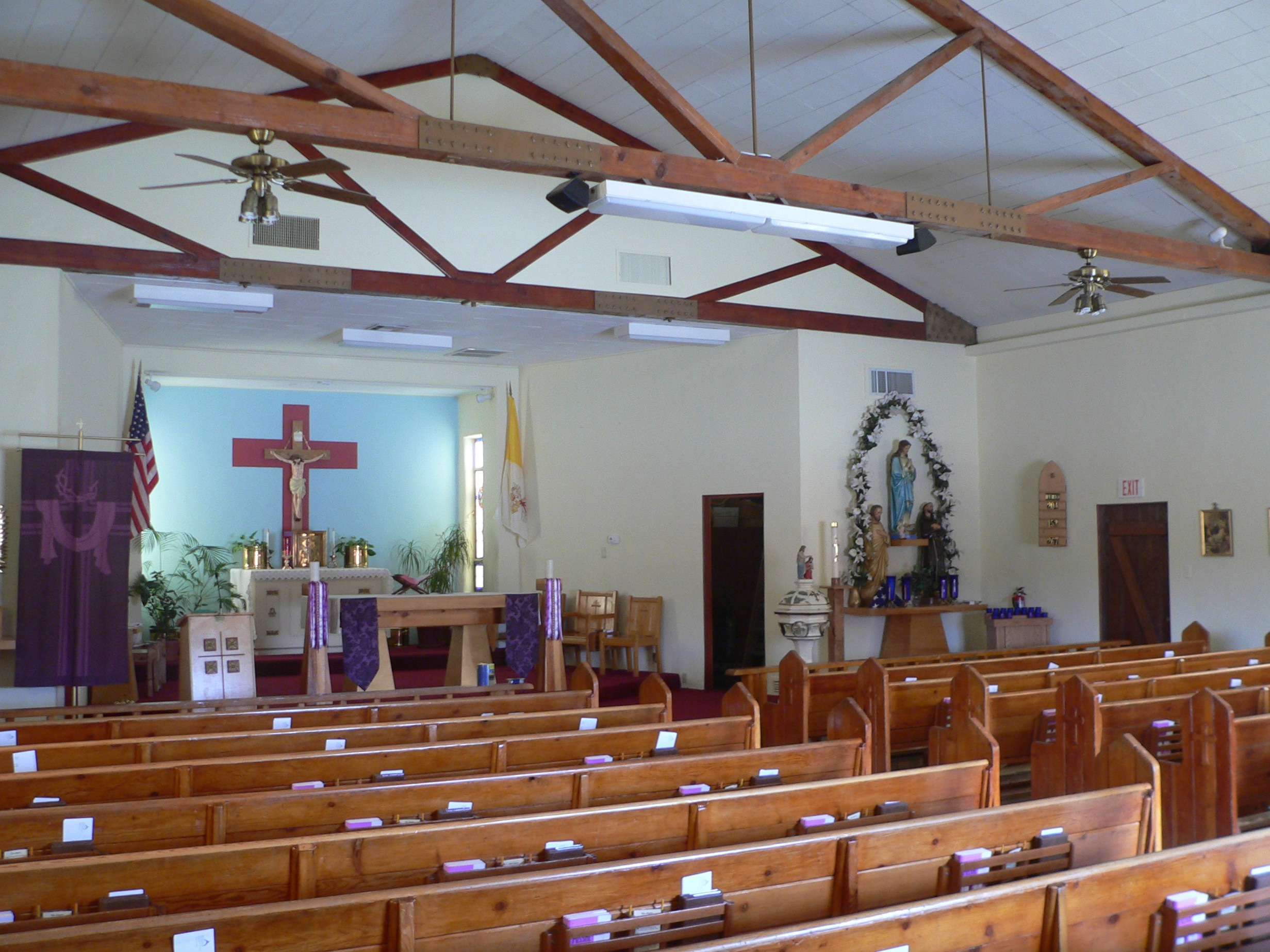
Sacred Heart Church (Tombstone, Arizona)
In a town known for gunfights, gambling halls, and silver fever, the most remarkable character may have been a five-foot-tall Irish immigrant named Nellie Cashman. She ran a hotel, worked as a nurse, prospected for gold, and in 1881 raised the money to build Tombstone's first church. Sacred Heart Catholic Church rose in what had become, almost overnight, the largest and busiest city between San Francisco and St. Louis. It was only the sixth Catholic church in all of Arizona Territory, and today its 1882 building remains the oldest surviving frame church in the state.
The Angel of Tombstone
Nellie Cashman earned her nickname through acts of compassion that seemed almost out of place in Tombstone's violent atmosphere. She was a businesswoman who ran a hotel and restaurant, but she was also a miner, a nurse, and an unstoppable force for charity. When five men were sentenced to hang for the Bisbee Massacre, Nellie reportedly provided them spiritual comfort in their final days and then took action to prevent their execution from becoming a grotesque public spectacle. Her leadership in building Sacred Heart Church was typical of her character: she saw a rough town that needed civilizing and did something about it. The 1881 building she helped fund, a rare two-story adobe structure in Tombstone, still stands as a rectory.
Three Churches, Three Eras
The Sacred Heart complex tells the story of Tombstone's evolution through its buildings. The original 1881 adobe building gave way in 1882 to a larger frame church with board-and-batten walls, Gothic-styled windows, and a high-pitched wood-shingled roof. This second building, constructed under Nellie Cashman's continued leadership, was built on the corner of 6th and Stafford Streets. Its walls were stuccoed over in 1925, and in 1946 the entire structure was moved to make way for the current church. That move destroyed the separate bell tower that had held a 610-pound bell since 1883, though the bell itself survived and was eventually mounted above the new main building in 2000. The 1947 church, designed by Tucson architect Terry Atkinson, represents a modern take on Spanish Colonial and Mission Revival architecture.
A Courtyard of Living History
Behind the church lies a gathering place that connects present-day parishioners to Tombstone's silver boom days. The Rose Tree Courtyard features two massive rose trees planted in the 1880s by the Giacoma-Costella family, who later donated their Sixth Street property to the church. Father Thomas Doyle began tending these roses in 1965, building a wooden support system as the plants grew to enormous size. By 2001, each tree measured several feet in circumference at the base and provided a canopy over a substantial area. The courtyard also includes a stone altar and a memorial wall with plaques honoring deceased church members. While impressive, these rose trees are dwarfed by their neighbor just blocks away: the World's Largest Rosebush at 118 South 4th Street, planted in 1885.
A Focus for Community
The National Register of Historic Places recognized Sacred Heart Church in 2002, not just for its architectural significance but for its continuous role in Tombstone's social fabric. The listing specifically notes the complex's importance as a focus for the Hispanic community and its unbroken service since 1881. The three contributing buildings span more than sixty years of construction, and the rose trees themselves were deemed contributing objects to the historic site. In a town where tourists come to see gunfight reenactments and visit the graves of outlaws, Sacred Heart Church stands as a reminder that even the wildest frontier towns had people who gathered to worship, raise families, and build communities that would outlast the silver boom.
From the Air
Located at 31.71N, 110.06W in the heart of Tombstone, Arizona. The church complex sits at 516 Safford Street, one block north of the Tombstone Historic District. The Spanish Colonial style of the 1947 main building is visible from low altitude as a white stuccoed structure with characteristic Mission Revival features. Tombstone Municipal Airport (P33) lies approximately 3 nm north of town. The surrounding high desert terrain is generally flat with excellent visibility except during summer monsoon season. The historic district's grid pattern makes orientation straightforward from the air.