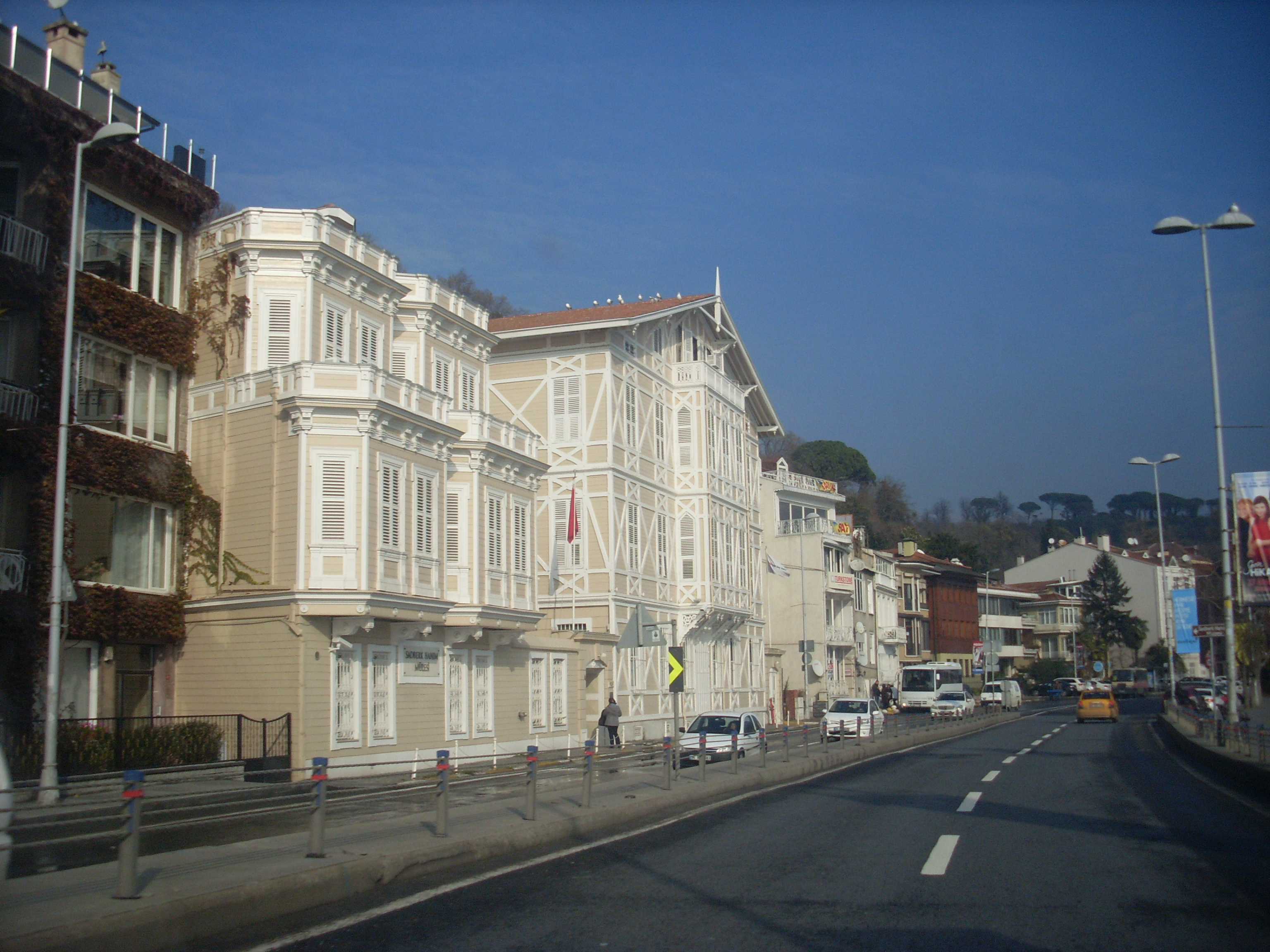
Sadberk Hanim Museum
Vehbi Koc was Turkey's wealthiest industrialist, founder of the Koc Group conglomerate, and a man not given to public displays of feeling. When his wife Sadberk died in 1973, he wanted to do something more lasting than a charitable donation in her memory. Sadberk had been a quiet collector throughout her marriage, accumulating Ottoman embroidery, ceramics, jewelry, and household textiles in the modest, almost domestic way of women whose collecting habits were rarely treated as serious. Vehbi decided her collection would become a museum. In 1978 his foundation took over a 19th-century Armenian-built wooden yali on the Bosphorus shore. On 14 October 1980, Sadberk Hanim Museum opened to the public, the first private museum in Turkey.
The Threaded Yali
The original museum building had a long memory before it became a memorial. Built in the late 19th century by the Azarian family, prosperous Armenian Catholics from Sivas, it was a three-story-plus-attic wooden structure on a masonry foundation, set in 4,280 square meters of grounds along the Bosphorus shore in Buyukdere. The building's exterior featured crossed wooden moldings unusual enough that locals dubbed it the Vidali Yalisi, the Threaded Yali. The Koc family bought it in 1950 as a summerhouse. By 1978 they had decided it would become Sadberk's memorial, and the architect Sedat Hakki Eldem was hired to convert the family retreat into exhibition space. The walls inside the public galleries were painted to resemble veined marble. The plaster ceiling moldings drew on ancient Roman vocabulary.
The Sevgi Gonul Wing
Three years after opening, the museum acquired a second collection: the Huseyin Kocabas accumulation of pre-Islamic and early Islamic archaeological material from Anatolia. The Vehbi Koc Foundation bought a semi-derelict yali next door and spent two years rebuilding the facade exactly to its original early-20th-century form. The new wing, dedicated to the daughter of Sadberk and Vehbi as the Sevgi Gonul Wing, opened on 24 October 1988. Europa Nostra immediately awarded it a prize for outstanding museum architecture and design. Inside, the building is reinforced concrete clad in wood at the front and marble stucco treated to look like wood at the side. Galleries are sealed against daylight, with case lighting calibrated for delicate antiquities.
What's Inside
The Sevgi Gonul Wing displays roughly 600 square meters of archaeology in chronological order: Neolithic, Hatti, Hittite, Phrygian, Greek, Hellenistic, Roman, Byzantine. Bronze figurines. Cylinder seals. Iron Age jewelry. The original Azaryan Yali holds the Islamic art and ethnography: Iznik tiles, Kutahya ceramics, Ottoman calligraphy panels, embroidered ceremonial textiles, kaftans, jewelry, and household objects from the Ottoman period through the early 20th century. There are also collections of European porcelain, Chinese export wares, and small but interesting holdings of Turkish costume from across the imperial period. The total exhibition space across both wings runs to about 625 square meters, modest by international standards but densely curated.
The American Traveler's Kilims
In 2007, Vehbi Koc's nearby Buyukdere summer house opened to display a collection of Anatolian kilims gathered by Josephine Powell, an American travel writer who spent decades photographing rural Turkish life. Powell had wandered through villages in the Aegean and central Anatolia in the 1970s and 1980s, documenting weaving traditions that were already disappearing under industrialization. After her death she donated her kilim collection to the Vehbi Koc Foundation. The summer house display preserves rugs that are essentially unrepeatable, woven by women whose techniques were not written down and whose villages have changed beyond recognition since.
The Move That's Coming
The museum is scheduled to relocate eventually. As part of the Tersane Istanbul redevelopment, also called Halicport, one of the abandoned warehouses on the Golden Horn shore will become Sadberk Hanim's new home. The move would bring the museum closer to its sister institutions, the Rahmi M. Koc industrial museum on the same Golden Horn shore, and to a more accessible part of central Istanbul. For now, though, Sadberk Hanim still occupies the two yalis at Buyukdere, with the Bosphorus current sliding past the windows where Vehbi Koc once spent quiet summers and where his wife's collection found its second life as a public museum named for her.
From the Air
Located at 41.1631 N, 29.0478 E on the western shore of the Bosphorus in the Buyukdere neighborhood of Sariyer district, near the strait's mouth at the Black Sea. The Bosphorus is unmistakable from the air, a narrow blue thread separating Europe from Asia. Istanbul Airport (LTFM) lies 30 km west. Sabiha Gokcen (LTFJ) is 40 km southeast on the Asian side. The Black Sea opens to the north.