Sagamihara Stabbings: The Attack Japan Could Not Name
By September 2016, two months after a former employee killed 19 people and wounded 26 others at a residential care facility in Sagamihara, almost no information had been released about the victims. Their names were withheld. Their photographs were not published. Japan, a country where mass violence is exceptionally rare, found itself grappling not only with the deadliest mass stabbing in its modern history but with an uncomfortable question embedded in the crime itself: the killer had targeted people with disabilities specifically because he believed their lives had no value. Naming them, in a society where disability still carried deep stigma, risked exposing their families to scrutiny they had spent years avoiding. The silence was both protective and painful -- an echo of the very invisibility the attacker had exploited.
The Facility on the Sagami River
Tsukui Yamayuri En was a residential care center operated by a social welfare organization and established by the local government. Built in a wooded area on the bank of the Sagami River, the facility housed 149 residents between the ages of 19 and 75, all of whom had intellectual disabilities and many of whom also had physical disabilities. Some were active enough to go outdoors; others were bedridden. The facility sat in a remote location in Midori Ward, Sagamihara, Kanagawa Prefecture, accessible from Sagamiko Station on the Chuo Main Line. It was the kind of institution that operates quietly -- essential to the families who depend on it, largely invisible to everyone else.
26 July 2016
At 1:37 in the morning, a 26-year-old former employee of the facility parked his car on a nearby road and retrieved a bag containing five knives, a hammer, and cable ties. He broke through a glass window with the hammer at 1:43. Inside, he restrained a female staff member with cable ties and forced her to accompany him room to room. In each room, he asked whether the resident could speak. Those who could not were stabbed as they slept. He moved through two residential buildings -- the Hana Home and the Niji Home -- killing 19 people and injuring 26, most by stabbing them in the neck. He turned himself in at a police station at 3:05 a.m., carrying the bloodstained weapons. The attack lasted less than an hour and a half. Justin McCurry of The Guardian described it as one of the worst crimes committed on Japanese soil in modern history.
The Letter That Was Ignored
Five months before the attack, in February 2016, the perpetrator had attempted to deliver a letter to Tadamori Oshima, Speaker of the House of Representatives, at Oshima's Tokyo residence. Turned away by security, he returned the next day and left the letter with guards. The document called for legalizing the killing of people with severe disabilities when requested by their guardians, framing the act as beneficial to Japan, the global economy, and world peace. He offered to carry out the killings himself and outlined a specific plan targeting two facilities -- likely the two residential buildings where the attack later occurred. He signed the letter with his name, address, phone number, and employer. After being reported, he was briefly hospitalized but released on 2 March after doctors determined he was not a threat. He resigned from the care home that same month.
Trial and Sentence
The perpetrator was charged on 24 February 2019 with 19 counts of murder, 24 counts of attempted murder, and multiple additional charges including illegal confinement and unlawful entry. His defense team initially planned to argue mental incompetence due to marijuana use. In December 2019, he reversed course and said he would admit to the crime, stating that denying the charges would make the trial unnecessarily complex. He pleaded not guilty on 8 January 2020, but the prosecution sought the death penalty, calling the rampage inhumane and leaving no room for leniency. On 16 March 2020, the Yokohama District Court sentenced him to death. He withdrew his automatic appeal on 30 March 2020, finalizing the sentence. A request for retrial filed in April 2022 was dismissed in April 2023.
What Was Rebuilt
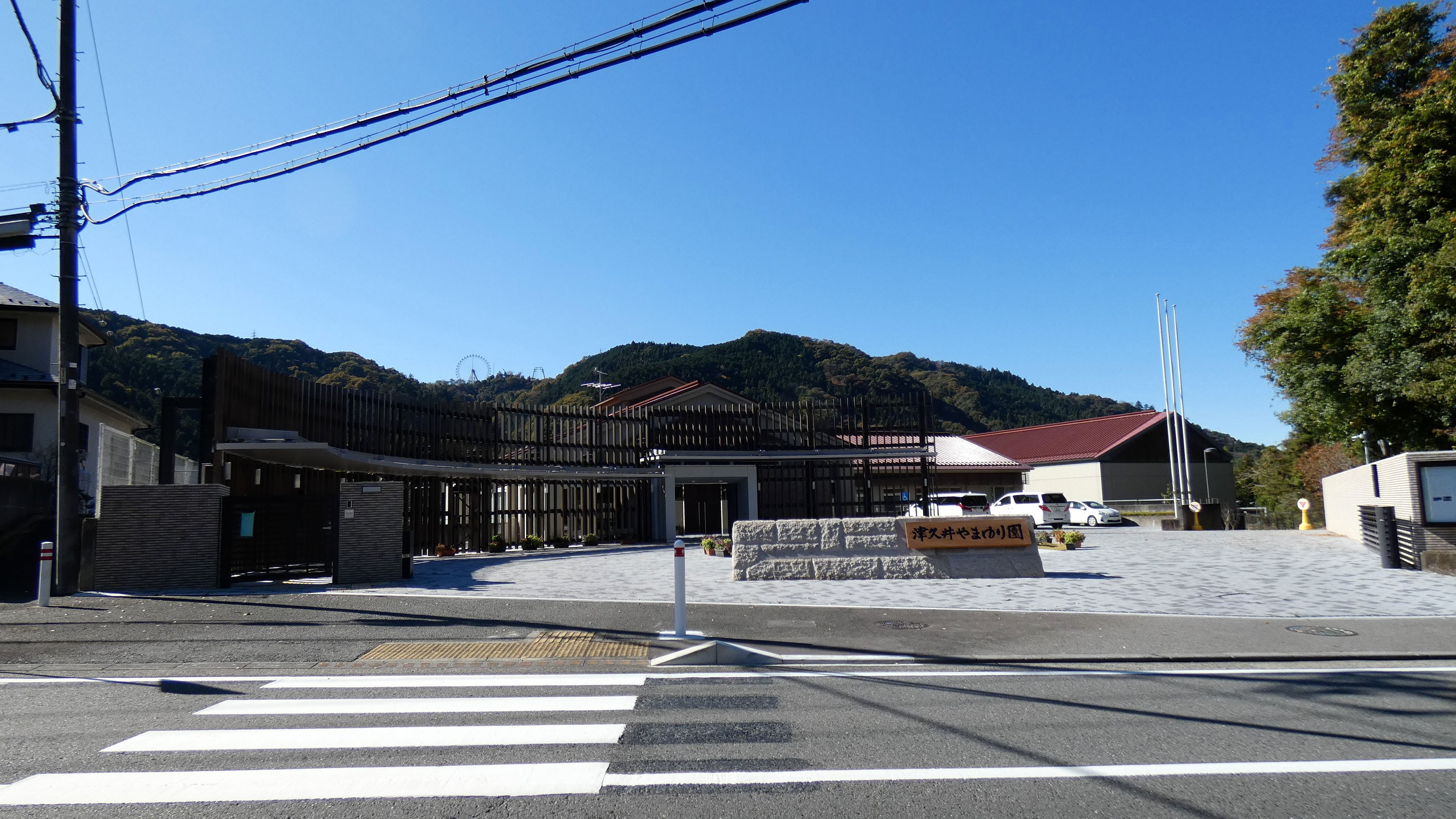
The original Tsukui Yamayuri En facility was demolished. The administration building and gymnasium, where no one was attacked, were left standing. In September 2016, Kanagawa Prefecture Governor Yuji Kuroiwa announced the facility would be rebuilt, and a new complex of two buildings opened in July 2021, continuing to serve residents with disabilities. The date of the attack -- July 26 -- carries a layered significance in disability history: it is also the anniversary of the 1990 Americans with Disabilities Act, one of the world's first national laws prohibiting disability discrimination. A year after the stabbings, filmmaker Michael Joseph McDonald released the documentary Nineteen Paper Cranes, following a deaf Japanese papermaker with Kabuki syndrome as she created memorials for each of the nineteen victims. The film offered what the official response could not: individual recognition of lives that the attacker -- and much of society -- had rendered invisible.
From the Air
Located at 35.61N, 139.21E in Midori Ward, Sagamihara, Kanagawa Prefecture. The site sits in a wooded area along the Sagami River, visible from 2,000-3,000 feet AGL as a clearing in the forest near the river. The rebuilt facility opened in 2021. Sagamiko Station on the JR Chuo Main Line is the nearest rail access. The area is west of central Tokyo, in the mountainous western portion of Kanagawa Prefecture. Nearby airports include RJTE (Atsugi Naval Air Facility, approximately 15 nm southeast) and RJTO (Chofu Airport, approximately 20 nm east-northeast).