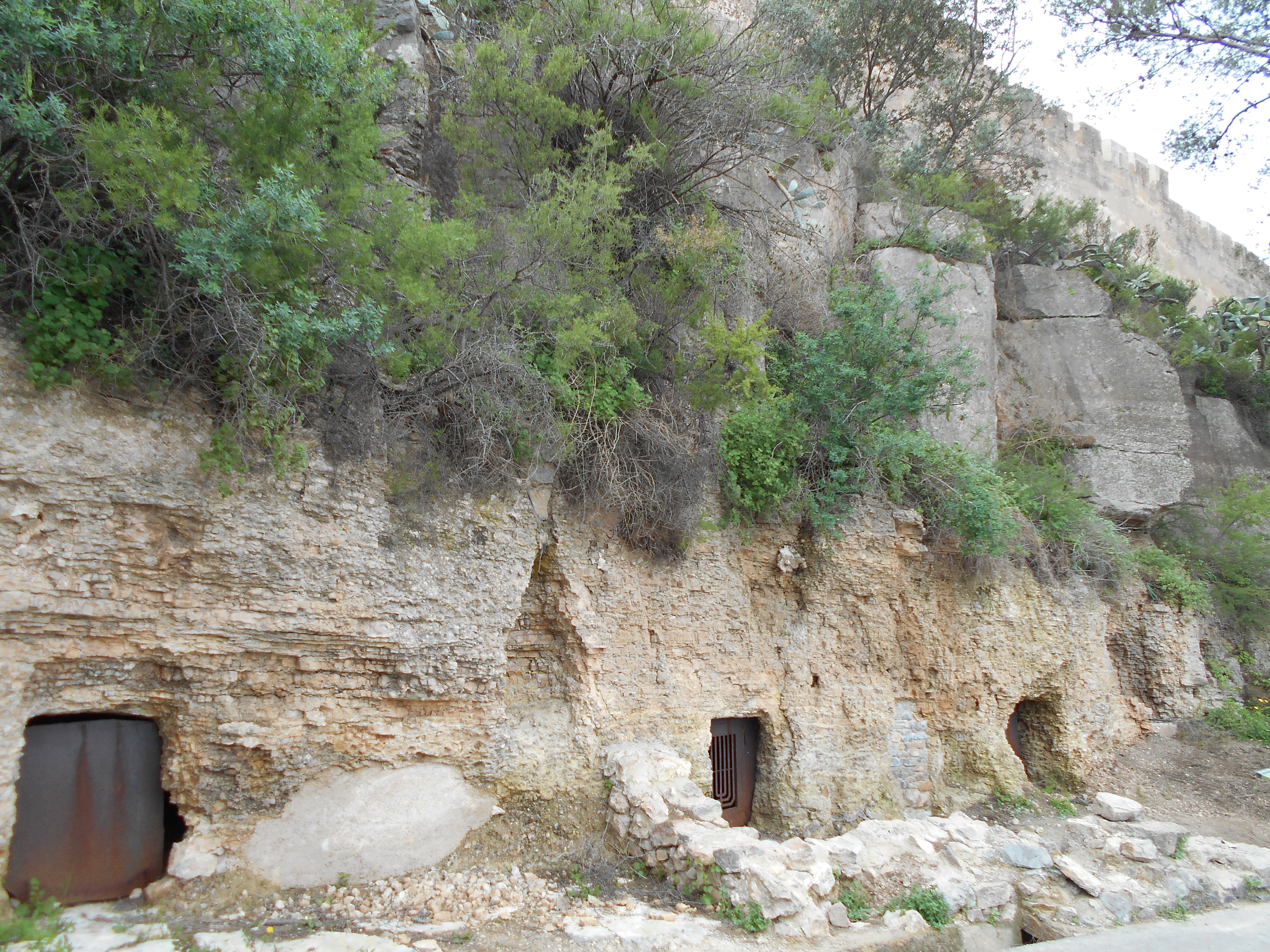
Sagunto Castle
Hannibal's siege of this hilltop in 219 BC started a world war. The Carthaginian general's sacking of the Iberian settlement then called Arse triggered the Second Punic War, a conflict that would reshape the entire Mediterranean. Twenty-two centuries later, the ruins of Sagunto Castle still crown the flat-topped hill that marks the last upthrust of the Sierra Calderona mountains, 23 kilometers north of Valencia. Beneath and between the visible walls lie the compressed remains of every civilization that fought for this strategic ground: Iberian, Roman, Moorish, Christian, and Napoleonic, all stacked in a single archaeological layer cake.
The Hill That Started Wars
The Iberians called their settlement Arse, and its position overlooking the Mediterranean coast made it a prize worth fighting over. When Hannibal besieged and sacked the town in 219 BC, Rome treated the attack as a casus belli, launching the Second Punic War that would eventually bring Carthage to its knees. Under Roman rule, the site became the Municipium Saguntinum, and its hilltop was transformed into a proper Roman civic center. The foundations of a forum, a basilica measuring 60 meters, a row of tabernae, a cistern, and a possible temple of Augustus still lie within the castle grounds. Fifty meters down the slope, the remains of a Roman theater survive, one of the most important in the Valencian region. The Romans built a city here; every subsequent occupier built on top of it.
Names Written in Stone
The castle's very name records the passage of empires. The Mozarabs who remained in the town under Muslim rule called it Murum Veterum, the old wall, a name that contracted over centuries into Murvetrum, Morvedre, and Molvedre. The Muslims modified this further into Murbiter. Christian documents from the 11th century use the Latin form Murus Vetulus. Each name is a linguistic fossil, preserving the accent and perspective of whichever culture happened to be writing it down. The castle did not regain the name Sagunto until well after the Christian reconquest, reaching backward past the medieval centuries to reclaim its Roman identity.
El Cid, Peter of Aragon, and the Jewish Cemetery
El Cid seized the castle in 1098 and held it until 1102, incorporating it into the Kingdom of Valencia during his brief dominion over the region. By the mid-13th century, Christians garrisoned the fortress even as the majority of the town's population remained Muslim. The early 14th century brought a growing Jewish community, leading to the establishment of a Jewish cemetery beneath the castle walls in 1328. Peter IV of Aragon reinforced the defenses, and Peter of Castile besieged and captured it in 1363. The castle's seven plazas, each a distinct fortified zone, bear the architectural fingerprints of these successive occupiers: Islamic arches leading into spaces ringed by Roman-era towers, refectory halls built of materials quarried from ancient foundations.
Napoleon's Engineers
The castle's final military chapter came during the Peninsular War, when French forces besieged it in 1811. The Spanish defender Andriani withstood multiple assaults before Marshal Suchet finally prevailed. After capturing the fortress, Suchet's engineers repaired and strengthened the defenses, leaving the most recent layer of military architecture on a site that had been fortified and re-fortified for more than two thousand years. The castle was declared a National Monument in 1931, freezing in place the accumulated evidence of Iberian walls, Roman forums, Islamic citadels, medieval keeps, and French gun positions. Walking through Sagunto Castle is less like visiting a single historical site than like reading the geological record of human conflict, compressed into a hilltop 172 meters above the sea.
From the Air
Located at 39.68N, 0.28W on a prominent flat-topped hill 23 km north of Valencia, Spain, at 172 meters above sea level. The castle's elongated hilltop fortress stretches nearly a kilometer and is clearly visible from the air. The Roman theater on the northwest slope is also identifiable. Valencia Airport (LEVC) is approximately 25 km to the south. The Mediterranean coast is visible to the east. Recommended viewing altitude: 2,000-4,000 feet AGL to appreciate the full extent of the hilltop fortifications and the adjacent town.