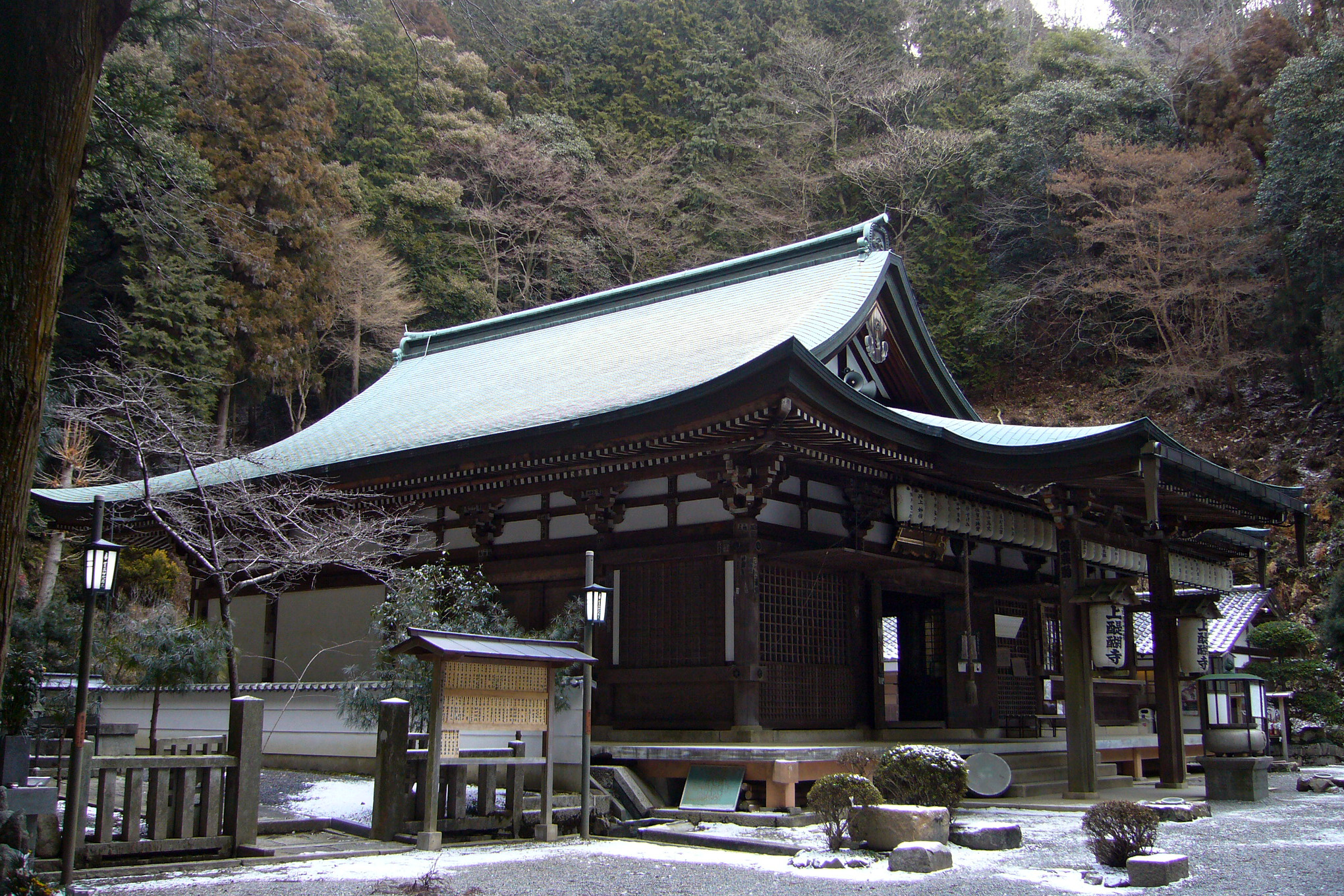
Saigoku Kannon Pilgrimage: Thirty-Three Temples, One Promise
The story begins with a monk in a coma. Around 718 AD, Tokudo Shonin, head priest of Hase-dera Temple in Nara Prefecture, fell into a deathlike sleep and claimed to have stood before Enma-ō, the fearsome King of Hell. Enma did not condemn him. Instead, the king handed Tokudo thirty-three sacred seals and an oath: establish thirty-three sites dedicated to Kannon, the Bodhisattva of Compassion, and those who visit every one of them will be spared from falling into hell. Tokudo woke, received his seals, and the Saigoku Kannon Pilgrimage was born -- the oldest Buddhist pilgrimage route in Japan, threading through seven prefectures across the Kansai region. Thirteen centuries later, pilgrims still walk it, some in traditional white robes and conical straw hats, their stamp books growing heavier with red ink at every temple gate.
Thirty-Three Forms of Mercy
The number thirty-three is not arbitrary. Buddhist scripture teaches that Kannon -- known in Sanskrit as Avalokitesvara and sometimes translated for Western audiences as the Goddess of Mercy -- can manifest in thirty-three different forms to relieve human suffering. Each temple on the pilgrimage enshrines a principal image of Kannon, though the specific form varies: Thousand-Armed Kannon at one temple, Eleven-Headed Kannon at another, Horse-Headed Kannon at a third. The variation means no two stops feel identical. Pilgrims encounter Kannon as warrior, as mother, as wrathful protector, as serene healer -- the same compassion expressed through radically different faces. Three additional temples known as bangai supplement the official thirty-three, bringing the total to thirty-six for the most thorough pilgrims.
An Emperor Revives the Road
After Tokudo established the route, the pilgrimage faded from prominence for nearly three centuries. Its revival came from an unlikely source: Emperor Kazan, who abdicated the throne in 986 under political pressure from the powerful Fujiwara clan. Withdrawing from court life, Kazan took Buddhist vows and devoted himself to ascetic practice. While training at Nachisan Seiganto-ji -- itself Temple 1 of the pilgrimage -- the deity Kumano Daigongen appeared to him in a vision, instructing him to restore the sacred sites that Tokudo had established. Kazan walked the entire route, and his imperial endorsement transformed the Saigoku pilgrimage from an obscure religious exercise into a major spiritual journey. The path he retraced now crosses Wakayama, Osaka, Nara, Kyoto, Hyogo, Shiga, and Gifu prefectures.
White Coats and Red Stamps
Tradition prescribes the pilgrim's appearance: white clothing, a conical straw hat called a sugegasa, and a wooden walking stick. The white robes symbolize purity and readiness for death -- a reminder that the pilgrimage was originally understood as preparation for the afterlife. Today most pilgrims travel by car or train, but the rituals at each temple remain unchanged. At every stop, the pilgrim presents a nokyo-cho, a stamp book bound in cloth or brocade. Temple staff mark each page with bold red stamps and flowing Japanese calligraphy recording the temple number, the temple name, and the specific name of the enshrined Kannon image. Some pilgrims also receive the stamps on hanging wall scrolls or directly onto their white coats -- garments that will be worn at their cremation, carrying the accumulated blessings of all thirty-three temples into the next world.
Songs for the Road
Each of the thirty-three temples has its own goeika -- a devotional hymn composed in classical Japanese verse. These songs are widely known among Japanese Buddhists and are frequently performed as a collected set. Pilgrims chant or sing the goeika upon arrival at each temple, and the melodies serve as both prayer and marker of progress along the route. The songs connect the physical journey to a musical one, each temple gaining a sonic identity alongside its architectural and sculptural character. For pilgrims who complete all thirty-three temples, the full cycle of goeika forms a kind of spiritual soundtrack -- thirty-three verses sung across seven prefectures, each one a step closer to the mercy that Enma promised Tokudo over thirteen hundred years ago.
From the Air
The pilgrimage's geographic anchor point is near Wakayama city at 34.19°N, 135.19°E, though the route spans seven prefectures across the Kansai region from Wakayama north through Osaka, Nara, Kyoto, Hyogo, Shiga, and east to Gifu. Temple 2 (Kimiidera) and Temple 3 (Kokawa-dera) are both near Wakayama. From altitude, the route traces a broad arc through the cultural heartland of western Honshu. Kansai International Airport (RJBB) provides the closest major airport. Osaka Itami (RJOO) and Kobe (RJBE) are also nearby. Many temple compounds are visible from low altitude as cleared grounds with traditional tile roofs set against forested mountainsides.