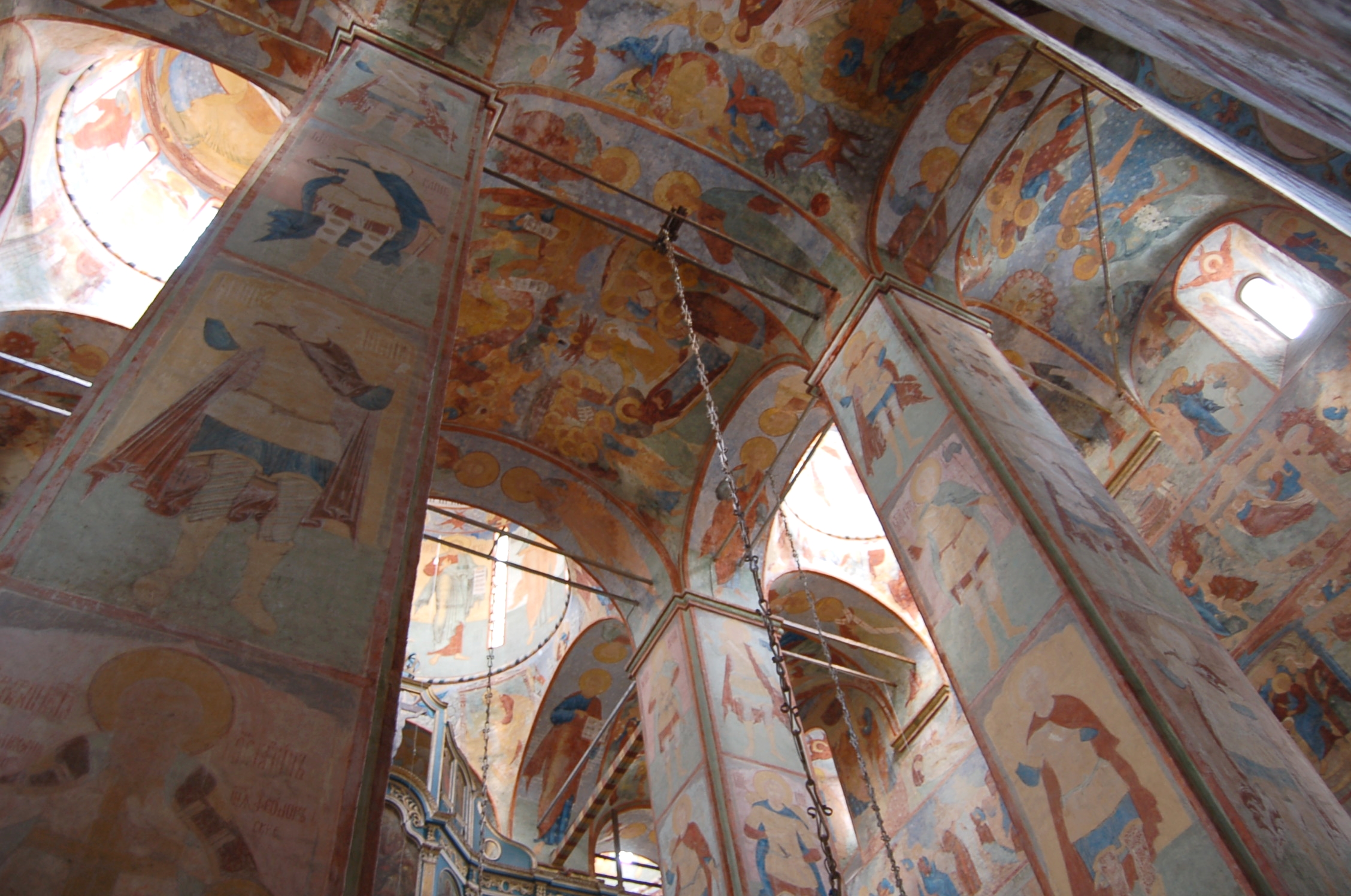
Saint Sophia Cathedral, Vologda
The altar faces northeast. In an Orthodox cathedral, it is supposed to face east -- toward Jerusalem, toward the rising sun, toward the theological center of the faith. But Ivan the Terrible ordered this cathedral built to his specifications, and when the tsar gave instructions, builders followed them. Saint Sophia Cathedral in Vologda, constructed between 1568 and 1570, is the oldest surviving building in the city and one of the more quietly defiant structures in Russian religious architecture. Its unusual orientation is just the beginning. Ivan later rescinded the order, but the cathedral was already built. The walls stayed where they were.
The Tsar's Northern Capital
Ivan the Terrible made Vologda the administrative center of his Oprichnina -- the personal domain he carved from the Russian state, governed by his own agents of terror, separate from the rest of the Tsardom. The cathedral was to be the spiritual anchor of this northern seat of power. In scale, it was ambitious: one of the largest churches built in the Tsardom of Russia up to that point. Tradition held that provincial cathedrals should be modeled after the Dormition Cathedral in the Moscow Kremlin, and Saint Sophia's designers claimed this lineage. But scholars have noted that the actual design draws more heavily from the Dormition Cathedral in Rostov, seat of the local bishopric. The dedication to Holy Wisdom -- Sophia -- carried political weight. Novgorod's great cathedral bore the same name, and Vologda's choice of dedication was read as a declaration of independence from its powerful neighbor.
Frescoes That Survived the Centuries
Between 1685 and 1687, a team of painters from Yaroslavl, led by Dmitry Plekhanov, covered the cathedral's interior walls with frescoes. These paintings represent one of the few completely preserved pre-Petrine fresco cycles in Russia -- a distinction that makes Saint Sophia's interior an irreplaceable document of late 17th-century Russian religious art. The colors, compositions, and iconographic programs remain largely as Plekhanov's team left them, undimmed by the wholesale repainting that destroyed so many comparable cycles elsewhere. Alongside the frescoes, the cathedral contains an elaborately carved Baroque iconostasis. The combination of painted walls and sculpted screen creates an interior of exceptional density, where every surface carries imagery and every surface has aged at its own pace.
Bells With Names
The cathedral's bell tower follows the pattern of the famous belfry in Rostov: every bell has its own name and its own voice. The Watch Bell, cast in 1627, is the oldest. The Water Carrier Bell dates to 1643, the Little Swan Bell to 1656. The Big Holiday Bell was cast in 1687, the same year the frescoes were completed, as if the cathedral was receiving its finishing touches all at once. The Archangel Bell and Big Swan Bell both arrived in 1689. Beyond its liturgical function, the tower served a practical purpose as a fire watch post -- essential in a city built almost entirely of wood. The clock on the tower was manufactured by the Brothers Gutenop factory in Moscow in 1871, a late addition to a structure that had been keeping different kinds of time for three centuries.
A View From the Observation Deck
The bell tower's observation deck offers the best panoramic view of Vologda's downtown. From this height, the city reveals its character: the Vologda River curving through, the wooden houses that define the historic districts, the other churches and monastery buildings that dot the landscape. The former Vologda Kremlin -- the citadel that once protected the cathedral -- is largely gone, but Saint Sophia's Cathedral endures just outside where its walls stood, on the right bank of the river. The building's federal significance designation (number 3510063013) speaks to its importance in the official record, but the view from the tower tells the more human story. This is a city that Ivan the Terrible chose as his own, that outlasted his Oprichnina, and that kept the cathedral he commissioned even after his reasons for building it no longer applied. The northeast-facing altar remains a quiet record of a tsar's whim preserved in stone.
From the Air
Located at 59.22N, 39.88E on the right bank of the Vologda River, adjacent to the site of the former Vologda Kremlin. The cathedral and its bell tower are among the most prominent structures in the Vologda skyline. Recommended viewing altitude: 1,500-4,000 feet. Nearest airport: Vologda Airport (ULWW), approximately 10 km north. The Vologda River and the cathedral ensemble provide clear visual references from the air.