Saint Vincent and the Grenadines Botanic Gardens
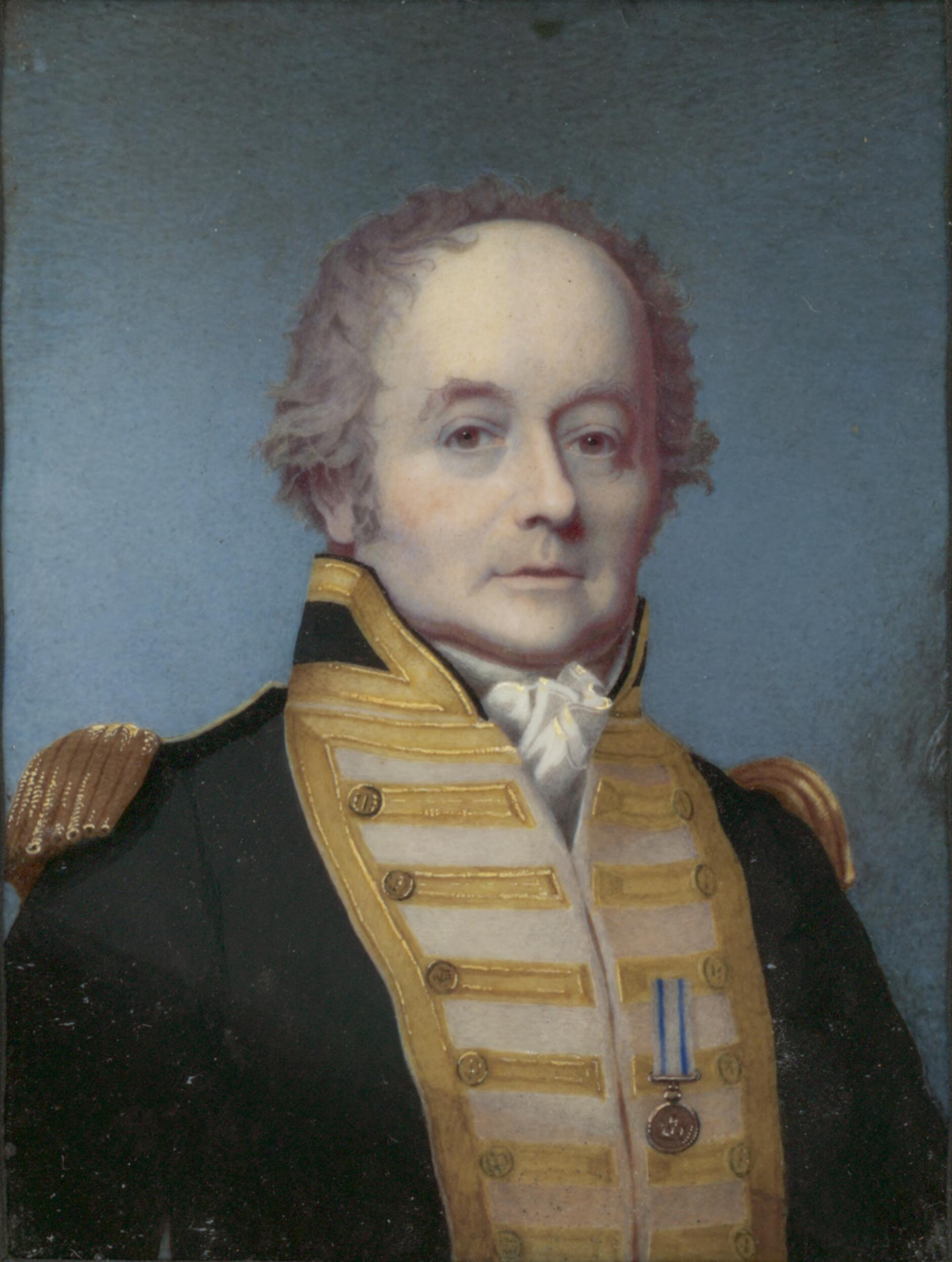
On January 23, 1793, Captain William Bligh stepped ashore in Kingstown, Saint Vincent, carrying cargo that would reshape Caribbean agriculture: several hundred breadfruit saplings from Tahiti. It was his second attempt. The first had ended in the most famous mutiny in naval history, when Fletcher Christian seized HMS Bounty and set Bligh adrift in a longboat across 3,600 miles of open ocean. Undeterred, Bligh returned to Tahiti aboard HMS Providence and completed his mission. The garden that received those plants had already been growing for nearly three decades, planted on requisitioned barracks land by a Scottish governor who paid for it out of his own pocket.
A Garden Born of Empire and Curiosity
On December 15, 1765, island commissioners on Saint Vincent set aside six acres of garrison land for a botanic garden. The directive came from General Robert Melville, the newly appointed governor of the southern British Caribbean, and the garden's first superintendent was Dr. George Young, a military surgeon with a passion for plants. Unlike other colonial botanical projects, Melville's garden attracted no government funding from London. He financed it privately, stocked it with his own library of botanical texts and scientific instruments, and corresponded with governors across the Spanish Main to acquire specimens. The garden's purpose was practical: medicinal plants for the military, food crops to improve the colony's economy, and commercial species that might open new export markets. But Melville had an unusually modern instinct. He urged Young to seek knowledge from "old Caribs and slaves who have dealt in cures," anticipating the field of ethnobotany by two centuries.
A Web of Botanical Spies
What makes these gardens remarkable is the sheer improbability of their collection. With no government budget and limited logistical support, the garden's curators built one of the most diverse plant collections in the Americas through an informal network that crossed imperial boundaries. French botanists in Saint-Domingue, Martinique, Guadeloupe, and Cayenne sent specimens freely. The Marquis de Bouille, Governor General of the French Antilles, contributed plants despite France and Britain being rivals and sometime enemies. Seeds arrived from Kew Gardens in London, which sourced them from China. The East India Company shipped plants from tropical India, Borneo, Sabah, and Sarawak. Cinnamon came from Guadeloupe and Grenada. Under Young and his successor Alexander Anderson, who served from 1785 to 1811, the collection expanded twenty-fivefold in just four decades: from 52 genera in 1773 to 1,311 by 1806. Nearly half the species originated in the Palaeotropical regions of Southeast Asia, the Indian subcontinent, and Africa.
Bligh's Breadfruit and Anderson's Care
The garden's most celebrated moment arrived with Bligh's breadfruit. Anderson, the Scottish curator who had transformed the garden into an institution of international reputation, took meticulous care of the Tahitian plants. His efforts paid off spectacularly. Breadfruit spread from Kingstown across the West Indies, becoming one of the most important food crops in the Caribbean. Modern genetic analysis has traced five major lineages of Caribbean breadfruit back to that single 1793 delivery. A third-generation descendant of Bligh's original planting still grows in the garden today. The breadfruit story encapsulates the garden's larger role: it was a node in a global network of plant exchange, a place where species from Tahiti, India, China, and the Americas converged on eight acres of Caribbean hillside.
Decline, Revival, and the Doric Temple
The first half of the nineteenth century was unkind to colonial botanic gardens everywhere, and Saint Vincent's was no exception. By 1850, neglect had left the grounds in disrepair, the collections scattered. But local efforts beginning in 1884 gradually revived the site, and by 1890 the garden was again functioning as both a public space and an agricultural research station. Experimental work on cotton, arrowroot, cacao, and sugarcane continued until 1944. The restored gardens gained a small Doric temple, new roads, and a steady flow of new plant introductions. Today, the garden occupies approximately eight hectares on the hillside above Kingstown. It remains the oldest botanic garden in the Western Hemisphere, more than 260 years after Melville's commissioners set aside that first plot of barrack land. The Saint Vincent amazon, a parrot found nowhere else on Earth, nests in its canopy.
From the Air
Approaching from the south, the garden is a dense patch of green on the hillside above Kingstown's harbor, distinguishable from the surrounding neighborhoods by its unbroken canopy. The capital's red and grey rooftops spread along the waterfront below, and the harbor itself curves in a tight arc. From higher altitude, the volcanic spine of Saint Vincent rises to the north, culminating in La Soufriere's summit. The garden sits at the island's gentler southern end, where the terrain softens into the kind of slopes that invited colonial settlement. It is a small place, measured in acres, but its reach was once global.
From the Air
Located at 13.17N, 61.23W in Kingstown, Saint Vincent. Nearest airport: Argyle International Airport (TVSA/SVD), approximately 8 nm southeast. The garden is visible on the hillside above Kingstown Harbor when approaching from the south or west. Recommended viewing altitude: 2,000-3,000 ft AGL. The volcanic peak of La Soufriere (4,049 ft) is visible to the north. Caribbean weather typical: watch for afternoon convective buildup.