Sakitama Kofun Cluster
In 1968, archaeologists pried open the stone chamber of a burial mound on the outskirts of Gyoda and found an iron sword with 115 characters of gold inlay hammered into the blade. The Inariyama Sword, as it came to be known, recorded the genealogy of a local chieftain serving the Yamato court and bore a date corresponding to 471 AD -- making it one of the oldest written records in Japanese history. The sword had lain in the dark for fifteen centuries, inside one of nine enormous keyhole-shaped tombs that the people of this region had been walking past, farming around, and writing about since the Edo period. This is the Sakitama Kofun Cluster, a landscape where the buried dead shaped everything -- including the name of Saitama Prefecture itself.
Keyholes in the Rice Paddies
Seen from above, the kofun are unmistakable. Eight of the nine are zenpokoenfun -- "front-square, rear-round" mounds that look like enormous keyholes pressed into the flat Kanto Plain north of Tokyo. One square end, one circular end, each tomb oriented with deliberate precision. The largest, Futagoyama Kofun, stretches over 138 meters in length. These were not simple graves. They were monuments of power, built between the late 5th and 7th centuries by rulers who commanded the labor to move thousands of tons of earth into precise geometric forms. The cluster once included 35 additional smaller mounds and at least one more circular tomb, but urban growth and land development swallowed them long ago. Only the nine largest survived, protected by their sheer scale and the reverence they commanded.
The Name That Named a Prefecture
The area surrounding these burial mounds was called Sakitama -- and that name echoed forward through time. It became the name of a county, then a province, and eventually mutated into the modern word Saitama, now the name of an entire prefecture with over seven million residents. Few places in Japan can claim such a direct line from ancient burial ground to modern administrative identity. The connection runs deeper than linguistics. According to the Nihon Shoki, Japan's oldest official chronicle, Emperor Ankan in 534 AD appointed a local leader named Nao Kasahara as provincial governor of Musashi Province after he won a bitter succession struggle for the post. The chronicle records that a keyhole-shaped tomb miraculously appeared overnight in the Sakitama district, signaling divine favor from the Yamato court. Whether miracle or propaganda, the story reveals how central these tombs were to the political landscape of ancient eastern Japan.
Gold Letters on Iron
The Inariyama Sword changed everything scholars thought they knew about literacy and political reach in 5th-century Japan. The 115 gold-inlaid characters trace a lineage through eight generations, ending with a retainer who served a great king identified as Wakatakeru -- almost certainly Emperor Yuryaku. The inscription records that the sword was made in the year corresponding to 471 AD, placing it among the earliest datable written artifacts in Japan. What stunned researchers was the location: not in the Yamato heartland of western Japan, where imperial power was centered, but here on the Kanto Plain, hundreds of kilometers to the east. The sword proved that the Yamato court's influence extended far deeper into eastern Japan than previously believed, and that local chiefs in Musashi Province maintained sophisticated cultural and political ties to the central government. The sword is now a National Treasure, housed in the Museum of the Sakitama Ancient Burial Mounds adjacent to the park.
A Park Among the Tombs
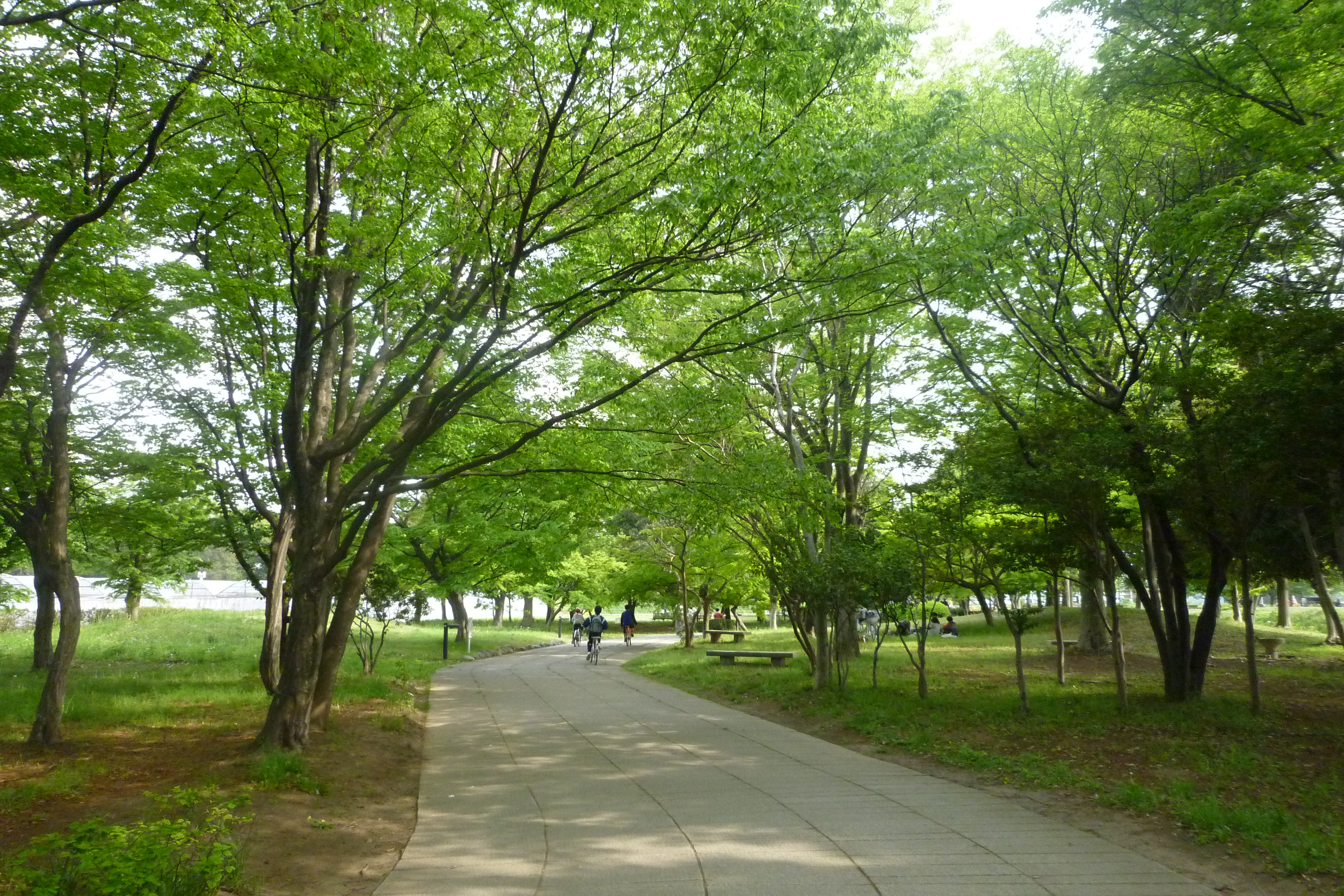
The Japanese government first recognized the mounds as National Historic Sites in 1938, after a 1935 survey cataloged 11 keyhole-shaped and 11 circular mounds still surviving. Restoration work began in 1966, and the excavation of Inariyama Kofun two years later made the site internationally famous. Today the grounds have been developed into a historical park that preserves not just the kofun themselves but also several relocated minka -- traditional thatched-roof farmhouses moved here to save them from demolition elsewhere. The on-site museum displays the Inariyama Sword alongside pottery, armor fragments, and burial goods recovered from the tombs. Saitama Prefecture and the city of Gyoda are actively promoting the cluster for UNESCO World Heritage status. As a preliminary step, the site's designation was elevated from National Historic Site to Special National Historic Site in 2020 -- a distinction held by fewer than 70 places in all of Japan.
From the Air
Located at 35.13N, 139.48E on the flat Kanto Plain northwest of Tokyo, approximately 50nm from Narita International Airport (RJAA). The nine keyhole-shaped mounds are visible as raised green forms amid the surrounding urban and agricultural landscape. Nearby airports include Honda Airport (RJTO) about 5nm south and Tokyo Haneda (RJTT) approximately 40nm southeast. The flat terrain of the Kanto Plain offers excellent low-altitude visibility. Best viewed at 2,000-3,000 feet AGL where the distinctive keyhole shapes of the kofun become apparent against the surrounding flat land.