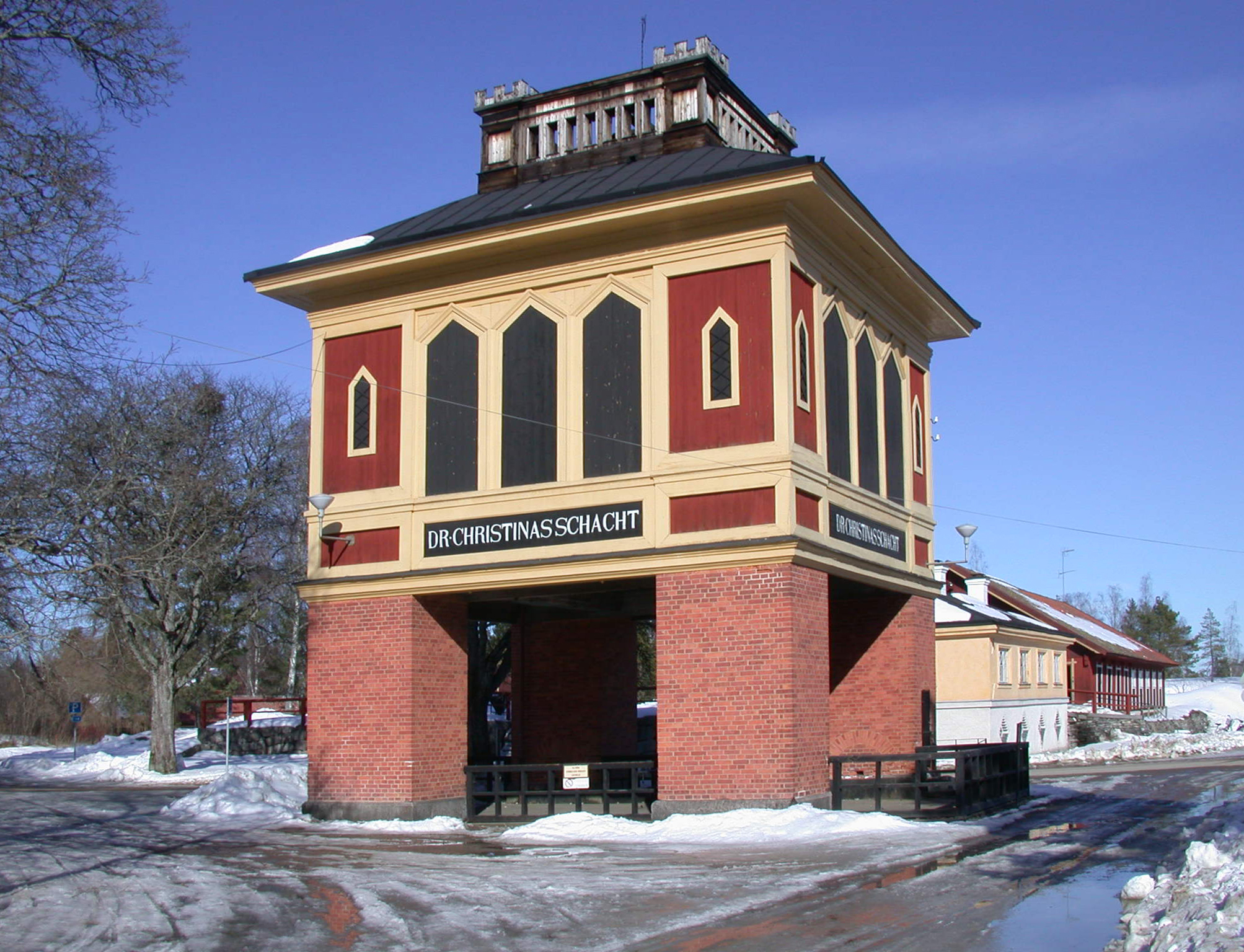
Sala Silver Mine
You can spend the night in the world's deepest bedroom. At 155 meters below the Swedish countryside, in chambers carved by miners who once extracted silver for kings, the Sala Silver Mine offers an overnight experience unlike any other on Earth. The temperature holds steady at two degrees Celsius year-round, the silence is absolute, and the walls glow with an eerie green tint from centuries of mineral seepage. This is not a gimmick dreamed up by modern tourism - it is a mine that operated continuously from the 1400s until 1908, producing over 200 million ounces of silver that funded Sweden's rise as a European power.
Bedrock Born Before Complex Life
The rock surrounding Sala Silver Mine formed 1.89 billion years ago, during the Paleoproterozoic era, when Earth's atmosphere was just beginning to accumulate oxygen from early photosynthetic life. The ore that miners would chase for centuries exists as silver-rich galena and sphalerite embedded in white dolomitic marble. Near the ore deposits, minerals like tremolite, serpentine, and diopside give the marble its characteristic green color - a palette visible nowhere else in quite the same combination. The silver content in the galena reached as high as one percent, among the highest concentrations ever reported in this mineral worldwide. Just 100 meters from the mine, the Tistbrottet quarry still extracts pure white dolomite, unmarked by the green-tinged minerals that signaled silver wealth below.
When Silver Built a Town
King Gustavus Adolphus granted Sala its town privileges in 1624, but the community had already grown around the mine's shafts and smelters for two centuries before that royal recognition. The town began as a humble mining village, its location determined by ore rather than comfort. The king later ordered the settlement moved to its present position, but the mine remained the heart of everything. To power the pumps that drained the ever-flooding tunnels, the hoists that lifted ore to the surface, and the furnaces that smelted metal from rock, engineers constructed an elaborate system of lakes, dams, and canals throughout the surrounding countryside. The water-powered machinery that once thundered here has vanished, but the waterways remain carved into the Swedish landscape.
Three Golden Ages
The mine experienced three distinct periods of prosperity: the early 16th century, when operations first scaled up to meet European demand; the mid-17th century, when Swedish power peaked; and the late 19th century, when new leaching technologies extracted silver from old tailings that earlier methods had left behind. The final renaissance included a revolutionary transition from state to company ownership and innovations that squeezed profit from rock that predecessors had discarded. Yet these technological triumphs only delayed the inevitable. High-grade ore ran out. By 1908, commercial mining ceased. At its maximum depth of 318.6 meters, stretching 700 meters long and 100 meters wide, the mine had surrendered everything it would give: over 200 million ounces of silver and some 35,000 tons of lead from five million tons of excavated rock.
Royal Signatures in the Dark
The shafts bear names that trace Swedish royal history: the Queen Christina shaft, the Charles XI shaft. In March 2008, Crown Princess Victoria descended into the mine and added her signature to the stone walls, joining the mark left years earlier by her father, King Carl XVI Gustaf. Today the empty chambers that once echoed with the crack of rock and the grunt of labor host concerts and events, their acoustics shaped by centuries of extraction. The mine museum occupies former administrative buildings, while the surrounding structures have transformed into souvenir shops, an art gallery, and even a police museum. Every July, the Mine's Days celebration brings crowds to honor the industry that built this place. Every December weekend before Christmas, markets fill the grounds above the underground kingdom.
The Search for a Second Treasury
Miners of the 18th century believed a second rich ore deposit existed somewhere near the exhausted veins, but the depth defeated their search. That legend persists. Recent test drillings have probed the surrounding rock, hunting for the treasure that previous generations could not reach. In August 2013, a Canadian exploration company applied for a mining lease covering a second zinc-lead-silver deposit approximately 100 meters west of the historic workings. Meanwhile, cracks and erosion around the old mine have created hazards, with restricted areas protecting visitors from the dangers that centuries of extraction left behind. The original mine drew wealth from the earth for 500 years; whether a second chapter remains to be written waits in rock that has guarded its secrets since before the first miners arrived.
From the Air
Located at 59.92°N, 16.57°E in Västmanland County, Sweden. The mine complex is visible from altitude as a cluster of historic buildings and open pit areas surrounded by the lakes and canal system that once powered mining operations. Nearest major airport is Stockholm Arlanda (ESSA), approximately 110 km southeast. Västerås Airport (ESOW) is closer at about 45 km south. Best viewed at 3,000-5,000 feet AGL in clear conditions to appreciate the waterway network radiating from the mine site.