Salem: The Witch City That Turned Tragedy Into Tourism
In 1692, Salem hanged 19 people and pressed one man to death for the crime of witchcraft. The Salem Witch Trials lasted nine months; over 200 people were accused. The episode ended when the colony's governor, whose own wife had been accused, dissolved the special court. Within years, Massachusetts had apologized; by 1711, the colony was paying compensation to victims' families. The trials became American shorthand for deadly hysteria, the dangers of false accusation, the damage of religious extremism - invoked whenever fear overrides reason. Salem itself took centuries to acknowledge what happened here. Now the city has embraced its dark history, rebranding as 'The Witch City,' a year-round Halloween destination where tragedy became tourism.
The Trials
The witch hysteria began in January 1692 when two young girls in Salem Village (now Danvers) began having fits. A local doctor suggested witchcraft; the girls accused three women, including Tituba, an enslaved woman. Under examination, Tituba confessed to dealings with the devil and named others. Accusations multiplied. By summer, the special Court of Oyer and Terminer was executing the accused - Bridget Bishop first, on June 10. The 'spectral evidence' standard (testimony that the accused's spirit had appeared to victims) allowed convictions without physical proof. Giles Corey, refusing to enter a plea, was pressed to death over two days. The trials ended when accusations reached the governor's circle. Nineteen hanged; one pressed; at least five died in jail.
Memorial and Museums
Salem's Witch Trials Memorial, dedicated in 1992 on the 300th anniversary, provides stone benches engraved with victims' names and protestations of innocence - a sober counterpoint to the surrounding tourism. The Witch Trials Memorial sits adjacent to the Old Burying Point, where Judge John Hathorne (ancestor of Nathaniel Hawthorne) lies buried. The Peabody Essex Museum, originally the museum of the East India Marine Society, contains trial documents and broader regional history. The Salem Witch Museum offers sensationalized presentations; the Witch Dungeon Museum features reenactments. The witch tourism industry is extensive and varied, ranging from serious historical examination to tacky exploitation.
October in Salem
October transforms Salem. Haunted Happenings, the month-long festival, draws hundreds of thousands of visitors for parades, costume parties, haunted houses, and general celebration. The streets fill with witches (real Wiccans and cosplayers both), vampires, ghosts, and tourists photographing everything. Traffic becomes impossible; parking lots charge premium rates. The festival is commercial and crowded, but also genuinely festive - a city that decided to embrace its dark history rather than hide from it. The line between memorial and celebration blurs. Salem makes money from the trials; whether this dishonors the dead or keeps their memory alive depends on perspective.
Maritime Salem
Salem was one of America's wealthiest ports before the witch trials and remained so after. The maritime trade - particularly with East Asia - built the Federal mansions that line Chestnut Street, one of the finest collections of early American architecture. The Custom House, where Nathaniel Hawthorne worked as a surveyor, inspired the opening of 'The Scarlet Letter.' Salem Maritime National Historic Site preserves the wharves, warehouses, and homes of the merchant era. The Peabody Essex Museum's Asian export art collection reflects Salem's China trade connections. The witch trials dominate modern Salem's identity, but maritime prosperity built the city that survives.
The Witch City
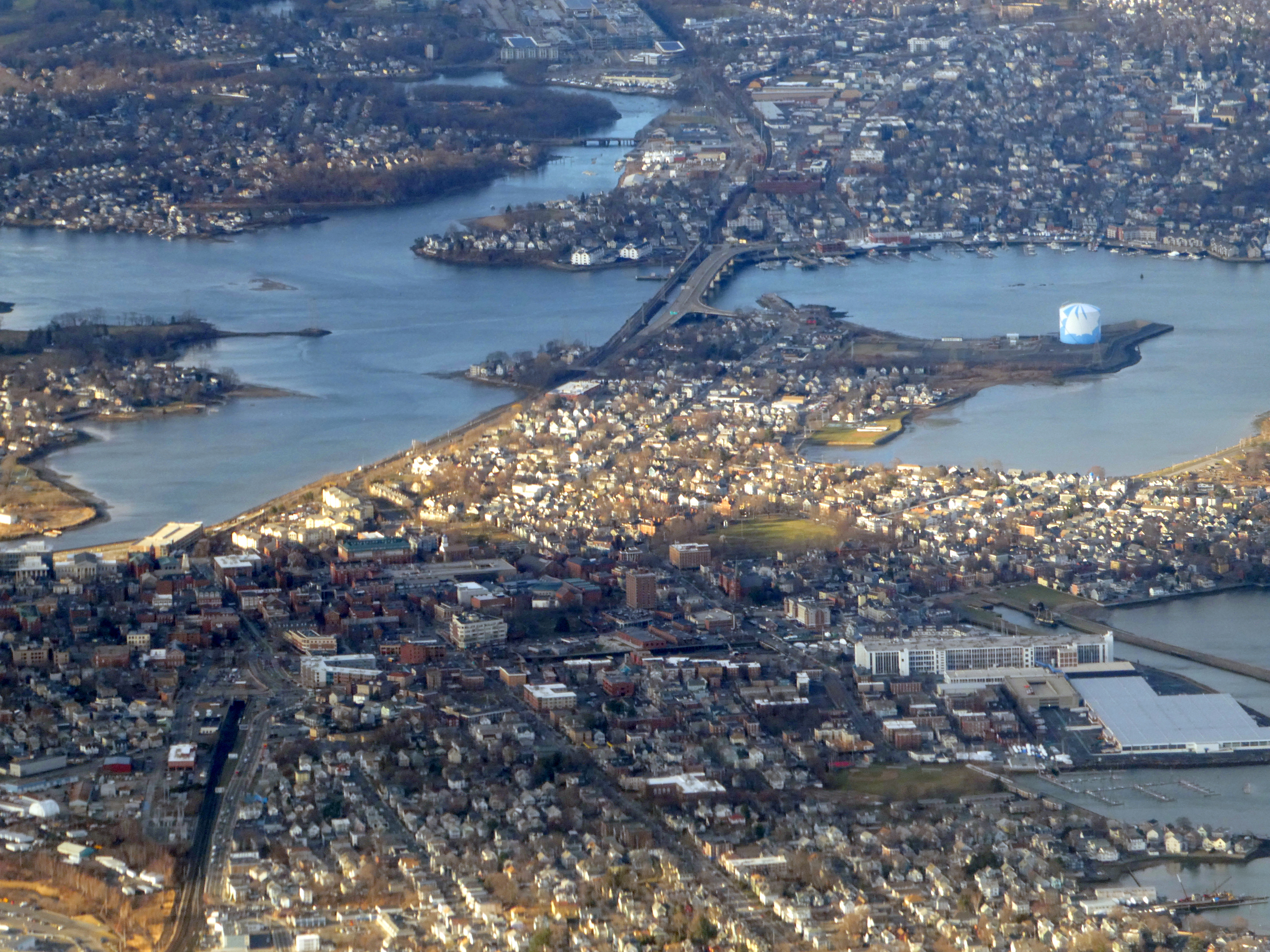
Boston's Logan Airport (BOS) is 15 miles south; Salem is accessible by MBTA commuter rail from North Station. The downtown is walkable, concentrated around Essex Street, the Pedestrian Mall, and the waterfront. The House of the Seven Gables (Hawthorne's inspiration) offers tours. The Witch City Mall embraces the branding. Salem State University brings student life. From altitude, Salem appears as a compact colonial town on the North Shore, its harbor opening to the Atlantic, the historic core visible - the Witch City where 20 died in 1692, where October brings 500,000 visitors, and where America confronts the deadly consequences of fear.
From the Air
Located at 42.52°N, 70.90°W on the Massachusetts North Shore, 15 miles northeast of Boston. From altitude, Salem appears as colonial waterfront development - the harbor visible, the historic core compact, the modern Salem merging into the Greater Boston sprawl. What appears from the air as a small Massachusetts port city is the Witch City - where 20 people were executed in 1692, where that history became tourism, and where October transforms the streets into celebration of the macabre.