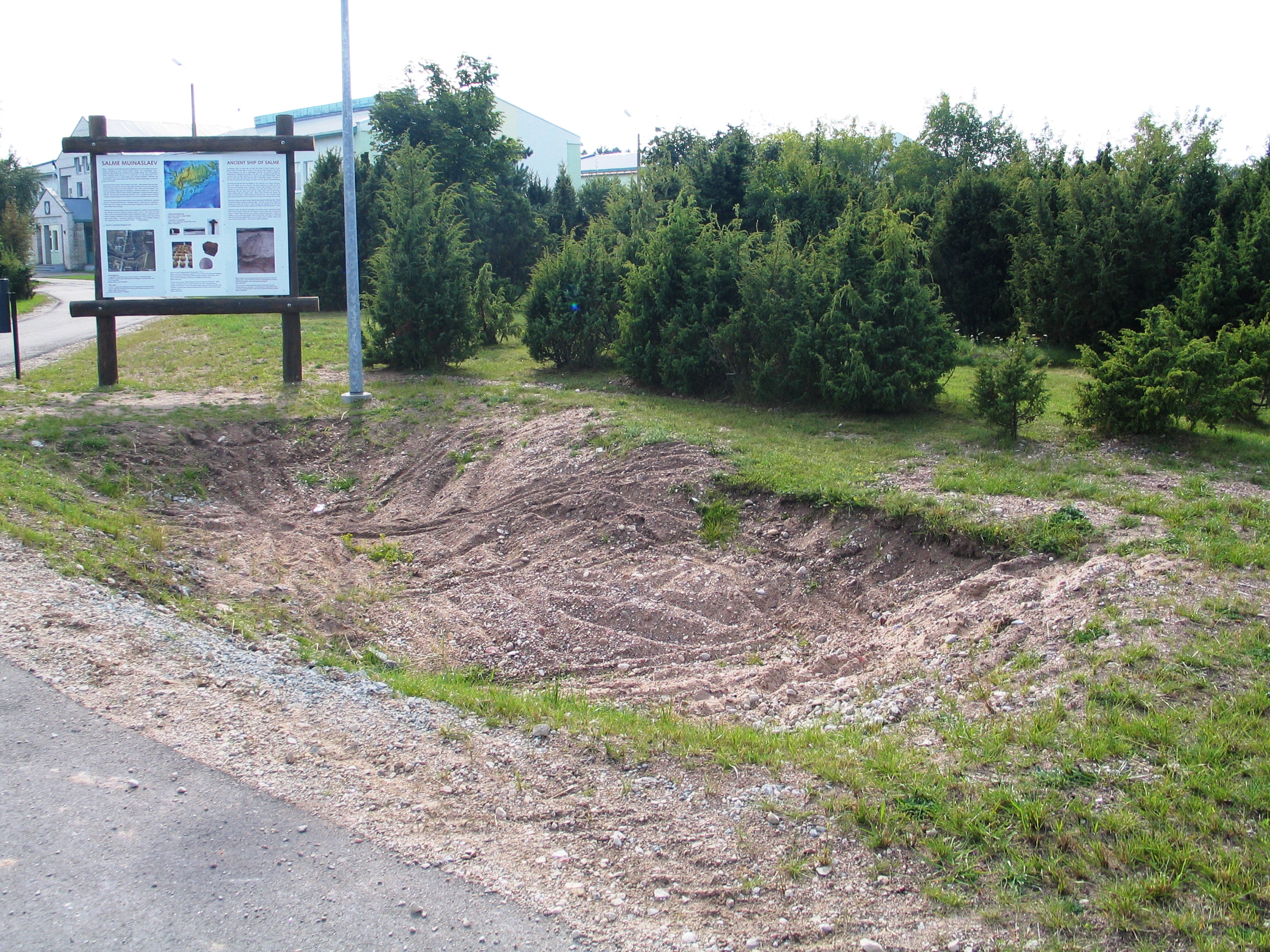
Salme Ships
In 2008, construction workers removing earth near the village of Salme on the Estonian island of Saaremaa uncovered something extraordinary: the remains of a wooden ship and the skeletal warriors buried within it. Two years later, a second, larger vessel emerged from the sandy soil. Together, the Salme ships contained the bodies of 41 men from central Sweden, killed in battle around AD 700-750, buried with their swords, their gaming pieces, and their hunting hawks. The discovery rewrote the timeline of Scandinavian seafaring aggression: these warriors had sailed to Estonian shores a full half-century before the infamous Viking raid on Lindisfarne in 793.
Brothers in Death
DNA analysis of the skeletal remains revealed an astonishing family connection. Four of the warriors were brothers, and a fifth man was likely their uncle. Isotope analysis of their teeth confirmed what the artifacts suggested: these men came from Svealand, central Sweden. They had sailed the Baltic in clinker-built vessels constructed around AD 650-700, ships that bore the marks of decades of repair and patching before making their final voyage. The smaller ship carried seven bodies. The larger held at least 36, stacked in four layers like cargo. These were not ordinary raiders. The quality of their weapons, the bronze sword-hilts, the presence of falconry hawks suggested nobility. Some archaeologists believe they came not to raid but to negotiate, perhaps to forge alliances or establish kinship ties with the Oeselians, the Estonian inhabitants of Saaremaa.
The Battle That Changed Everything
The ships themselves tell the story of their last day. Embedded in their wooden sides, archaeologists found numerous arrowheads, some of the three-pointed type designed to carry burning materials and set enemy vessels aflame. The Scandinavians had met fierce resistance from Oeselian archers. After losing too many oarsmen to continue sailing, the survivors beached their vessels and tried to make a stand behind them. It was not enough. The Estonian force prevailed. But what happened next was remarkable: the Oeselians allowed the dead to be buried with full Scandinavian ritual honors. Warriors were laid in their ships surrounded by weapons, gaming pieces, and sacrificed animals. It was a gesture of respect from one martial culture to another, or perhaps permission granted to survivors to honor their fallen before departing.
Grave Goods of the Fallen
The burial contents paint a picture of warrior aristocracy. More than 40 swords were recovered, deliberately bent or broken to discourage grave robbers and perhaps to kill the weapons themselves so they could accompany their owners to the afterlife. Spearheads, shield fragments, and dozens of arrowheads lay among the bones. But the warriors had not lived by violence alone. Hundreds of gaming pieces carved from whale bone and antler, with six dice, suggested men who passed long sea voyages in strategic games. A bear-claw necklace, a bone comb with ornaments, and whetstones for blade maintenance rounded out the personal effects. Two dogs were ritually sacrificed and buried with the men, along with hawks used for falconry, luxuries that marked these warriors as far above common raiders.
Echoes in Old Norse Saga
The 13th-century Ynglinga saga, composed by Snorri Sturluson, tells of Swedish King Ingvar Harra, who campaigned against the Estonians and fell in a great battle on their shores. The 9th-century poem Ynglingatal sings of how the people of Sysla slew Yngvarr at the heart of the water, a phrase that scholars interpret as meaning an island. The Historia Norwegiae states explicitly that Ingvar died while campaigning on an island in the Baltic called Eysysla, the Old Norse name for Saaremaa. The Salme ships may contain the physical evidence of events that echo through centuries of Nordic poetry. Whether or not King Ingvar himself lies among the Salme dead, the burial demonstrates that Swedish royalty and nobility were dying on Estonian shores centuries before the Viking Age officially began.
The Oldest Sails in the Baltic
The larger Salme ship preserves a revolutionary detail in the humus outline of its keel. The strong, irregular rivets at the bottom and the keel structure indicate this vessel used a sail, making it the oldest known sailing ship in the Baltic Sea region. Before this discovery, scholars believed Baltic Sea vessels of this era relied exclusively on oars. The Salme ships proved that Scandinavian maritime technology was more advanced than previously thought, capable of harnessing wind power a generation before the first raids on England. The site, which may yet yield a third buried ship, continues to produce new insights into the violent dawn of an age that would reshape European history. For now, the Salme warriors rest where they fell, on an island their descendants would come to call Osel, at the bloody beginning of the Viking storm.
From the Air
The Salme ship burial site is located at 58.168°N, 22.251°E near the village of Salme on Saaremaa island, Estonia. The excavation site is approximately 150 meters inland from the present coastline. Nearby airports include Kuressaare Airport (EEKA), approximately 18 km to the northeast, the only airport serving Saaremaa. The island's flat terrain makes low-level observation straightforward. From the air, the relationship between the ancient and modern coastlines becomes clear, as the ships were buried near what was the water's edge 1,300 years ago but is now well inland due to post-glacial rebound. The Sorve Peninsula extends to the southwest, and mainland Estonia is visible to the east across the Vainameri strait.