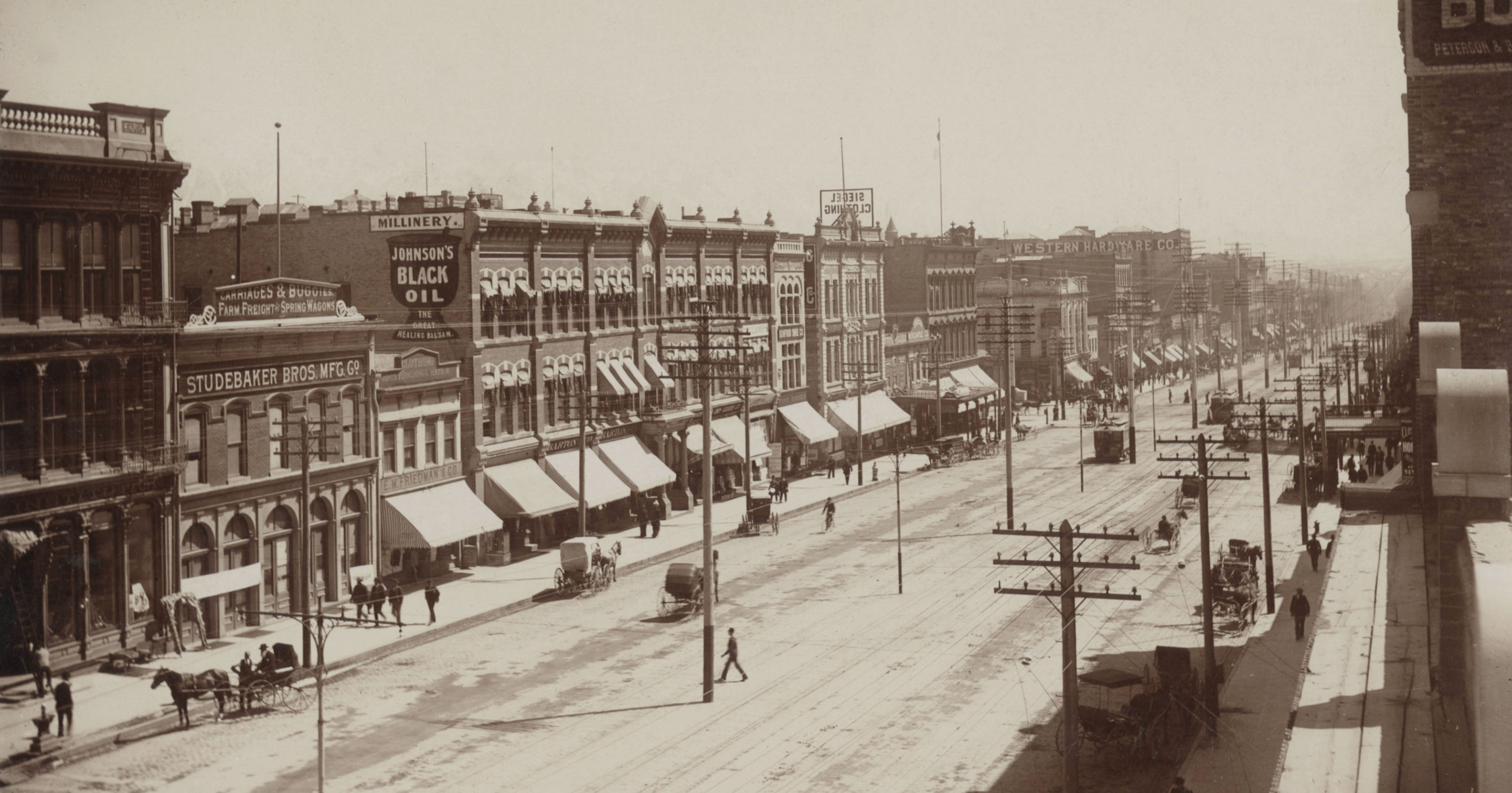
Salt Lake City: The Mormon Capital at the Crossroads of the West
On July 24, 1847, Brigham Young looked down from the Wasatch Mountains into the Salt Lake Valley and declared, 'This is the right place.' The Mormon pioneers had walked 1,300 miles from Illinois, fleeing persecution, seeking a place where they could practice their faith in peace. They found it in the desert basin between mountains and salt lake. Within days they were laying out a city; within years they had transformed desert into farmland through irrigation. Salt Lake City remains the world headquarters of the Church of Jesus Christ of Latter-day Saints, the faith that shaped the city's character. But Salt Lake is also a ski destination, a tech hub, and an increasingly diverse city that's outgrowing its theocratic roots.
This is the Place
The Mormon pioneers arrived in the Salt Lake Valley exhausted, malnourished, and determined. They had been driven from New York, Ohio, Missouri, and Illinois, their founder Joseph Smith murdered by a mob in 1844. Brigham Young, his successor, led the exodus west - 70,000 Mormons eventually making the journey. The valley they chose was technically Mexican territory (it became U.S. territory after the Mexican-American War ended in 1848). Within four days of arrival, they had plowed land and planted crops. The irrigation system they built transformed arid land into farms. Today, 'This is the Place' Heritage Park marks where Young first viewed the valley, and the phrase has become the city's unofficial motto.
Temple Square
The Salt Lake Temple took 40 years to build, from 1853 to 1893, its six granite spires rising above downtown. Only members in good standing may enter the temple itself, but Temple Square - the 10-acre headquarters of the LDS Church - welcomes all visitors. The Tabernacle, with its remarkable acoustics (a pin dropped at the pulpit can be heard 170 feet away), hosts the Mormon Tabernacle Choir. The Family History Library, the world's largest genealogical library, attracts researchers of all faiths. Temple Square receives 3-5 million visitors annually, more than any other site in Utah. The temple's spires, topped by a golden statue of the angel Moroni, define Salt Lake's skyline and symbolize the faith that built the city.
The Greatest Snow on Earth
Utah's license plates proclaim 'The Greatest Snow on Earth' - a claim supported by average snowfall of 500+ inches in the Wasatch Mountains and the dry, light powder that comes from Great Basin storm patterns. Seven ski resorts lie within 45 minutes of Salt Lake City: Alta, Snowbird, Brighton, Solitude, Park City, Deer Valley, and Canyons. The 2002 Winter Olympics showcased these mountains to the world. Alta and Snowbird, in Little Cottonwood Canyon, receive the deepest snow; Park City and Deer Valley offer more polished resort experiences. The proximity of airport to slopes is remarkable - visitors can fly in, ski world-class terrain, and return the same day. No other major city offers comparable access to mountains.
The Lake
The Great Salt Lake is the largest saltwater lake in the Western Hemisphere - 75 miles long at full pool, up to eight times saltier than the ocean. It has no outlet; water flows in and evaporates, leaving minerals behind. You can float effortlessly, the salt supporting your weight, but the brine shrimp smell and encrusted shoreline discourage swimming. The lake has been shrinking dramatically - half its surface area lost since the 1980s due to water diversions and drought. Exposed lakebed creates dust storms carrying arsenic and other toxins. What was once a curiosity has become an environmental crisis. Antelope Island State Park, accessible by causeway, offers hiking, bison herds, and views across the alien landscape.
Beyond the Temple
Salt Lake City International Airport (SLC) lies minutes from downtown, recently expanded with a new terminal. The TRAX light rail connects the airport to downtown and the university. Temple Square anchors downtown, but the city extends in all directions - the Avenues neighborhood climbing the foothills, Sugar House offering independent shops, the Marmalade Historic District preserving Victorian homes. The tech industry has grown significantly, drawn by educated workforce and quality of life. Salt Lake's demographics are changing - the city proper is now less than half LDS, though the surrounding suburbs remain heavily Mormon. From altitude, Salt Lake City appears as development spreading across a valley between the Wasatch Mountains and the Great Salt Lake - the Mormon capital still growing, still changing.
From the Air
Located at 40.76°N, 111.89°W in a valley between the Wasatch Mountains (east) and the Great Salt Lake (west). From altitude, the geography is dramatic - mountain wall rising immediately east of the city, the salt lake spreading silver-white to the west. SLC airport lies between downtown and the lake. The temple's spires are visible from above. The ski canyons cut into the Wasatch east of the urban area. What appears from the air as a mountain-front city beside a strange inland sea is the Mormon capital - where Brigham Young declared 'This is the place,' where Temple Square welcomes the world, and where the greatest snow on Earth falls.