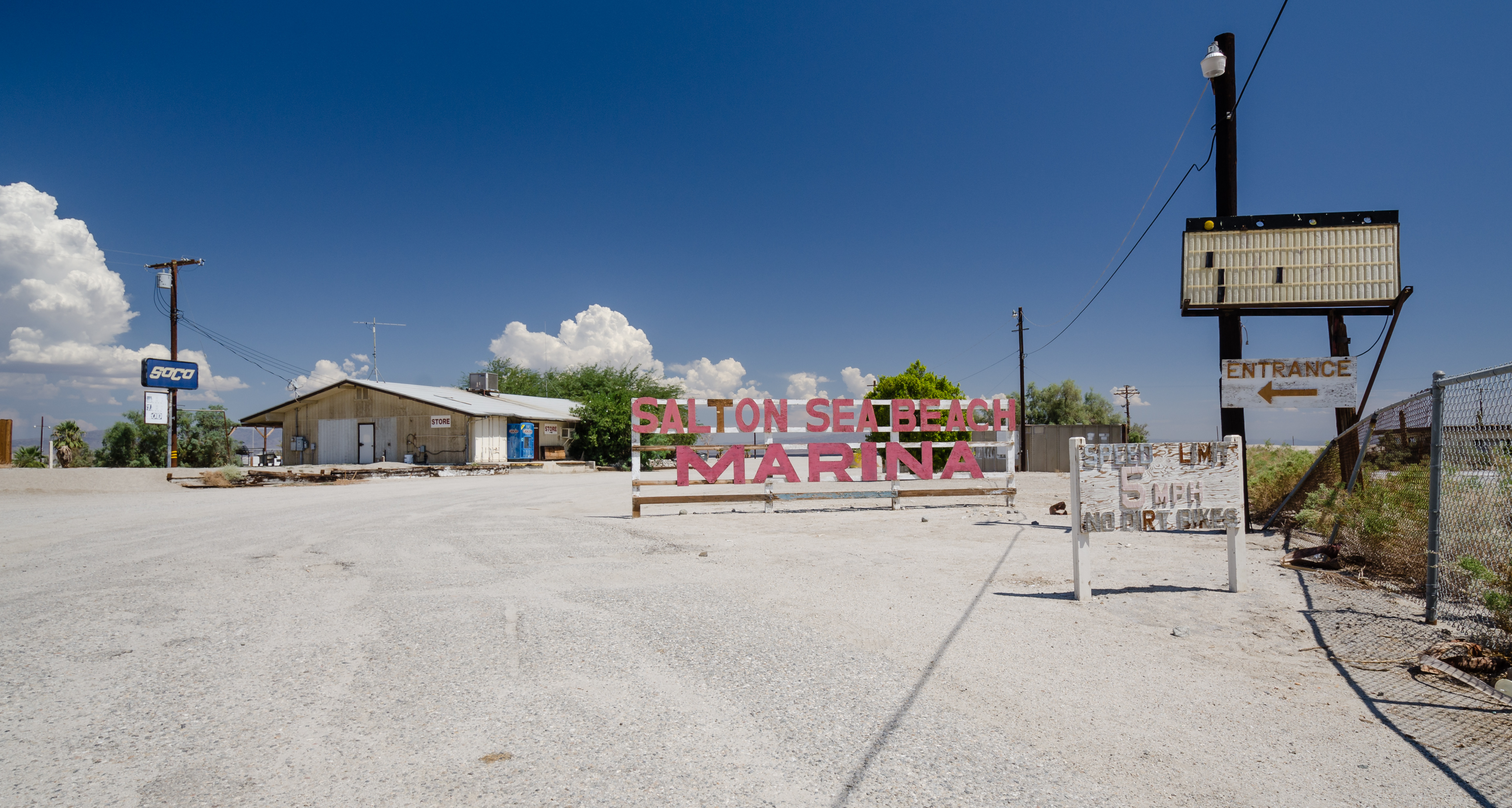
Salton City: The Beach Resort That Became a Wasteland
In the 1950s and 60s, developers saw the Salton Sea and imagined the next Palm Springs. They built Salton City, Salton Sea Beach, Desert Shores - resort communities with yacht clubs and golf courses, streets named optimistically after faraway cities, lots sold to thousands who dreamed of California waterfront living. Then the sea began to die. Salinity rose as agricultural runoff replaced diminishing freshwater inflow. Fish died in massive kills, their bones coating the beaches. The stench drove tourists away. Property values collapsed. Today, these communities are half-abandoned, their streets largely empty, their yacht clubs ruins. The Salton Riviera is a monument to environmental miscalculation, a place where optimism decomposed into apocalyptic landscape.
The Accident
The Salton Sea itself was a mistake. In 1905, irrigation canals from the Colorado River breached, flooding the Salton Sink for two years before engineers could stop the flow. The resulting sea, 35 miles long and 15 miles wide, California's largest lake, was never supposed to exist. For decades it thrived anyway, maintained by agricultural runoff from the Imperial Valley. Fish were stocked; birds arrived in millions; the sea became a recreational destination. But with no outlet, water leaving only through evaporation, the sea was destined to become increasingly saline. The catastrophe was baked into the geology.
The Dream
Developers saw opportunity in the anomaly. Penn Phillips bought desert land and began subdividing in 1958, selling lots for California waterfront living at desert prices. Roads were graded, utilities installed, yacht clubs and golf courses built. Celebrities visited. Speedboat races attracted crowds. The sales pitch was compelling: buy now before prices rise to coastal levels. Thousands bought - retirees, investors, dreamers. By the early 1960s, the Salton Riviera was booming. The streets of Salton City stretched into the desert, waiting for houses that would surely come.
The Collapse
The sea's salinity crossed critical thresholds in the 1970s and accelerated afterward. Fish began dying in spectacular kills - millions of tilapia floating belly-up, their bodies coating the shore, decomposing in the desert heat. The smell became unbearable. Tourists stopped coming. Property values crashed. The yacht clubs closed; the golf courses browned. Those who had bought lots discovered them worthless. Those who had built houses watched their communities hollow out. By the 2000s, the Salton Riviera was synonymous with failure - a cautionary tale about environmental hubris and real estate speculation.
The Present
The communities persist in reduced form. A few thousand people still live in Salton City, Salton Sea Beach, and Desert Shores - retirees, artists, the economically marginal, those who find beauty in ruin. The streets remain, many unpaved, their optimistic names (Rome, Venice, Athens) now ironic. Abandoned structures dot the landscape. The yacht clubs are photogenic ruins. The beaches are fish bones and barnacles, the water so saline that swimming is inadvisable. Proposals for restoration surface periodically; none have been implemented. The sea continues shrinking, exposing lakebed that adds dust pollution to the area's problems. The dream is over; the aftermath continues.
Visiting Salton City
Salton City and surrounding Salton Riviera communities are located on the western shore of the Salton Sea, approximately 65 miles north of El Centro via Highway 86. The experience is ruin tourism: abandoned structures, empty streets, dying sea. The stench varies with conditions - some days manageable, others overwhelming. Photography is popular; the apocalyptic aesthetic attracts artists and urban explorers. Services are minimal; bring supplies. The Salton Sea State Recreation Area offers the best maintained access to the shore. International Bird Rescue operates in the area during die-offs. The experience is sobering - witnessing environmental disaster in slow motion, the consequences of decisions made decades ago still unfolding.
From the Air
Located at 33.30°N, 115.96°W on the western shore of the Salton Sea in California's Imperial Valley. From altitude, the Salton Sea dominates - a brilliant blue anomaly in tan desert, visibly shrinking from historical shorelines. The western communities appear as grid patterns extending into empty desert, streets and lots prepared for development that never came. The contrast between the optimistic infrastructure and the dying sea is stark. Agricultural patterns of the Imperial Valley stretch to the south. The Chocolate Mountains rise to the east. The sea's surface occasionally shows fish kill discoloration. What was promoted as California's Riviera is visible as what it became: a desert development experiment that failed when the water turned toxic.