Samoa
The drums haven't stopped for three millennia. Somewhere in Samoa, at this very moment, someone is beating tapa cloth from mulberry bark, the rhythmic thudding echoing across a village where open-walled fales face the sea. Samoa isn't just old - it's continuous. When the first Polynesians arrived here around 1500 BC, they didn't just settle these volcanic islands; they launched the greatest ocean migration in human history, eventually reaching Hawaii, New Zealand, Easter Island. Samoa was the staging ground, the homeland, the place where Polynesian culture crystallized into what it would become. And unlike so many Pacific islands reshaped by colonialism, Samoa held on. The matai still govern their villages. The 'ava ceremony still opens every significant gathering. The fa'a Samoa - the Samoan way - isn't a museum exhibit but a living framework. Even Robert Louis Stevenson, that restless Scottish wanderer, recognized it: he came here in 1890 for his health and stayed until his death, buried on a hill above his home at Vailima, the only place that ever held him still.
The Volcanic Heart
The islands rose from fire and still remember it. Upolu and Savai'i are the twin giants - volcanic shields that climbed from the Pacific floor, their cones still visible across both islands, dormant but not extinct. The last major eruption ended in 1911 on Savai'i, when Mount Matavanu finally ceased after pouring lava toward the sea for six years. The flow field remains today, a frozen black river cutting through the jungle, the only sealed road on the island threading right through its eerie desolation.
Small earthquakes still shake the islands regularly, gentle reminders that the earth beneath is merely sleeping. In 2009, that sleep proved restless when a tsunami struck Upolu's south coast, a devastating wave that reshaped communities and carved new respect for the ocean's power. But Samoans have always known the sea's dual nature - provider and destroyer, highway and barrier. Their ancestors navigated it by stars and swells. Their descendants still read its moods.
The Tusitala's Rest
Robert Louis Stevenson arrived in Samoa in 1889, a tuberculosis patient seeking warm air to breathe. He found more than climate - he found a culture that fascinated him, a people who adopted him as one of their own. They called him Tusitala, 'teller of tales,' and the name stuck. He built his home at Vailima above Apia, wrote his final works there, and threw himself into Samoan politics, defending indigenous rights against colonial powers.
When he died in 1894, Samoan chiefs cut a path through the jungle to carry his body to the summit of Mount Vaea. His tomb looks out over the island he loved, inscribed with his own epitaph: 'Home is the sailor, home from sea, and the hunter home from the hill.' Stevenson wrote of treasure islands and Jekyll's dual nature, but his truest story might be the one he lived - a wanderer who finally found where he belonged, buried in Samoan soil by Samoan hands.
The Fa'a Samoa
The Samoan way isn't nostalgia - it's infrastructure. Every extended family has its matai, its chief, elected by family consensus. Every village has its fono, its council of matai who make decisions collectively. The system predates any constitution and functions alongside the modern state, governing land use, settling disputes, enforcing customs that no written law touches.
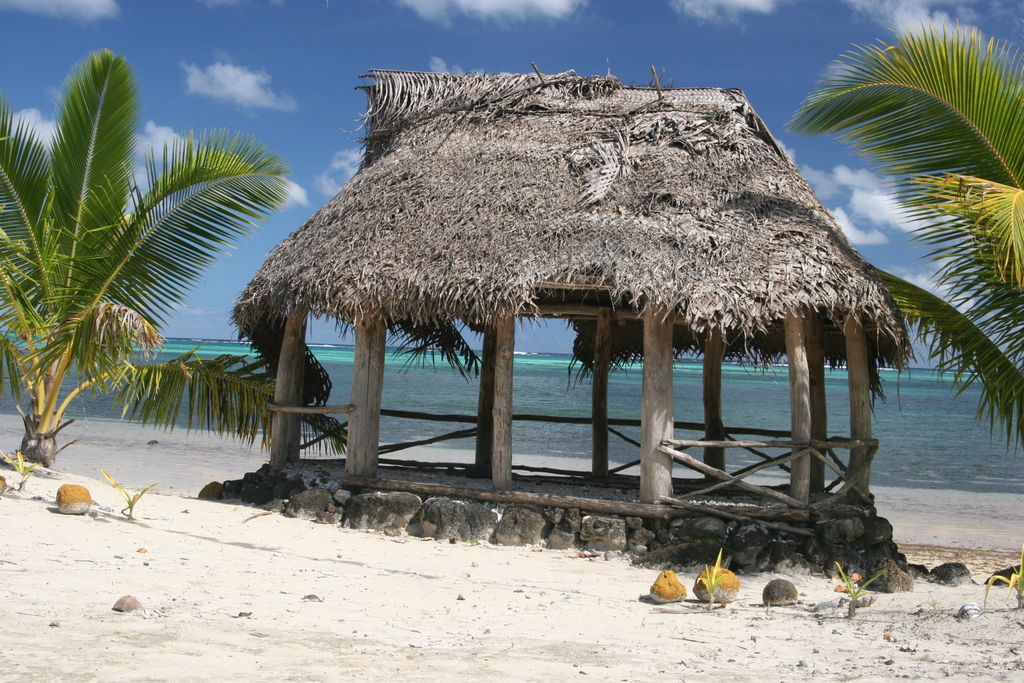
Sunday remains sacred. Shops close. Villages observe prayer curfew at dusk, a half-hour of stillness when strangers should not walk through. The umu - earth oven - still produces the family meals: taro, breadfruit, fish, palusami of coconut cream wrapped in taro leaves. The 'ava ceremony still opens every formal gathering, the kava root pounded and mixed, passed according to strict protocol, binding participants in ritual older than memory. Even the architecture speaks continuity: traditional fales have no walls, just posts and domed roofs, blinds that lower for privacy, a design that says the community matters more than the individual.
The Independence Trail
Samoa became the first Polynesian nation to reclaim independence in the twentieth century - but the path was hard. German companies dominated the islands from the 1870s, joined by British and American interests until a great storm in 1889 destroyed their warships in Apia harbor, ending their standoff by meteorological intervention. New Zealand took over during World War I and stayed, administering the islands under League of Nations mandate.
The resistance began on Savai'i in the early 1900s - the Mau a Pule, peaceful at first, growing through the 1920s until supporters wore their distinctive uniform of navy blue lavalava with white stripe in open defiance. On December 28, 1929, New Zealand troops fired on a peaceful Mau procession, killing eleven Samoans including a chief of high rank. The date is remembered now as Black Saturday. But the Mau survived, and on June 1, 1962, the flag rose on an independent Samoa - the Western dropped from the name in 1997, a final assertion that this is simply Samoa, the heart of Polynesia, requiring no modifiers.
The Living Islands
The jungle presses close, though little of it is virgin forest - three thousand years of cultivation have shaped even the wildest-looking growth. Coconut palms and breadfruit trees mark old village sites. Waterfalls plunge down volcanic cliffs into pools where locals swim on hot afternoons. The To Sua Ocean Trench on Upolu offers surreal swimming in a collapsed lava tube, ladder access down to jade waters. On Savai'i, blowholes shoot seawater dozens of meters high through tubes in the coastal lava.
The coral gardens offshore hold 900 fish species and more, the reefs still healthy enough to attract divers who've seen the bleached skeletons elsewhere. Humpback whales pass through seasonally. And everywhere, the roosters of countless feral chickens announce that Samoa operates on its own schedule - island time, where the afternoon bus runs 'when it runs' and the best meals are the ones you didn't plan. Samoa hasn't been preserved in amber. It continues, adapts, endures - the Polynesian heartland still beating its ancient rhythm while the rest of the world rushes past.
From the Air
Located at 13.76°S, 172.10°W in the heart of Polynesia. Samoa comprises two main volcanic islands - Upolu (where capital Apia is located) and larger Savai'i to the northwest - plus smaller islets. Faleolo International Airport (APW) on Upolu has a 3,000m runway, approximately 35km west of Apia; look for the airport on the island's northwest coast. From altitude, the islands appear as lush green volcanic shields rising steeply from the ocean - Savai'i's Mount Silisili reaches 1,858m. The 1911 lava fields on Savai'i are visible as dark bands cutting through the green. The capital Apia is on Upolu's north coast, identifiable by its harbor and urban concentration. The islands lie just south of the Equator with consistent tropical weather - warm, humid, with a wet season November-April. Expect afternoon buildups and tropical showers. American Samoa (US territory) lies 100km east - Pago Pago on Tutuila has a distinctive harbor. The International Date Line was moved west of Samoa in 2011, placing it in the same day as Australia and New Zealand.