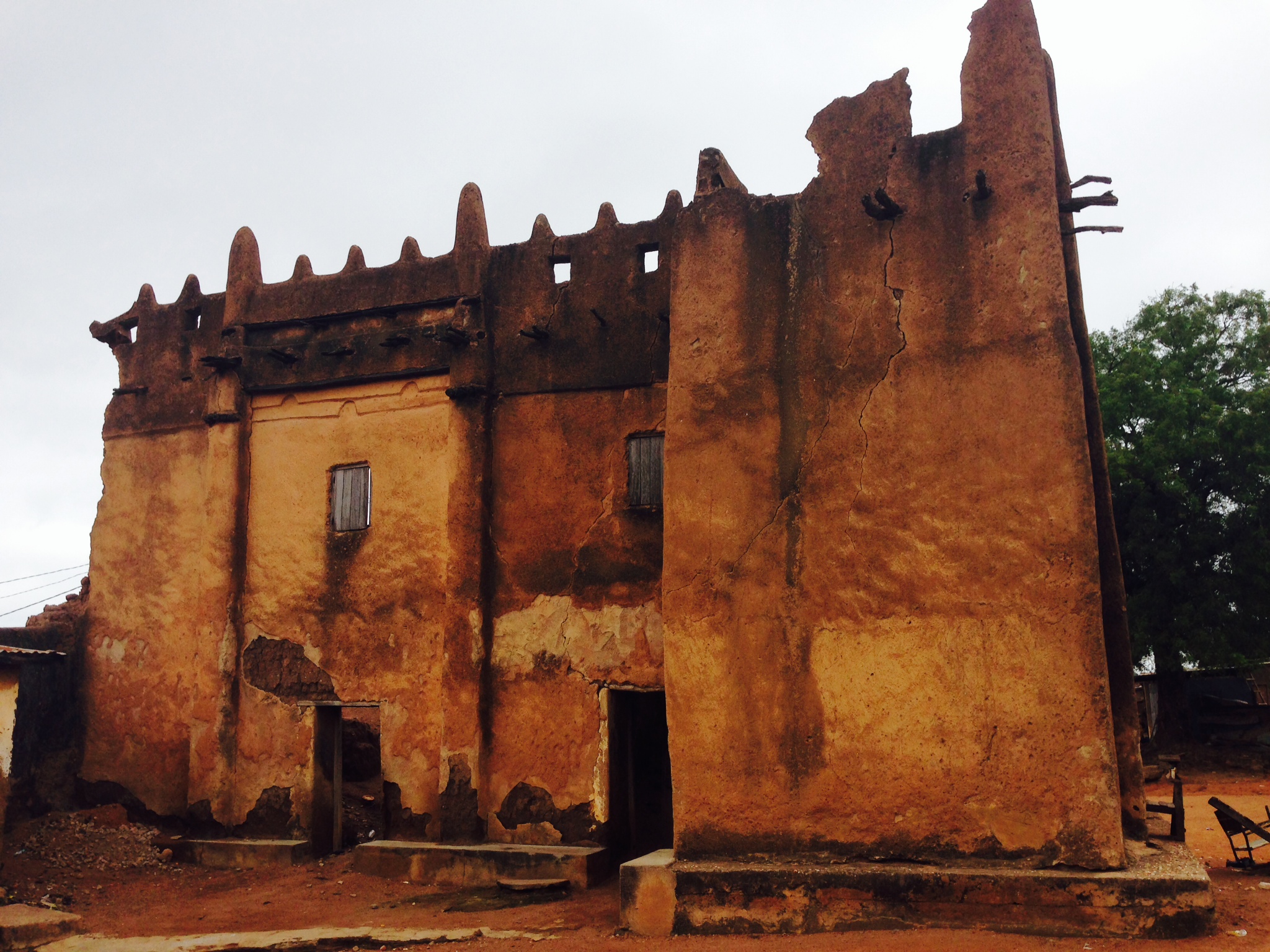
Samorian State
In the village of Tete, deep in the Guinea highlands, blacksmiths hunched over forge fires copying French Kropatschek repeating rifles from memory. They turned out two a day, along with hundreds of reload cartridges. The man who organized this improbable arms industry was Samori Ture, a former trader's son who had declared himself Faama -- emperor -- of a state that did not even have an official name. His subjects called it Samoridugu: "Samori's home." Between 1878 and 1898, that home stretched across parts of present-day Guinea, Mali, Sierra Leone, and Ivory Coast, and it gave the French colonial army more trouble than any other African power of the era.
From Trader to Emperor
Samori Ture's rise began not with inheritance but with ambition. Born around 1830 to a Dyula trading family in the Wassoulou region of present-day Guinea, he entered the warrior class after his mother was captured in a raid and he served the local warlord to secure her release. The apprenticeship proved transformative. By the 1860s, Ture had assembled his own following, and with his Kaba allies he conquered Kouroussa, Norassoba, and other key towns along the Upper Niger. He forged diplomatic ties with Aguibou Tall of Dinguiraye in 1878, then allied with the almamy of the Imamate of Futa Jallon the following year. The capture of the Bure gold mining district on the Guinea-Mali border gave his empire the financial muscle to sustain itself, and by 1878, Ture declared himself Faama with Bissandugu as his capital. Six years later he took the Islamic title of Almamy, binding religious authority to political power.
The Empire That Moved
What made the Samorian state remarkable was its willingness to uproot itself entirely rather than submit. When Colonel Louis Archinard launched a surprise strike on Kankan in March 1891, expecting to crush Ture in weeks, the emperor simply vanished. Archinard captured Kankan on April 11 and then a deserted Bissandugu, but Ture had stripped both cities bare. French artillery could shatter fixed fortifications, so Ture refused to build any. He waged a war of maneuver and scorched earth, devastating each area before evacuating it to slow pursuit. At a council in Frankonedou in May 1892, his commanders decided to abandon their western heartland entirely and rebuild the empire eastward in Kabadougou. By 1895 Ture had pushed his base to Dabakala and claimed the ancient Dyula trading city of Kong, defeating a French column under Colonel Monteil in the process. For nearly two years, the relocated empire functioned without significant French interference.
Blacksmiths and Breechloaders
Ture understood that survival depended on firepower. He concentrated between 300 and 400 metalworkers at Tete, later relocating them to Dabakala, tasking them with manufacturing flintlock muskets and eventually single-shot breechloading rifles from scratch. His elite troops carried French Gras rifles that local blacksmiths had learned to repair and replicate, and by the 1890s -- after some of his gunsmiths had spent months studying French arsenals in Saint-Louis -- the workshops were producing effective copies of repeating rifles at a rate of about a dozen per week. Yet the limitations were real. Without blast furnace technology, casting artillery remained impossible, and quality gun barrels were difficult to produce consistently. Importation from British Sierra Leone stayed critical. When the French cut off those supply routes through Faranah in 1893, the empire's military calculus changed irreversibly.
The Long Retreat
After the fall of the Kenedougou capital of Sikasso on May 1, 1898, French forces concentrated against Ture with overwhelming strength. He turned south toward Liberia, hoping to live off unfamiliar land while marching through the mountainous terrain of western Ivory Coast. The gamble failed. Hostile local populations, colonial patrols, and the sheer difficulty of the terrain turned the march into a catastrophe. Thousands of his followers died of starvation. On September 29, 1898, French captain Henri Gouraud, guided by information from deserting sofas, surprised Ture's forces at Guelemou and captured the Almamy without a fight. Ture was exiled to Gabon, where he died in 1900. His twenty-year resistance had cost France more men, more time, and more diplomatic maneuvering than almost any other campaign in West Africa -- and his memory endures across Guinea and Mali as a symbol of defiance against colonial domination.
From the Air
Centered at 9.93N, 9.16W near Bissandugu in the Guinea highlands. The former capital lies in a landscape of rolling savannah and river valleys at approximately 400m elevation. Nearby airports include Kankan (GUXN) to the northeast and Conakry (GUCY) far to the west. Best viewed from 10,000-15,000 feet where the Upper Niger basin and the Guinea-Mali borderlands are visible. The Bure gold district and Wassoulou region extend north toward Siguiri.