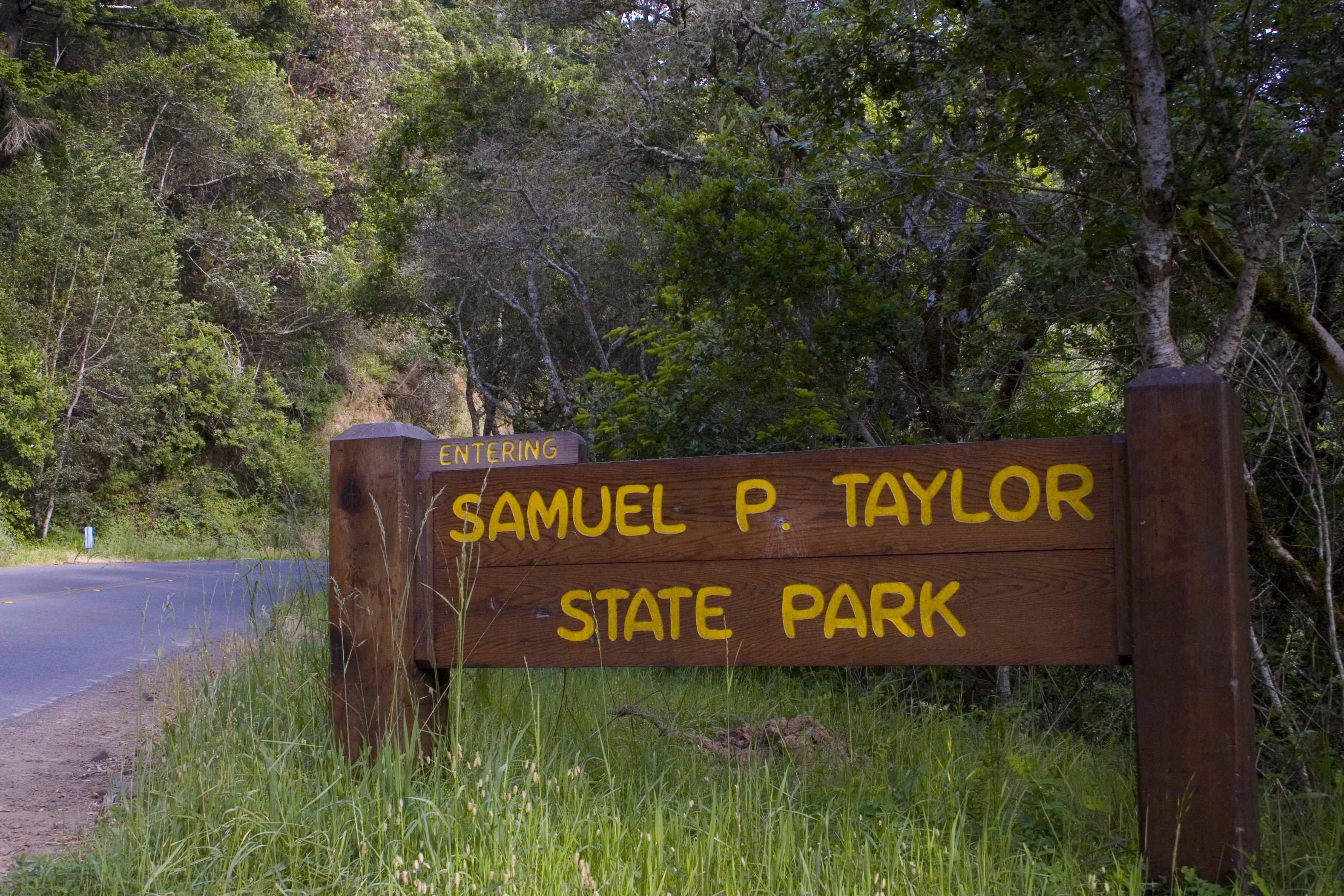
Samuel P. Taylor State Park
Samuel Penfield Taylor's father ran a paper mill on the Hudson River in upstate New York. That detail matters, because when the younger Taylor arrived in California in 1849, lured like thousands of others by the promise of gold, he saw something in the redwood canyons along Lagunitas Creek that no one else did. Not just timber. Not just water. He saw the raw materials for an industry that Gold Rush California desperately needed and entirely lacked. By 1856, he had built the Pioneer Paper Mill, the first on the Pacific Coast, and the sheets of newsprint rolling off its presses would carry the dispatches of a civilization inventing itself in real time.
From Gold Dust to Newsprint
Taylor was born on October 9, 1827, in Saugerties, New York, and sailed from Boston for San Francisco Bay in 1849. He found gold. In 1852, at the peak of the rush, he shipped just over 21 pounds of gold dust to his San Francisco bankers, netting $5,692, a sum worth more than $400,000 today. But Taylor understood that the real fortune lay not underground but in the appetite of a boomtown that consumed paper faster than anyone could supply it. His lumber yard brought him to Marin County in 1853, and one day he stopped along Lagunitas Creek, where the water ran clear through a canyon of coast redwoods. His father's trade clicked into place. The Pioneer Paper Mill Company opened in 1856, turning rags, rope, jute, and wood pulp into newsprint for the Daily Alta California, the San Francisco Morning Call, and the Daily Evening Bulletin. Taylor was recycling before the word existed, sending employees to collect discarded paper and fabric from cities across the state.
The First Fish Ladder on the West Coast
Taylor was an industrialist, but he was also an observer. He noticed that his milldam blocked the salmon running upstream to spawn, and rather than shrug it off as the cost of progress, he built what is believed to be the first fish ladder on the West Coast. That impulse, to use the creek without destroying it, foreshadowed the conservation ethic that would eventually protect this canyon as a state park. Today, coho salmon, listed as an endangered species, still return to Lagunitas Creek each winter to spawn in the same waters that powered Taylor's mill. The creek is one of the last viable coho streams in Central California, a fact that would have pleased a man who understood that industry and nature need not be enemies.
Camp Taylor and the Invention of Weekend Getaways
In the 1870s, the North Pacific Coast Railroad laid tracks between Cazadero and a pier in Sausalito, connecting the remote forests of western Marin to San Francisco via ferry. The line passed near Taylor's mill, and the entrepreneur saw another opportunity. He built Camp Taylor Resort alongside the tracks, offering city-dwellers a hotel, tent camping, swimming in the millpond, fishing, boating, and a dance pavilion. It became one of Northern California's first destination resorts, a place where San Franciscans escaped the fog and crowds for a weekend in the redwoods. Taylor had, without quite meaning to, invented recreational camping in California. The resort thrived through the 1870s and 1880s, drawing families and adventurers who arrived by train and departed sunburned and pine-scented.
Ruin and Resurrection
Taylor died on January 22, 1886, and without his energy the enterprise unraveled. The Panic of 1893 wiped out his family's finances, and they lost both the mill and the resort. The mill itself burned down in 1916, leaving only ruins along the creek. For decades the land drifted into neglect until 1945, when the State of California took possession for nonpayment of taxes and established it as a state park. Today, Samuel P. Taylor State Park encompasses approximately 2,700 acres of redwood forest and grassland. About 600 acres contain old-growth forest, some visible along the Pioneer Tree Trail, where trees predate Taylor's arrival by centuries. Mount Barnabe, the park's highest point, offers panoramic views of the Marin hills, and the Cross Marin Trail follows the old railroad grade through the canyon. The park is a California Historical Landmark, honoring not just the trees but the man who milled their neighbors into paper and, in his own contradictory way, helped save what remained.
From the Air
Located at 38.03°N, 122.72°W in a narrow canyon along Lagunitas Creek in western Marin County, California. From the air, the park appears as a dark band of dense forest following the creek drainage, contrasting with the lighter grasslands on surrounding ridges. Sir Francis Drake Boulevard runs through the park along the old railroad grade. Best viewed at 1,500-3,000 ft AGL. Nearest airports: Gnoss Field (KDVO) approximately 15 nm northeast, San Francisco International (KSFO) approximately 30 nm southeast. The park's canyon orientation can channel wind and fog from the coast.