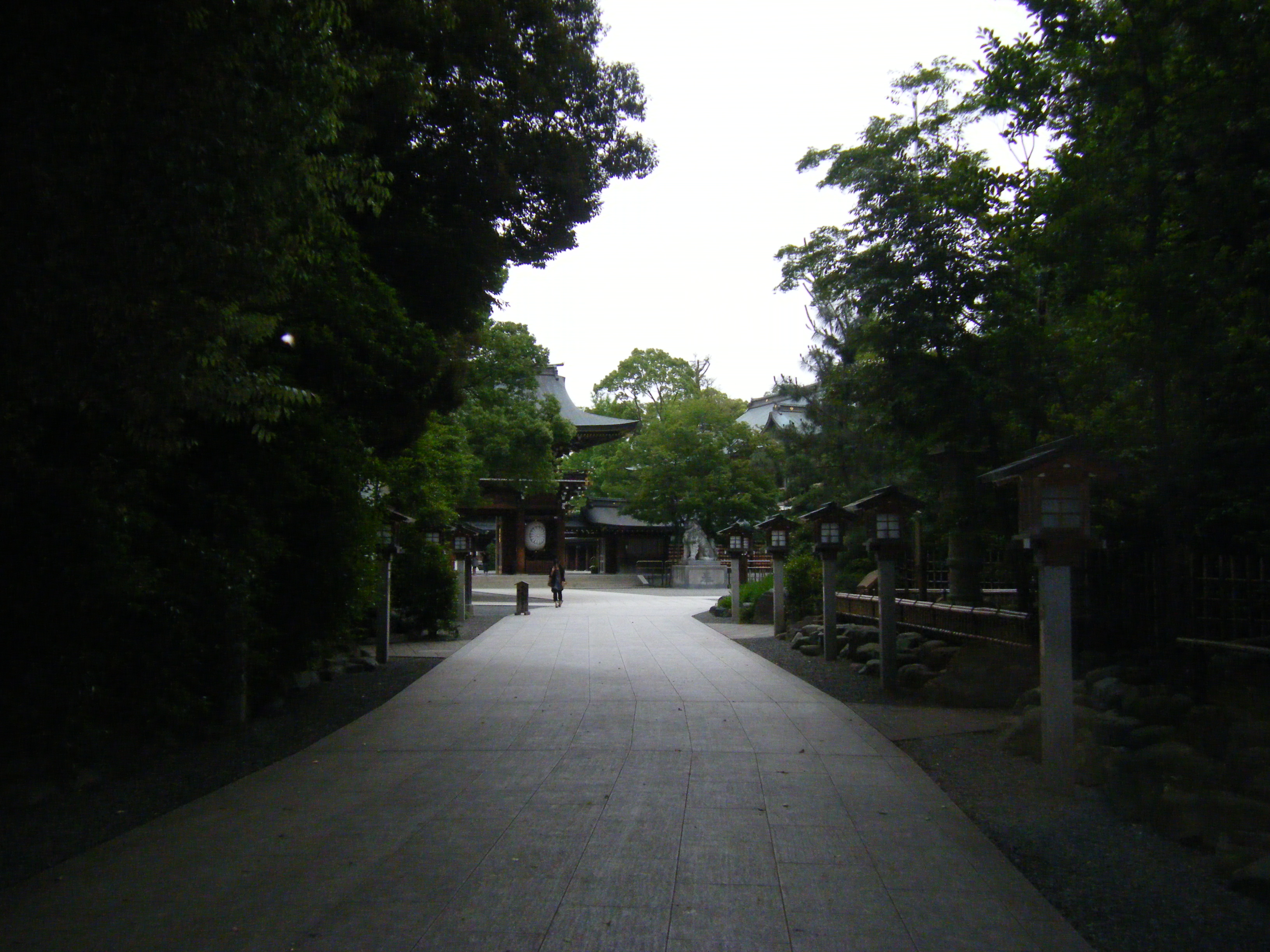
Samukawa Shrine: Where a Warlord Left His Helmet
Two million people visit Samukawa Shrine every year, making it one of the most popular shrines in the greater Tokyo region. Most come for New Year's blessings. Few realize they are praying to gods whose identity no one can actually confirm. The kami enshrined here carry the collective name Samukawa Daimyojin, and that is essentially all anyone knows about them. One theory links them to deities worshipped at the Ise Grand Shrine. Another identifies them as children of Oyamatsumi, the mountain god. A third suggests they are ancestral spirits of the Samukawa clan, the old provincial governors. None of these theories contradict each other, and none have been proven. The shrine has been standing on this low plateau above the Sagami River since at least the eighth century, collecting mysteries as patiently as it collects visitors.
First Among Shrines
Samukawa Shrine holds the rank of ichinomiya -- the first-ranked shrine of Sagami Province. Unverifiable shrine legend claims imperial messengers arrived during the reign of Emperor Yuryaku, sometime between 418 and 479 AD, which would make the site over 1,500 years old. The first reliable written records indicate a rebuilding in 727. By 846, the shrine appears in the Shoku Nihon Koki, an official court history. The 923 AD Engishiki, a compendium of laws and customs, lists Samukawa as the only shrine in all of Sagami Province to hold a particular elite designation. During the Kamakura period, the Azuma Kagami confirms the ichinomiya status and records a dedication ceremony at the shrine marking the birth of Minamoto no Yoriie, son of the first Kamakura shogun. The Hojo clan became patrons, and that patronage continued through the Later Hojo clan during the Sengoku period of warring states.
The Warlord's Helmet
The shrine's most dramatic cultural property is a Sengoku-period sujikabuto helmet, a sixty-two plate bowl of thick, well-forged iron that exemplifies the best metalwork of the Kanto region. The official story is that Takeda Shingen himself donated the helmet and a sword in October 1569 to pray for victory when he attacked Odawara Castle. A rival version says Shingen donated them as an apology -- his forces had burned the area around the shrine and set up camp in the wreckage. Armor researcher Ichiro Miura offers a third interpretation: Shingen gave the helmet as a political statement protesting the collapse of the Takeda-Hojo alliance in 1568. The evidence is in the metalwork. The bowl is inscribed with the date Tenbun 6 (1537), the maker Fusamune's signature, and passages from the Heart Sutra. Gilt bronze rivets bear the Takeda clan diamond crest. Most of the original black lacquer has peeled away over the centuries, leaving rusted iron -- but the craftsmanship and the clan markings remain unmistakable.
Where the Sea Once Reached
Today Samukawa Shrine sits on a low plateau on the left bank of the Sagami River, about seven kilometers inland in central southern Kanagawa Prefecture. Suburban houses and rice paddies surround it. But during the Yayoi period, roughly two thousand years ago, the landscape looked entirely different. An inlet of Sagami Bay extended far inland from the present shoreline, and the shrine occupied a position on its shore. The ancient Tokaido highway -- the great road connecting Kyoto to eastern Japan -- crossed the Sagami River and passed the east side of the shrine. That road made Samukawa a crossroads, a place travelers would stop to pray before fording the river. The geography has shifted dramatically since then -- the bay retreated, the land filled in, modern highways replaced the Tokaido -- but the shrine's position at a natural gathering point has never changed.
Horseback Archery and Paper Lanterns
The main festival falls annually on September 20 and features yabusame, the ancient art of mounted archery where riders in traditional costume fire arrows at targets from galloping horses. During the Setsubun festival in February, marking the boundary between winter and spring, illuminated paper figures are hung from the main gate in a style reminiscent of the famous Nebuta festival in Aomori Prefecture, far to the north. The shrine's influence extends well beyond Kanagawa: a mikoshi -- a portable Shinto shrine carried during festivals -- donated by Samukawa Shrine stands in the Brooklyn Botanic Garden in New York City, a small piece of Sagami Province transplanted across the Pacific. The shrine remains a living institution, its festivals drawing crowds that rival its New Year's numbers, its grounds maintained with the careful precision that marks a site still central to its community after over a thousand years of continuous worship.
From the Air
Located at 35.379°N, 139.381°E in the town of Samukawa, Koza District, Kanagawa Prefecture, on the flat Sagami Plain. The shrine complex sits on a low plateau on the left bank of the Sagami River, roughly seven kilometers inland from the coast of Sagami Bay. From altitude, the forested shrine grounds form a distinctive green rectangle amid the surrounding suburban and agricultural landscape. Best viewed at 2,000-3,000 feet AGL. Atsugi Naval Air Facility (RJTA) is approximately 7 nautical miles to the northwest. Tokyo Haneda (RJTT) lies about 28 nautical miles to the northeast.