San Antonio: The Alamo City Where Texas Identity Was Forged
San Antonio is where Texas became Texas - where 189 men held the Alamo for 13 days against Santa Anna's army, where their deaths became the rallying cry 'Remember the Alamo' that fueled Texas independence. The battle was a military defeat and a propaganda victory; the legend that emerged made Texas what it is. But San Antonio predates the Alamo by over a century - the Spanish founded missions here in 1718, converting Native Americans and claiming the land for Spain. The city that grew from those missions became one of Texas's largest, 1.4 million people spreading across the Hill Country terrain, still defined by what happened at a former mission in 1836.
The Alamo
On February 23, 1836, Mexican General Santa Anna arrived with thousands of troops to reclaim the Alamo from Texas rebels. The 189 defenders - including Jim Bowie and Davy Crockett - held out for 13 days before the final assault on March 6. All the defenders died; Santa Anna won the battle and lost the war. 'Remember the Alamo' became the Texas Revolution's rallying cry; Sam Houston's army used it at San Jacinto six weeks later. The Alamo itself is smaller than visitors expect, hemmed in by downtown buildings, but its symbolic weight remains immense. More Texans know the Alamo story than know their own family histories.
The River Walk
The San Antonio River flooded regularly, killing people and destroying property. Engineers proposed paving it over; architect Robert Hugman proposed turning it into an amenity. Hugman won, barely - the WPA built the River Walk during the Depression, lowering the river level, adding walkways and stairs, creating a pedestrian zone 20 feet below street level. The River Walk languished for decades before the 1968 World's Fair brought investment. Now it's San Antonio's primary tourist attraction: restaurants, hotels, bars lining the river, tourist boats floating past, the noise and crowds that indicate success. The flood control project became the city's identity.
The Missions
The Alamo was originally Mission San Antonio de Valero, one of five Spanish missions established along the river. The other four - Concepción, San José, San Juan, and Espada - still stand as a UNESCO World Heritage Site, the largest concentration of Spanish colonial missions in North America. The missions converted (or coerced) thousands of Native Americans, teaching Spanish agriculture and Catholicism, reshaping the region's culture. The mission churches still hold services; the compounds still show the irrigation systems that made desert farming possible. San Antonio's Latino heritage traces directly to these 18th-century institutions.
The Military
San Antonio is 'Military City USA' - home to Fort Sam Houston (Army), Lackland Air Force Base (Air Force basic training), Randolph Air Force Base (pilot training), and various other installations. The military presence began after the Civil War and expanded with each subsequent conflict. Every Air Force enlisted person passes through Lackland; every Army medic trains at Fort Sam Houston. The military employment provides stability; the veteran population shapes the culture. San Antonio is more conservative than other Texas cities, more patriotic in the flag-waving sense, deeply connected to the military that defines it.
Visiting San Antonio
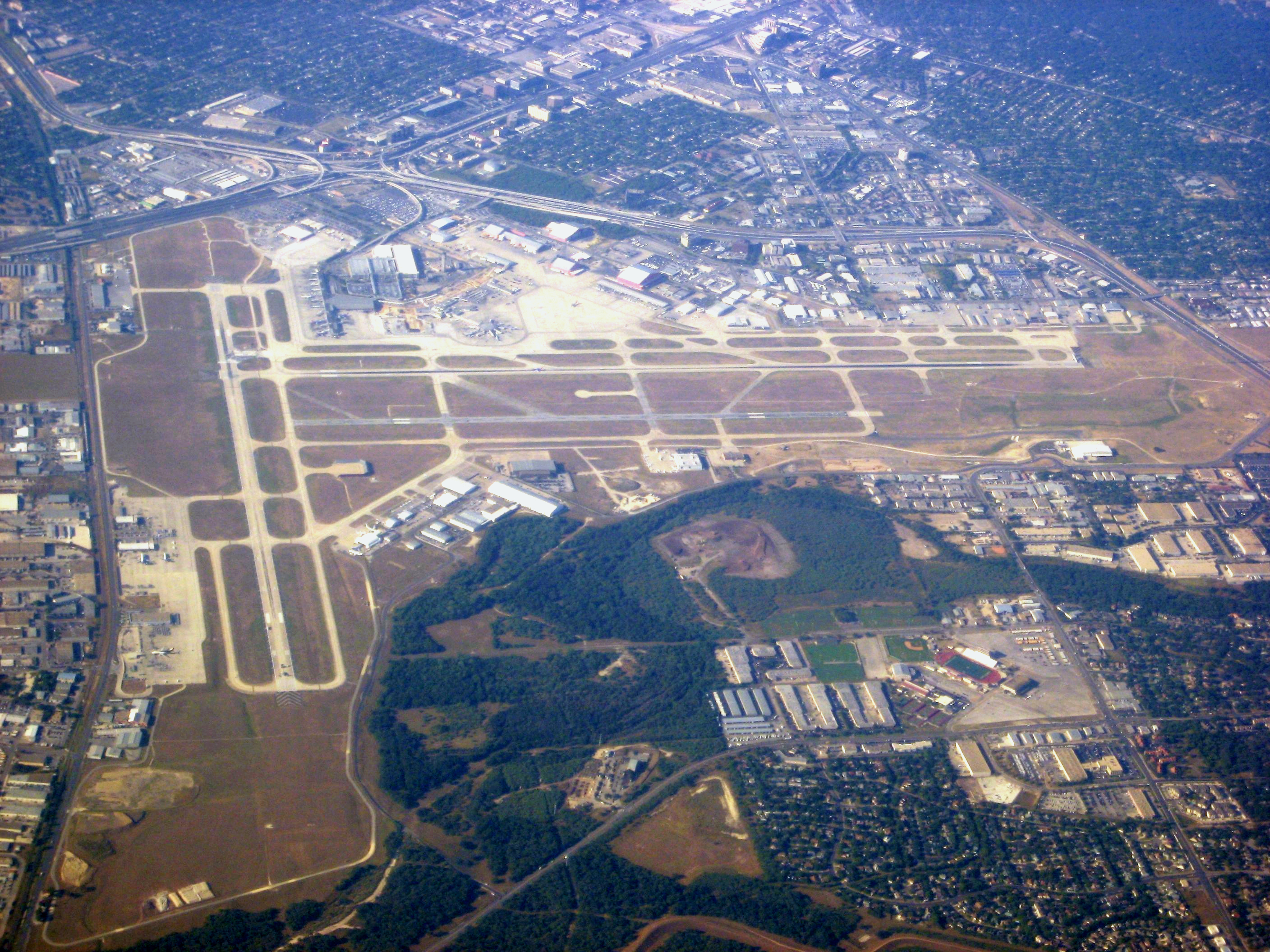
San Antonio is served by San Antonio International Airport (SAT). The Alamo is downtown, free to enter, smaller than imagined. The River Walk extends for miles, though the tourist core is more concentrated. The Mission Trail connects the four southern missions; bicycling is the best way to visit. The Pearl District has transformed a former brewery into restaurants and shops. Market Square offers Mexican goods and food. Tex-Mex originated here: the combination of Mexican and American cuisine that defines Texas eating. The breakfast taco is essential; the puffy taco is distinctive. Summers are brutal; spring is best.
From the Air
Located at 29.42°N, 98.49°W in south-central Texas where the Hill Country meets the coastal plain. From altitude, San Antonio appears as urban sprawl spreading across the terrain, the River Walk's green corridor visible threading through downtown, the military bases visible as large installations with runways. The mission chain extends south along the river. What appears from altitude as one of Texas's largest cities is the Alamo City - where Texas independence was forged in defeat, where Spanish missions converted a region, and where the River Walk turned flood control into destination.